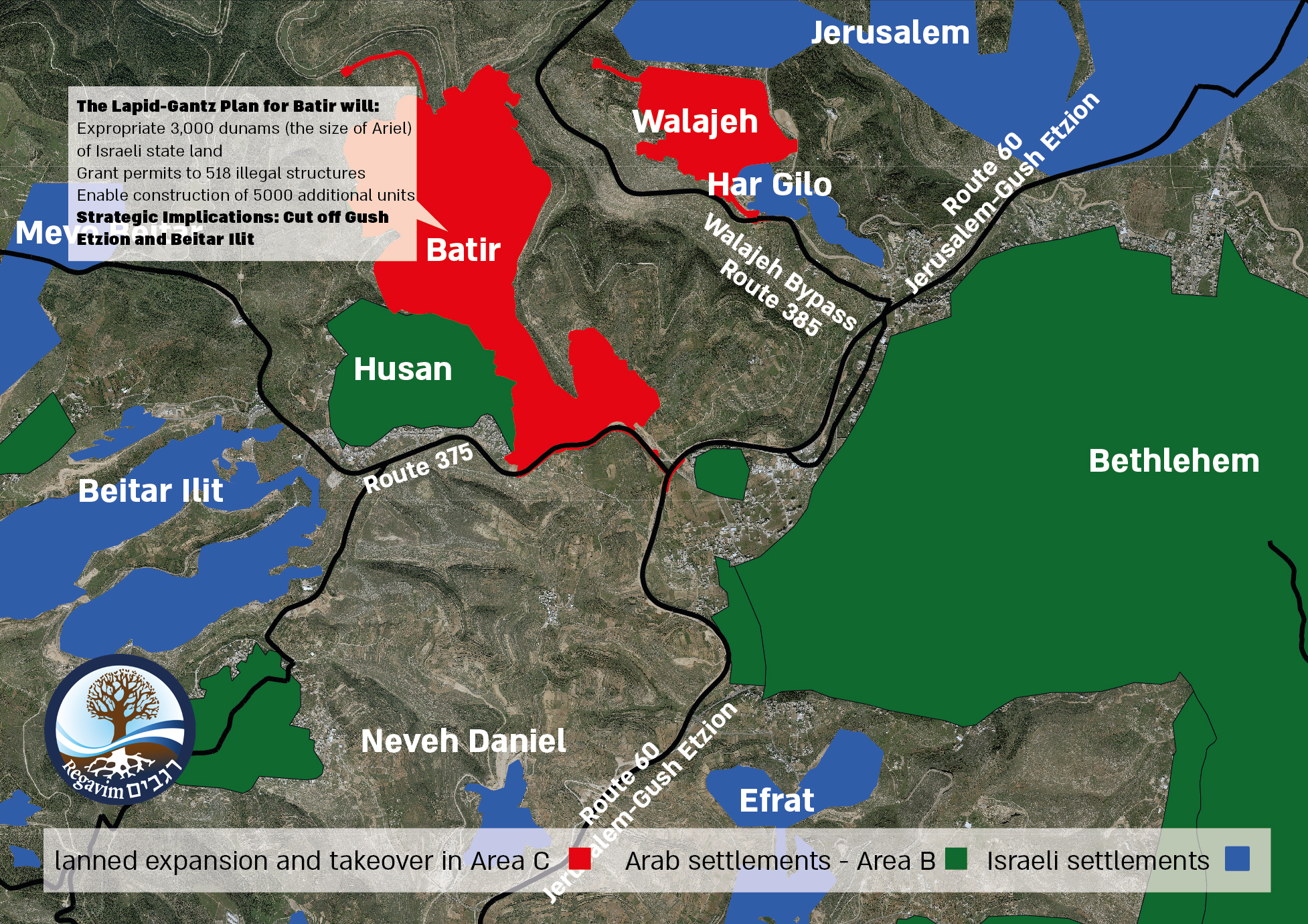
A map that outlines one of six masterplans that will compromise Israeli national interests

Thousands of dunams for expansion and construction – on land that will cut off Jewish communities from Jerusalem: Jewish communities in Judea and Samaria express outrage at the announcement of permits for Palestinian Arab construction as a gesture to welcome President Biden. Regavim: “This is a fatal blow to Jewish settlement and to Israeli democracy.”

As part of a package of “good will gestures” honoring honoring US President Biden upon his visit to Israel, the Israeli government will approve 6 masterplans for Palestinian settlements in Judea and Samaria. These plans will result in de facto Palestinian annexation of large sections of Area C – the portion of Judea and Samaria under full Israeli jurisdiction. They include “legalization” of hundreds of illegally-built structures and expansion of Arab villages, isolating and choking existing Jewish communities and threatening the security and feasibility of the entire settlement enterprise. 

The plans will reward the Palestinian Authority’s continued efforts to create facts on the ground, and encourage the continued implementation of the Fayyad Plan of territorial takeover using precise placement of illegal construction and agricultural projects.

The Arab village of Batir, located between Jerusalem’s Gilo neighborhood and Gush Etzion, will be granted a permit for no less than 518 illegal structures as well as expansion of the village by some 3000 dunams – an area comparable in size to the city of Ariel. The plan will effectively cut off Gush Etzion from Jerusalem and severely compromise the security of the Gush Etzion-Jerusalem Tunnel Road.

Another plan, in Eastern Gush Etzion, will approve the expansion of Kisan by 615 dunams, severely limiting access for Jewish communities of eastern Gush Etzion and any possibility for future growth. Similar plans for the village of Pakiks will cut off the Jewish community of Negohot in the South Hebron Hills area.
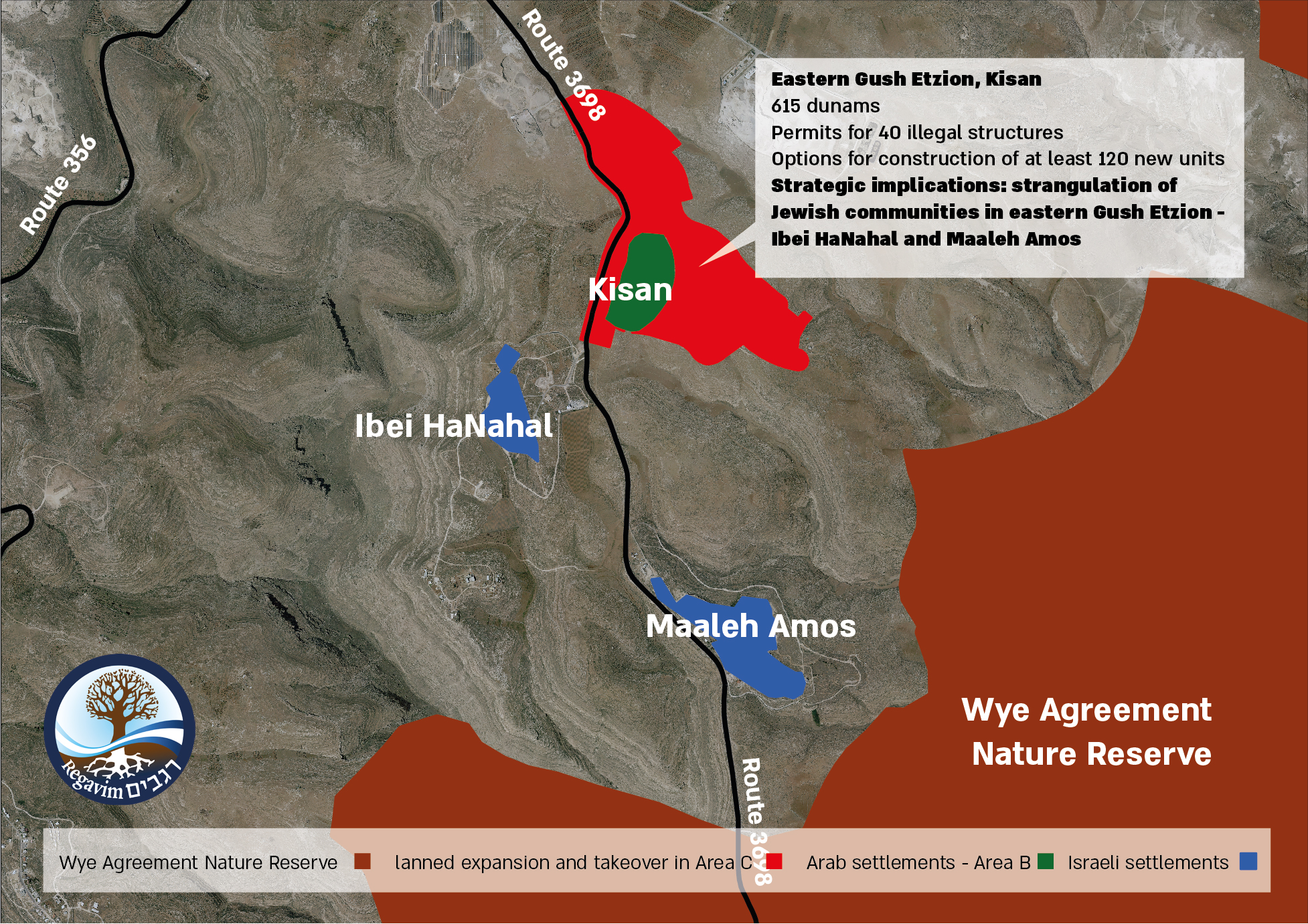
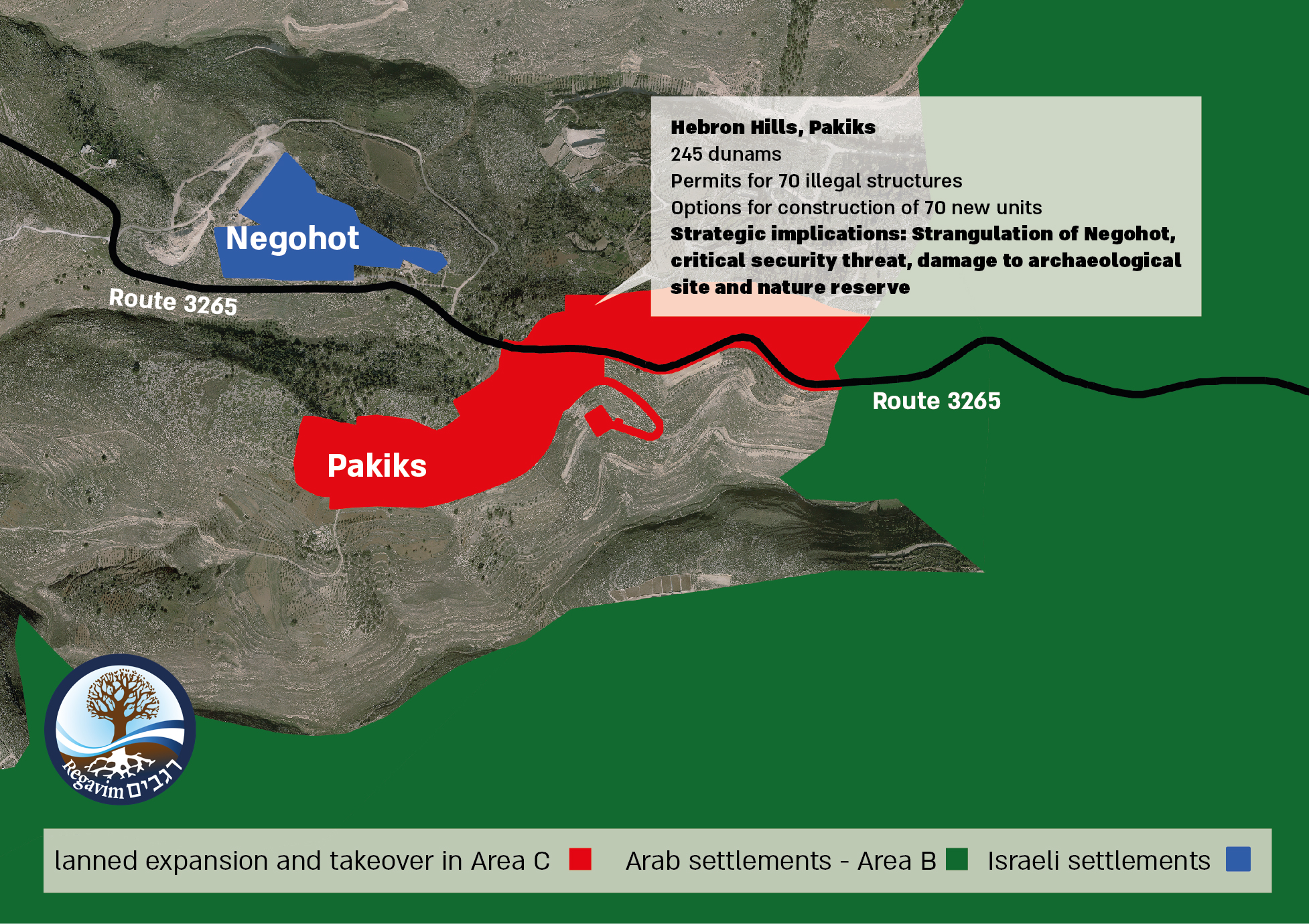
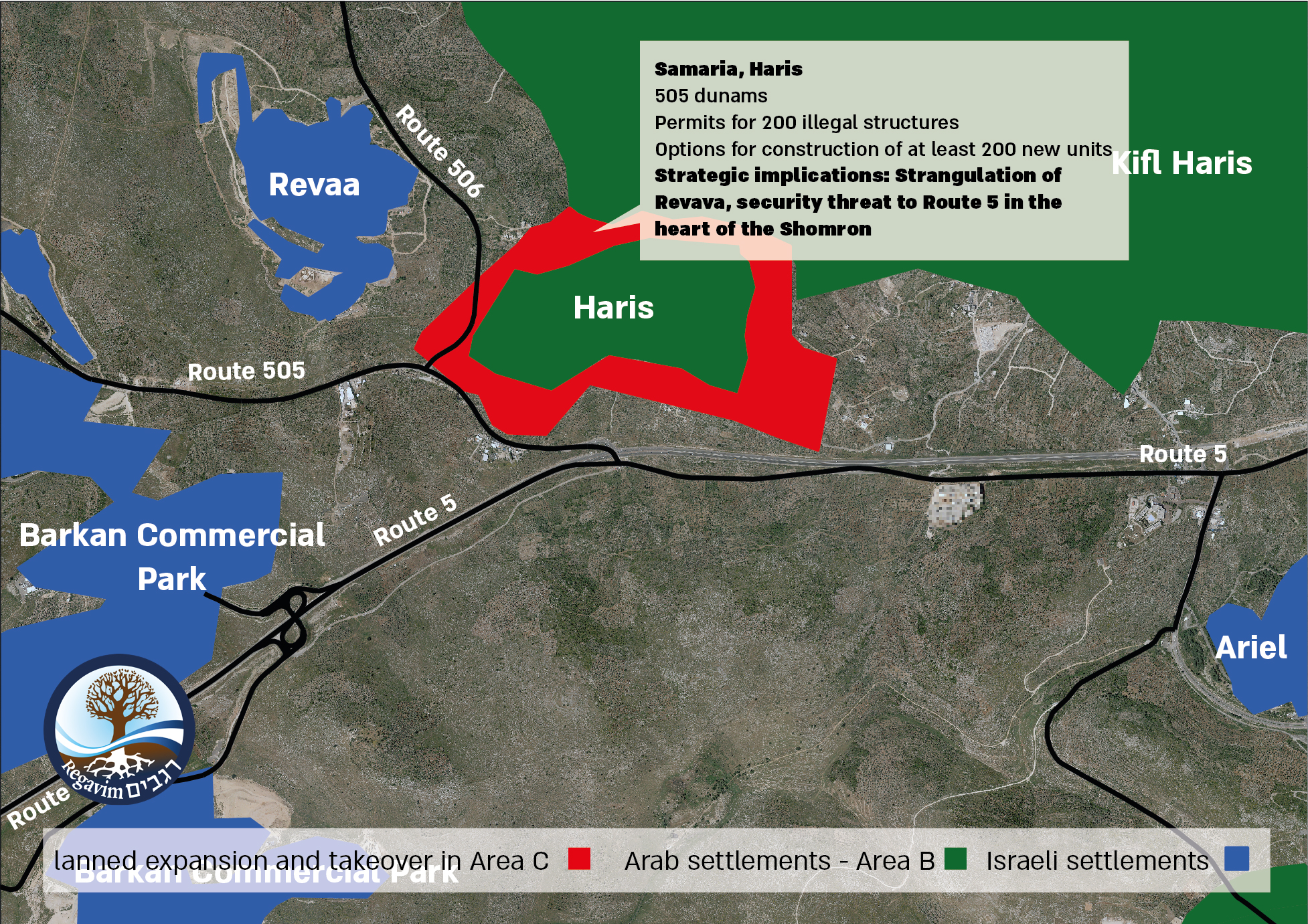
Approval of Municipal Masterplans (Tab”a) are also planned in Binyamin and Shomron, including a plan that jeopardizes the very heart of Samaria, near Highway 5 between Ariel and Revava.  Another plan up for approval is Hizme, adjacent to Jerusalem’s Pisgat Zeev neighborhood, where expansion by hundreds of dunams will bring the village even closer to Israel’s capital.
“This is a catastrophe that must be averted – immediately,” says Meir Deutsch, Director General of Regavim. “Saar, Shaked, Kahana, Elkin, Hendel, Orbach – you were elected on right-wing votes because you promised to protect the Jewish settlement enterprise. You handed Yair Lapid his seat in the Prime Minister’s office, and you are the reason Benny Gantz is Minister of Defense. It is your responsibility to block this insane plan to whitewash thousands of illegal structures that will cut off Jewish settlement blocs from Jerusalem and give permanence to the criminal Palestinian takeover of Area C.”
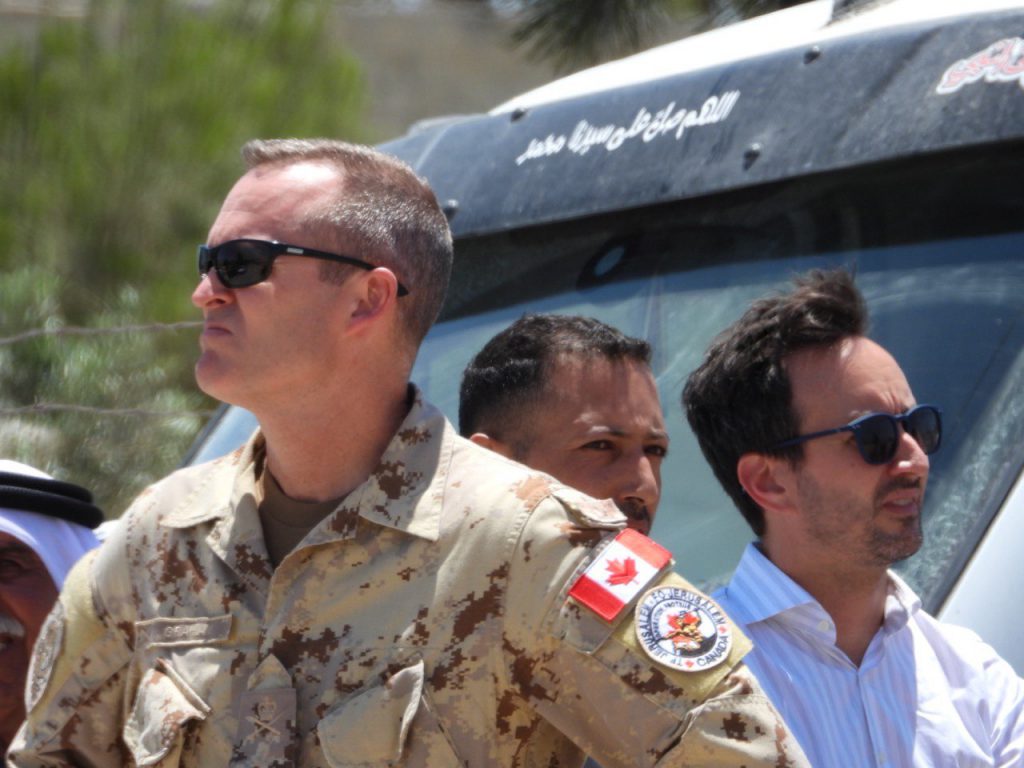
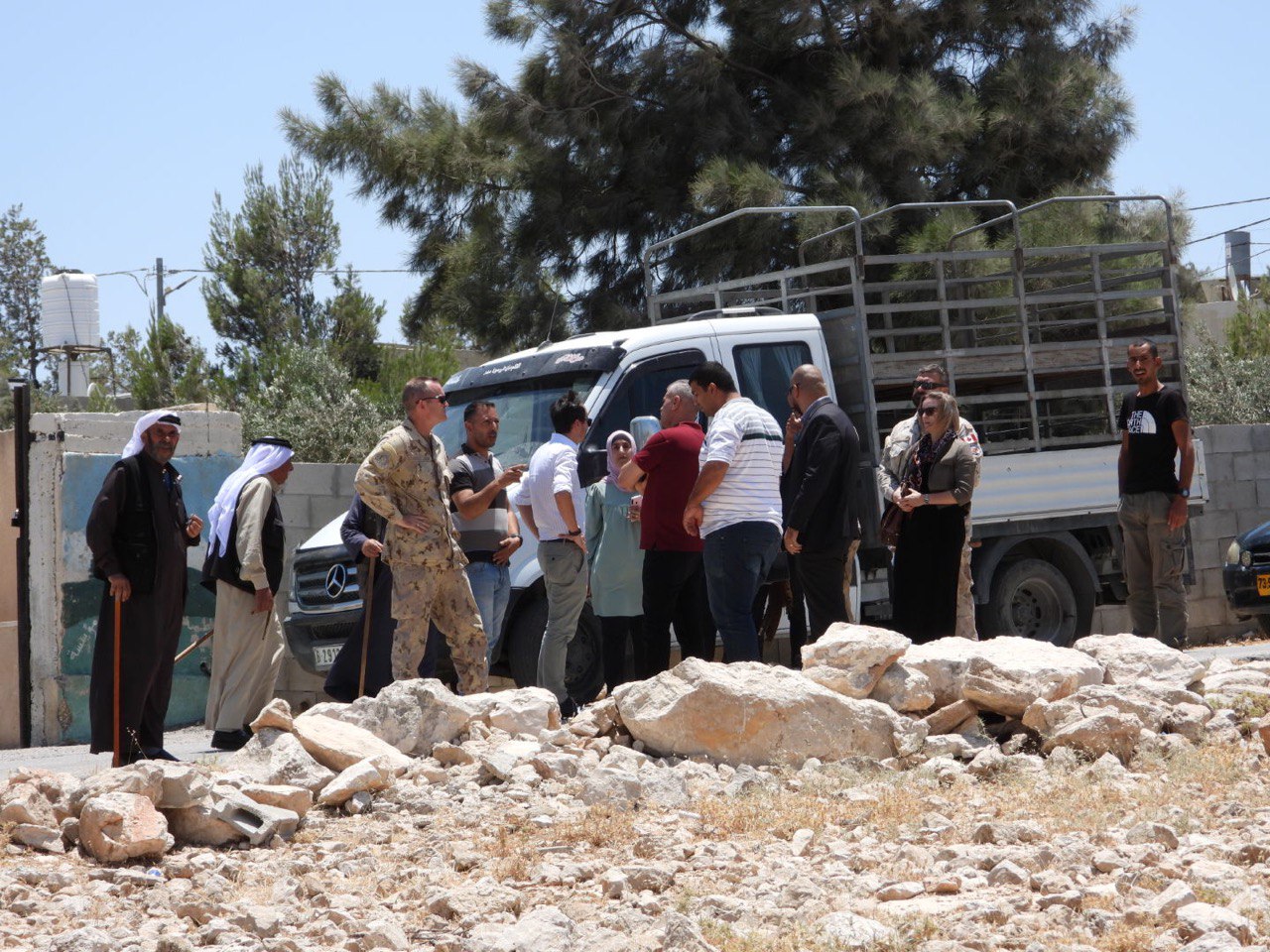
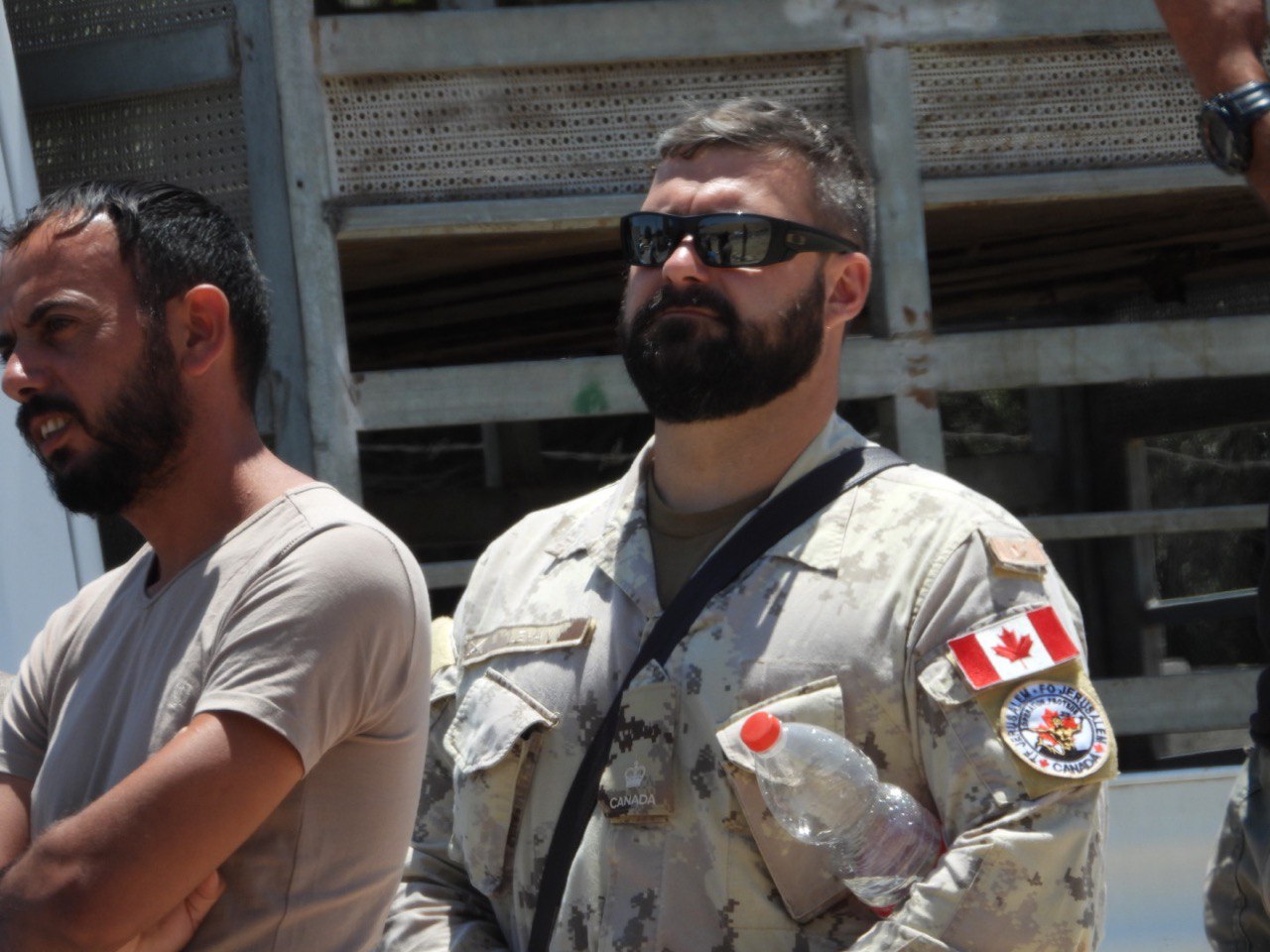
A senior Canadian military officer seen visiting an illegal Palestinian structure

In recent weeks, we’ve noticed a delegation of senior Canadian military personnel that has been patrolling in uniform in Area C, including at an illegal structure in the South Hebron Hills region.

The delegation was also hosted by the IDF’s Central Command General Yehuda Fuchs, meaning that its presence in the area is known to and sanctioned by IDF officials.

The illegal structure that the Canadians visited was erected overnight on land designated for agriculture and belongs to the nearby Israeli community of Maon. Residents of Maon appealed to the IDF and the Civil Administration to stop the work and demolish the building. Apparently, the Civil Administration has pledged to enforce the law but has done nothing so far.

Shortly after the referral to the Civil Administration, the visit of the Canadian delegation, which included two uniformed military personnel, was documented.

The delegation was also documented during a visit to the village of Zurif near the community of Carmi Tzur in Gush Etzion, and this week they were seen again in a meeting with Arabs near the village of Kisan in eastern Gush Etzion, also in Area C.

**

It’s an utterly insane and blatantly rude move against the State of Israel for senior military figures from a foreign country to encourage construction criminals who are acting under the auspices of the Palestinian Authority.

As long as the State of Israel sees itself as a guest in Judea and Samaria and does not conduct itself as the sovereign, the rest of the world will also see the State of Israel as a guest and not as the legitimate sovereign.

Don’t sell us out!
Israel’s security and sovereignty aren’t bargaining chips!

President Biden: Don’t exploit Israel’s unstable political landscape to extract historic concessions from an interim government that may be tempted to pay an enormously high price to shore up their election prospects.

Prime Minister Lapid: Don’t sell out our national interests for photo-ops with visitng dignitaries who have agendas of their own.

The itinerary of President Biden’s visit, scheduled for 13-15 July, includes several things that are tremendously problematic for Israel’s sovereignty and security:

  • A first-of-its-kind visit by a US President to East Jerusalem without any Israeli presence or accompaniment, signaling that our capital is divided between two independent sovereigns, constituting a substantive violation of US law, Israeli law and diplomatic protocol;
  • Solidifying Israeli agreement to a Palestinian Authority presence at the Allenby Border Crossing, signaling joint sovereignty and authority over our border and the secession of our our control and sovereignty over the Jordan Valley;
  • Official recognition of the upgraded status of the Palestinian Affairs Office as a de facto embassy to Palestine in West Jerusalem, with an eye towards opening a full embassy in the East Jerusalem consular building, shut down by the Trump Administration.

Jerusalem and the Jordan Valley are Israel’s most vital existential interests.

They’re not for sale.

The Masafer Yatta case illustrates how leftist propaganda manipulates the kind hearts and good intentions of people in Israel and around the world.

It’s a whale of a tale that has enabled anti-Israel organizations, foreign governments and the Palestinian Authority to turn run-of-the mill illegal construction into a massive international issue. It also illustrates that although “better late than never” might work in some situations – in others, if you miss the boat, the ship sails on and you’re left to swim against the tide and battle the sharks on your own.

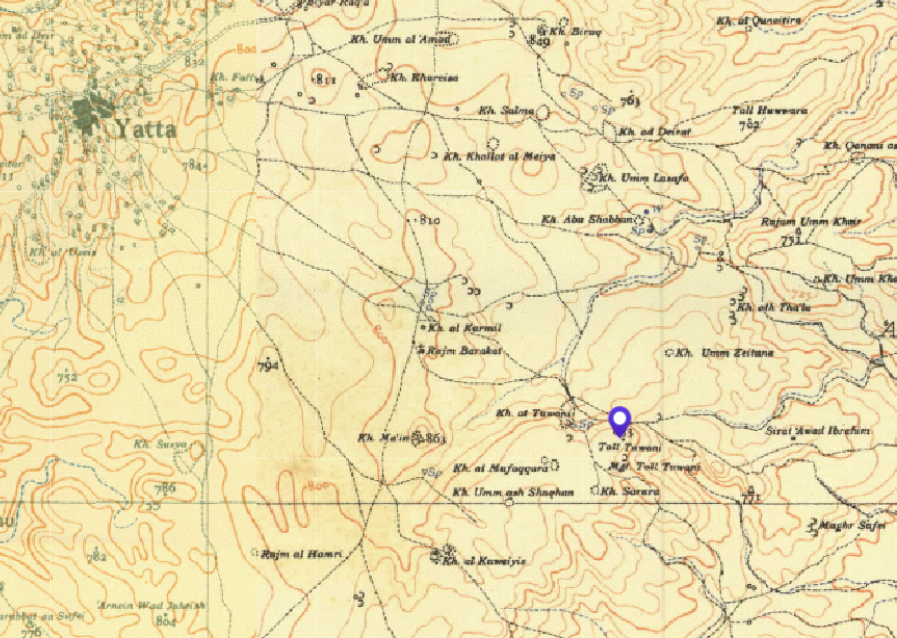
The area referred to as Masafer Yatta is state land, which was declared a military training ground in the early 1980s. Like all state lands set aside for military use, there was not, nor had there been in over 100 years, settlement of any kind on the land in question – no private property, no historic villages, nothing. This is a desert area, very difficult terrain, with no water or arable land. During the Ottoman era it was classified as mawat – “dead” – and owned by the sultan (in other words, by the state); the same classification carried through the Mandatory era and the Jordanian occupation. Mandate-era maps (below, 1935) show some archaeological ruins in the area, but no settlement of any kind. By comparison, the map shows Yatta and Hebron, Bani Naim and other villages that were real, actual settlements during the same period. “Masafer Yatta” was desolate.

A map from the British Mandate era (1935) shows a desolate Masafer Yatta area

Aerial photos from as recently as 1997 make this point unequivocally – but they aren’t really necessary: The “proof” offered to the High Court of Justice by the Arab plaintiffs in the Masafer Yatta case actually disproves their claims. The recent High Court decision lists some of the more egregious examples that prove unequivocally that the residents of the illegal “villages” of Masafer Yatta arrived after the IDF closed off the area for military use. It also proves that these residents, almost without exception, have permanent homes in the nearby town of Yatta.

How were these “villages” born? The shepherds of Yatta would sleep in caves in nearby grazing areas, rather than trekking back to the village each night. After the IDF closed off the area, the shepherds were permitted to continue grazing their flocks there; the IDF gave them a few days’ warning before live-fire exercises to insure that no one got hurt. The Palestinian Authority seized the opportunity – and began funding construction of permanent structures. Foreign interests jumped right in after them, funding infrastructure projects to support the “indigenous farmers” – laying water and electricity lines that enabled more and more people to set up homesteads on the “free” land. This pattern, repeated all through the area, was exposed in the High Court of Justice – by the plaintiffs themselves!

The first petitions regarding Masafer Yatta were filed over 20 years ago by leftist organizations that tried to wrest control of the area out of the State’s hands. Temporary injunctions weren’t merely ignored, they were trampled – but instead of immediately tearing down the few structures that had popped up in the firing zone, the IDF kept pulling back, limiting the area it used for training, to avoid harming the squatters. What started off as a few structures in three specified areas metastasized into hundreds of structures, many hundreds of residents, and a brand new fake-news international humanitarian crisis. A full two decades passed before the High Court finally asserted what had been clear from the start: The Arab claims to this land are unfounded, and the claim that Israel is dispossessing indigenous people is a lie.

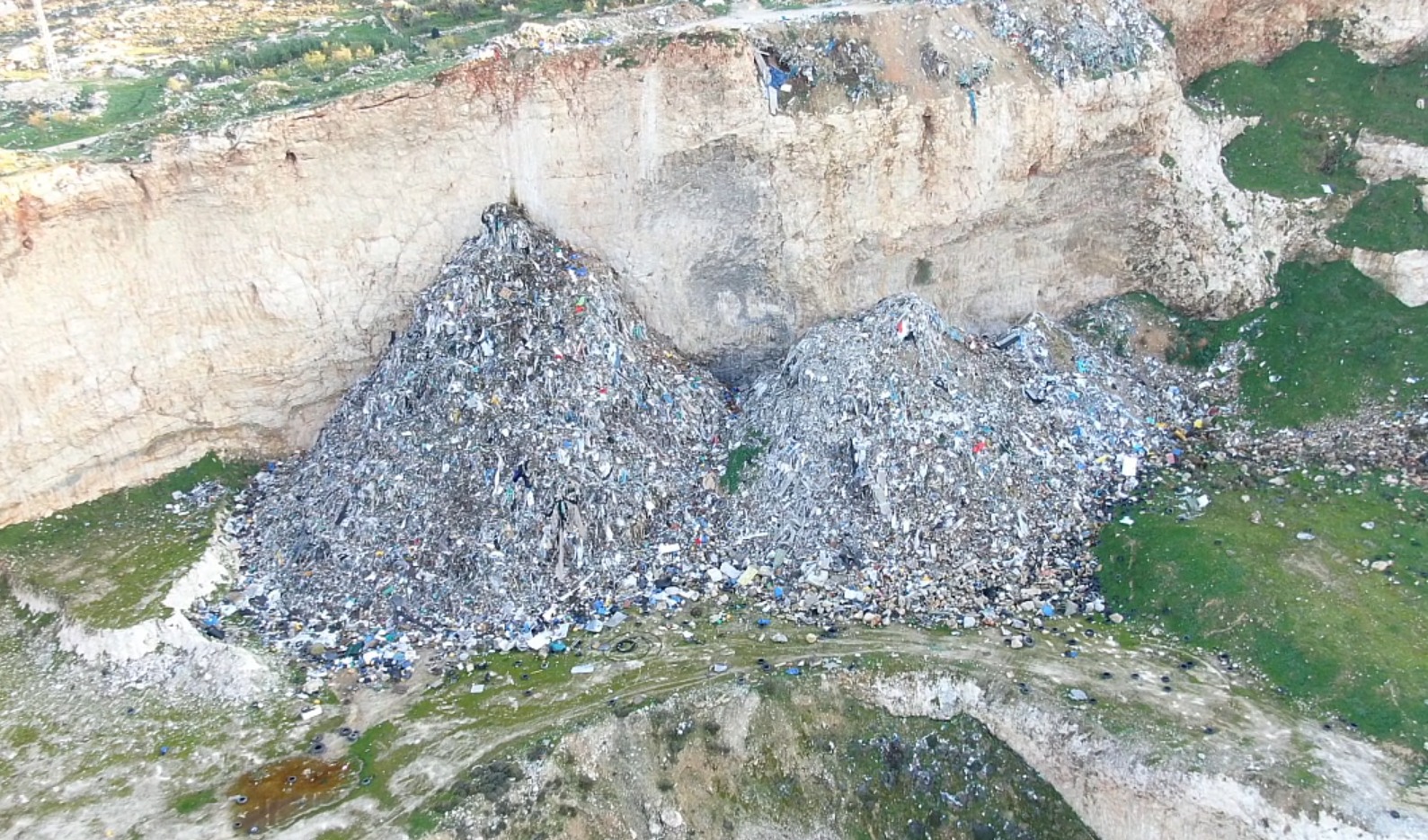
A truck offloads trash at the abandoned quarry near Psagot

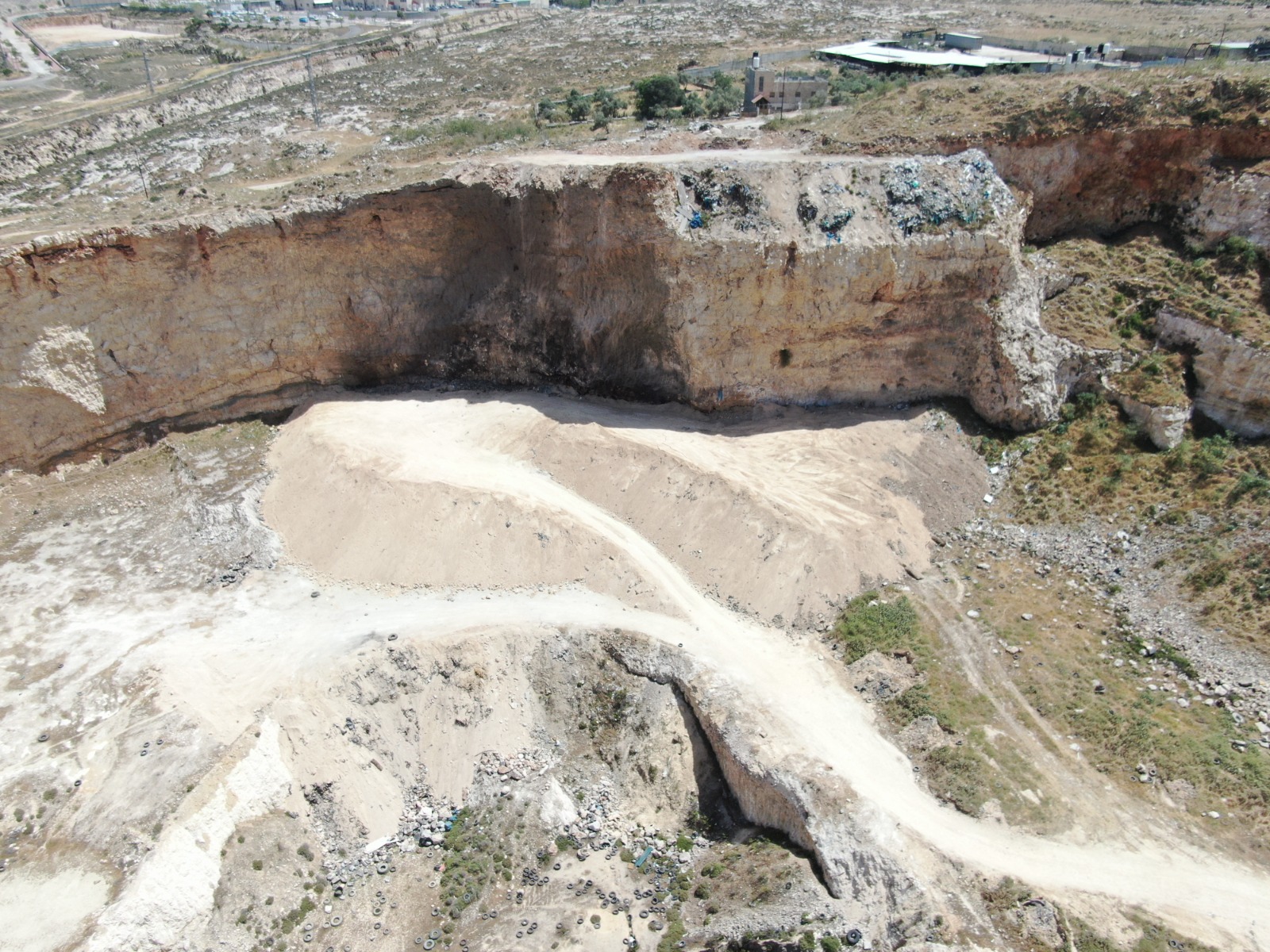
After a seemingly endless stream of correspondence and complaints by Regavim, the Civil Administration cleared an illegal garbage dump in the Binyamin region. But the Regavim Movement discovered that the dumping site was cleared and rehabilitated at the expense of the Israeli taxpayer, and not a single one of the criminals arrested for dumping the trash were charged or tried – even when they resumed dumping at the very same spot only weeks later. Regavim has petitioned the High Court of Justice.

In 2019, Regavim’s field staff noticed that criminals had taken over the open space near the Psagot Junction in the Binyamin region of Area C (the portion of Judea and Samaria under full Israeli jurisdiction), and used it to dump and burn massive quantities of trash. With no oversight, inspection or permits and in complete disregard of the most basic criteria for waste disposal and environmental protection, this illegal dumping ground was causing unspeakable, irreparable damage to the soil and water, and creating a health hazard to plant, animal and human life in the vicinity that was affecting all residents of the area – Jews and Arabs alike.

Regavim complained to the authorities – repeatedly – and demanded oversight and enforcement at the site, restoration of the environment and prosecution of those responsible for this criminal abuse. The authorities eventually announced that they had apprehended and impounded several dump trucks that were unloading trash – meaning that the identity of the offenders was known and duly recorded. At the end of 2021, the Civil Administration, which is responsible for law enforcement in Area C, announced that it had completed clean-up and restoration of the site – at a cost of NIS 370,098. The project was funded from the Civil Administration’s budget, while the official announcement also noted that “the Civil Administration has no information regarding the identity of the perpetrators.”

Surprisingly – or not – only a few short weeks later, in February 2022, dump trucks were back at work, unloading tons of garbage at the very same site and rebuilding the massive mountain of trash.

Regavim decided to take the matter to the High Court of Justice. The petition they submitted claimed that the Civil Administration’s conduct in this matter violates both the law and the most basic standards of good governance, and that it is unreasonable to force the law-abiding public to bear costs of hundreds of thousands of Shekels to remove the trash while the offenders, whose identity is no secret, have not been charged or tried for this crime – and are given a free hand to continue to violate the ecosystem and the law, causing irreparable harm to the environment.

Attorney Yael Cinnamon, who is representing Regavim in this petition, noted: “The Civil Administration’s policy of negligence that allows criminals to commit offenses with impunity, without being required to pay the price for their crimes or for the damage they have caused, has taken root, and criminals have learned to take full advantage of the law enforcement void and the Civil Administration’s reticence in order to expand their dangerous and illegal activities. The re-activation of the illegal dump in Binyamin, which was cleared and restored only a few months ago, is a case in point.”

Moshe Shmueli, Regavim’s Field Coordinator for Judea and Samaria, added: “We are engaged in a protracted battle against the illegal dumping site near Psagot. When we finally managed to force the Civil Administration to shut down the dump and do what had to be done to rehabilitate the surrounding environment, we were shocked to discover that the costs were funded by the public. Even worse, it took almost no time at all for the dumping to resume. This is not the only illegal dumping site in the area, either. The criminals know how to use the chaos and inaction of the authorities to their advantage, just as they do with the lack of enforcement against illegal construction.”

Yisrael Gantz, Head of the Binyamin Regional Council: “The failure to enforce the law is strangling the environment. Sadly, there is no deterrence against Arab criminals or the Palestinian Authority. When there is no serious enforcement, there is a free for all, and it takes a toll on our health. Enforcement is currently only a drop in the ocean – it’s nowhere near enough to stop the rampant criminality.”

“The fact that the hard-earned tax money of the municipalities and citizens of Judea and Samaria is collected by the Civil Administration and used to tend to illegal Arab dumping sites, rather than to develop infrastructure and environmental projects for local communities, is nothing short of scandalous.”

Four years after we set out to abolish the problematic procedure by which property ownership was determined in East Jerusalem, the Mukhtar Protocol has been revoked.

The Mukhtar Protocol was one of the most corrupt, discriminatory procedures enforced by the State of Israel. In a nutshell, this longstanding procedural practice, which was used to establish ownership and as the basis for construction permits and other legal processes, replaced the requirement for documented proof of ownership with the say-so of local village
“experts.” In East Jerusalem, the testimony of al local village chief (mukhtar) sufficed, as opposed to the burden of proof – actual Tabu records, deeds, or other documentation with legal standing and verifiability – required everywhere else. This strange, antiquated procedure was an open invitation to widespread fraud, resulting in the violation of proprietary rights of both Jewish and Arab owners.

Four years ago, when the Ministry of Justice attempted to revise and update the list of recognized mukhtars, a coalition of organizations was formed to fight the municipal and national bodies seeking to perpetuate this problematic procedure.

As part of the public campaign against the Mukhtar Protocol, Regavim led a series of meetings with the professionals in the Jerusalem Municipality responsible for land-use issues. The meetings were attended by Jerusalem-focused Zionist organizations including Elad, Ateret Cohanim, BeTzedek, Keep Jerusalem and others. We also spearheaded a public awareness and protest campaign against this dangerous and harmful procedure that has resulted in the illegal transfer of land to Arabs with specious claims. Notable champions of this campaign were MK Orit Strock, Deputy Mayor Arieh King, and Jerusalem Assemblyman Yoni Yosef, who joined us in actively fighting for the cancellation of the protocol.

Their efforts and ours were rewarded at last: On Friday 24 June, the Mukhtar Protocol was retired.

Yehudah Poah, Director of Betzalmo: “We welcome this decision. East Jerusalem is no different than anywhere else in the State of Israel. Our sovereignty and the rule of law there should be 100%.”

Attorney Boaz Arzi, Director of Regavim’s Legal Division, added: “The State of Israel should have conducted full regulation procedures for all properties in Jerusalem immediately upon the city’s reunification, and the foot-dragging has resulted in the loss of thousands of dunams of land to fraudulent claims and the erosion of governance. We congratulate the Ministry of Justice for its efforts to end this ongoing failure and cancel the dubious procedure, and hope that the process of land regulation and registration will be completed quickly and resolutely.”

Keep Jerusalem welcomed the decision: “Today, a significant step was made for the protection of the unity of Jerusalem and for Israeli sovereignty over its capital. We congratulate all of those who worked for this change, particularly the nationalist organizations, Minister Ayelet Shaked and Mayor Moshe Lion.”

Attorney Eldad Rabinowitz of “BeTzedek”: “We congratulate the Ministry of Justice for its decision to cancel the Mukhtar Protocol, which was an illegal procedure that resulted in large-scale land theft and undermined Israeli sovereignty in East Jerusalem. We expect the Jerusalem Municipality to uphold and enforce this decision and stop granting construction permits on the basis of the protocol that has now been discarded.”

The Emergency Regulations Law in Judea and Samaria was passed today by the government, but still needs to be brought back to the Knesset plenum. This ongoing saga exposes the decades-long failure of Israeli governments to formulate policy for Judea and Samaria.

Last week, the Knesset plenum voted down what has been a standard piece of legislation for some five decades. The first reading of the bill to extend emergency regulations in Judea and Samaria for another five years failed to pass, for the first time since 1967: 52 MKs voted in favor, 58 opposed.

The emergency regulations apply Israeli law to citizens living in Judea and Samaria, and mainly concern the powers of Israel’s judiciary and executive branches regarding Israelis who have committed crimes in Judea and Samaria, including areas under Palestinian Authority jurisdiction. These regulations make it possible for Israel to carry out orders and enforce punishments on Israeli citizens and creates a framework for legal cooperation between Israel and the relevant arms of the Palestinian Authority.

The emergency regulations will expire at the end of this month, which may complicate matters for law enforcement authorities as well as for the residents of Judea and Samaria. In the opinion of the Deputy Attorney General, “This will create legal and practical difficulties in conducting complex or joint investigations, which is a significant factor and a vital element of the powers vested in the Military Governor, impacting governance of the area and maintenance of public order and security.”

The real story here is the ongoing failure of Israeli governments to formulate policy, to articulate a national vision, and to demonstrate governance. The only thing that has prevented Israeli governments since 1967 from applying Israeli law in Judea and Samaria is their own reticence – actually, their timidity. This has led to a chaotic reality that harms the security and quality of life of the residents of Judea and Samaria, Jews and Arabs alike, and the security of the State of Israel as a whole.

These regulations deal mainly with criminal law and civil rights. The various technical clauses reveal the official policy of the State of Israel to criminality in Judea and Samaria, but what they do not include may be even more telling: In completely ignoring the issues of proprietary rights – real estate law and ownership – they lay bare the government’s failure to protect the basic rights of the State and its citizens. Proprietary rights in Judea and Samaria remain under the Jordanian and Ottoman systems, and these laws are outdated, ineffective and in some cases even antisemitic. Even worse, perhaps, is the selective manner in which these laws are enforced by the Israeli judicial and military systems.

Selective enforcement of outrageously outdated laws has enabled – and continues to enable – the Palestinian Authority to exploit the Israeli system, to annex vast areas of Judea and Samaria, to redraw the map, and to lead the entire region toward violent confrontation. Continued reliance on emergency legislation may be the lesser of evils, but it is most certainly not the solution.

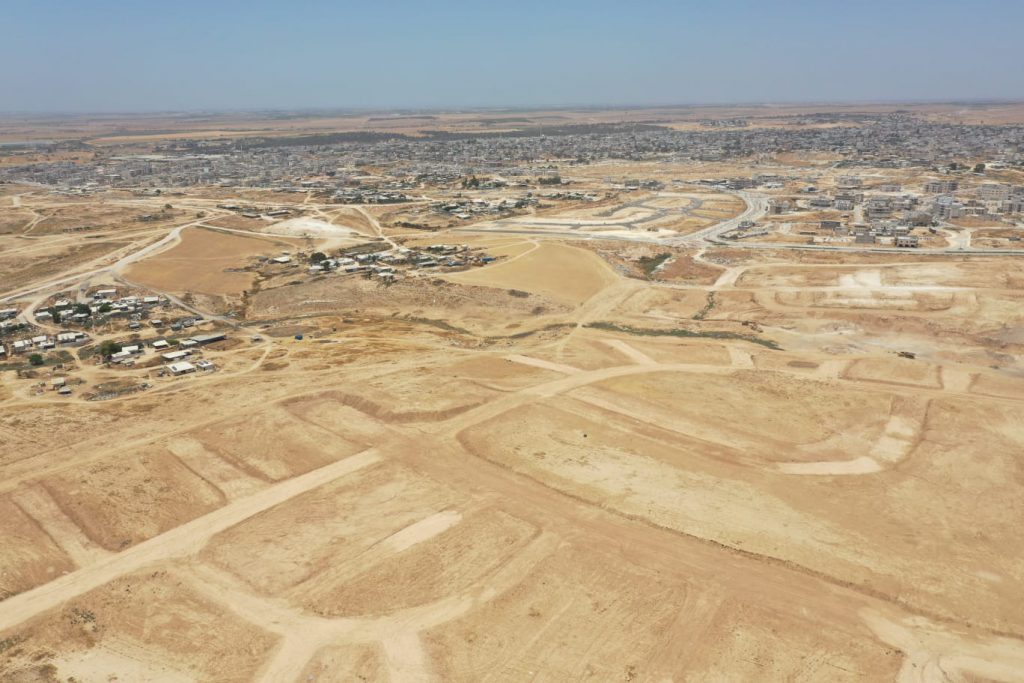
Aerial image of plots in south Rahat intended for the Abu Quider clan

Today (Wednesday, 8 June) the Supreme Court denied a petition filed by the Rahat Municipality – neutralizing one more attempt to sabotage the relocation of thousands of Bedouin squatters and the regulation of Bedouin settlement in the Negev. Regavim: “The Bedouin leadership itself is throwing the monkey-wrench into the works and obstructing the regulation process.”

Earlier today (Wednesday), the High Court of Justice (HCJ) rejected a petition submitted by the Rahat Municipality against the State’s decision to allocate plots of land in a new neighborhood for resettlement of members of the Abu Quider clan who have been squatting illegally on privately-owned land. The government decision to develop a new neighborhood in Rahat for this clan was taken many years ago, but has languished, unimplemented, ever since.

More than three decades have passed since an agreement between the Bedouin Authority and representatives of the Abu Quider tribe was signed. The plan was to resettle squatters in permanent housing in Rahat, but it was opposed by the municipality, which claimed that the land in question was needed for “natural growth” of the existing population of Rahat who would be at an unfair disadvantage if the Abu Quider agreement is upheld. Over the years, in the context of attempts to reach a compromise through mediation, Rahat’s municipal lines were expanded – at the expense of the neighboring Bnei Shimon Regional Council – in order to set aside plots for “natural growth;” the cost to the Israeli taxpayer was hundreds of millions of shekels.

Today’s HCJ decision refuted the Rahat Municipality’s claims that the resettlement agreement with the Abu Quider clan would result in discriminate against the residents of Rahat or create inequality. The Court determined that the steps taken by the Bedouin Authority were all fully within its purview; the Bedouin Authority has both the authority and the responsibility to develop new neighborhoods for the resettlement of squatters. The judicial panel, headed by Judge Khaled Kabub, was “unconvinced” that the authorities’ behavior was disproportionate to the extent that judicial intervention was required. At the same time, the Court upheld the State’s argument that Rahat’s land reserves are sufficient to meet the needs of natural growth for decades to come.

The decision clears the last remaining obstacle to the relocation of the squatters into the city and the return of the land commandeered by the Abu Quider clan to its rightful owners. It should be noted that Regavim and the legal owners of the land upon which the Abu Quider squatters continue to live petitioned the HCJ a decade ago. The legal process for that petition, which dragged on for years, resulted in a High Court decision that required the evacuation of the squatters and the return of the stolen land to its legal owners – but did not make specific demands upon the State to take action, due to the Rahat Municipality’s objections.

“Abu-Sahiban, the mayor of Rahat, is doing everything in his power to sabotage resettlement and regulation efforts,” says Meir Deutsch, Director General of Regavim. “During the long years of legal procrastination, the Rahat Municipality has extorted more and more land and ever-expanding development budgets with one hand, while with the other hand it has obstructed the state’s regulation efforts. Today, the High Court finally put an end to this. We hope to soon see the land in al-Zarnug returned to its rightful owners.”

The Regavim Movement’s recent High Court of Justice petition targeting Defense Minister Benny Gantz’s refusal to revoke an anti-Jewish law still in force in Judea and Samaria is approaching the next stage, and Regavim has released a video highlighting the issue.

“The situation is so ridiculous, it’s difficult to explain how it has continued for so long,” said Tamar Sikurel, Regavim’s spokesperson. “The State of Israel continues to enforce a law that discriminates against Jews and bars them from purchasing land in the heart of the Land of Israel. Discrimination of this kind would be immediately struck down in any other modern democracy – but here, in our ancestral land, the government of the Jewish state is afraid to protect the rights of the Jewish People. It’s an outrage, an affront to justice and equality, and a badge of shame”.

Nearly two months ago, the High Court of Justice issued a conditional order to repeal Jordanian Law #40 in response to a petition filed by the Regavim Movement; the government and the Minister of Defense were given 60 days to file arguments in defense of their continued enforcement of the law that prohibits the sale of land in Judea and Samaria to Jews.

As the deadline nears, the Regavim Movement has called upon Defense Minister Gantz to adopt the professional opinion of former defense ministers Lieberman, Netanyahu and Bennett – an opinion shared and supported by the Ministry of Defense’s experts and legal advisers – and repeal the racist law without delay.

“Defending this indefensible law will only add insult to injury,” added Sikurel. “Defense Minister Gantz – don’t wait for the High Court to intervene. Strike down Jordanian Law 40 today!”

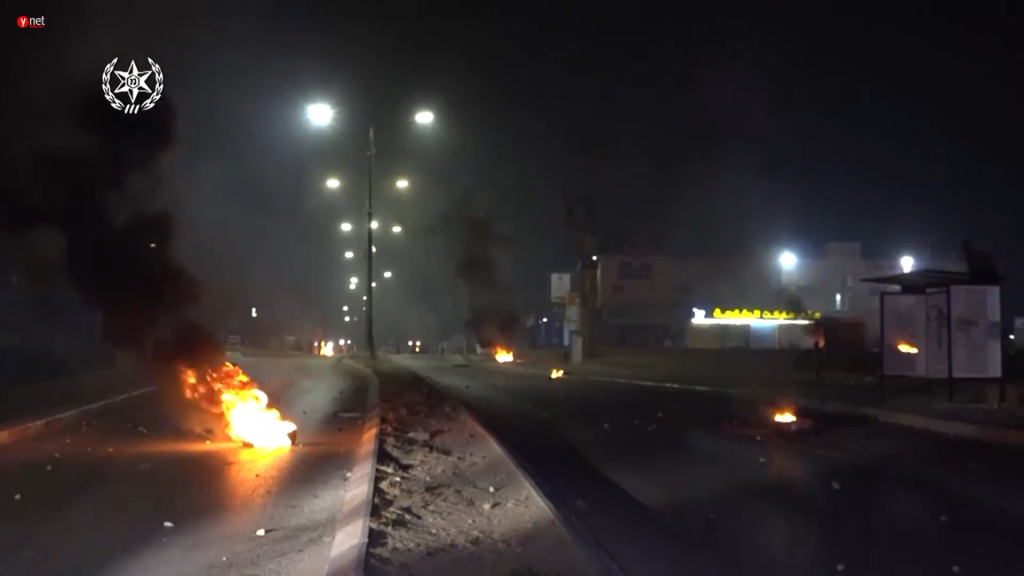
On 10 May 2021, the May riots, during the Guardian of the Walls operation, began throughout Israel. It all started when rockets were fired from Gaza on Jerusalem Day (Yom Yerushalayim), and continued in the form of lynches and attacks against Jews in mixed cities, riots on the streets of the Negev, violence and terror during a long and difficult week.

As soon as the riots in Lod broke out, we set up a ‘situation room’, together with My Israel, for the sake of the Jewish residents in mixed cities. We helped to organize volunteers: medics, drivers, armed ex-officers, caregivers, and more.

But it doesn’t end here. Since last year, the situation on the roads in the Negev hasn’t exactly calmed down, while shootings and violence in the streets of mixed cities haven’t stopped. The sense of security and safety among the public has taken a hit. And the public’s trust in the authorities has also been damaged. However, as an organization that’s been battling for the Negev for over a decade, we feel as though the public is waking up and understanding the challenge that Israel faces. The Negev issue has become important and significant in the Israeli public discourse. There’s an understanding that the Negev is a place worth fighting for. Although it’s become an ‘ex-territory’, the State of Israel can and must return to the Negev!

In the last year, we have initiated and participated in Knesset hearings about the erosion of governance. We have engaged policymakers, and taken them out to the field to see, discuss, and monitor the various issues in the Negev and elsewhere. We opened dozens of new cases relating to the authorities’ conduct during and after the May riots. We wanted to find out how many rioters were caught, how many criminal cases were opened, and how many indictments were filed.

We weren’t surprised to learn that the real problem today in the State of Israel is the legal system. While we were critical of the Police’s efforts (or lack thereof) during the riots, it should be noted that criminals were indeed arrested. However, the Courts released the criminals back into the streets without significant punishment, undermining the authorities, the rule of law, and Israel’s security.

Looking forward, it’s pretty obvious that the next round of violence is just a matter of time. The judiciary must undergo serious reform. The criminals must be given the message that there’s accountability. When you break the law and engage in violence, there must be heavy punishments that serve as a deterrent to others!

We must not let down our guard. Israel is our one and only homeland – and we shall always work to protect it.