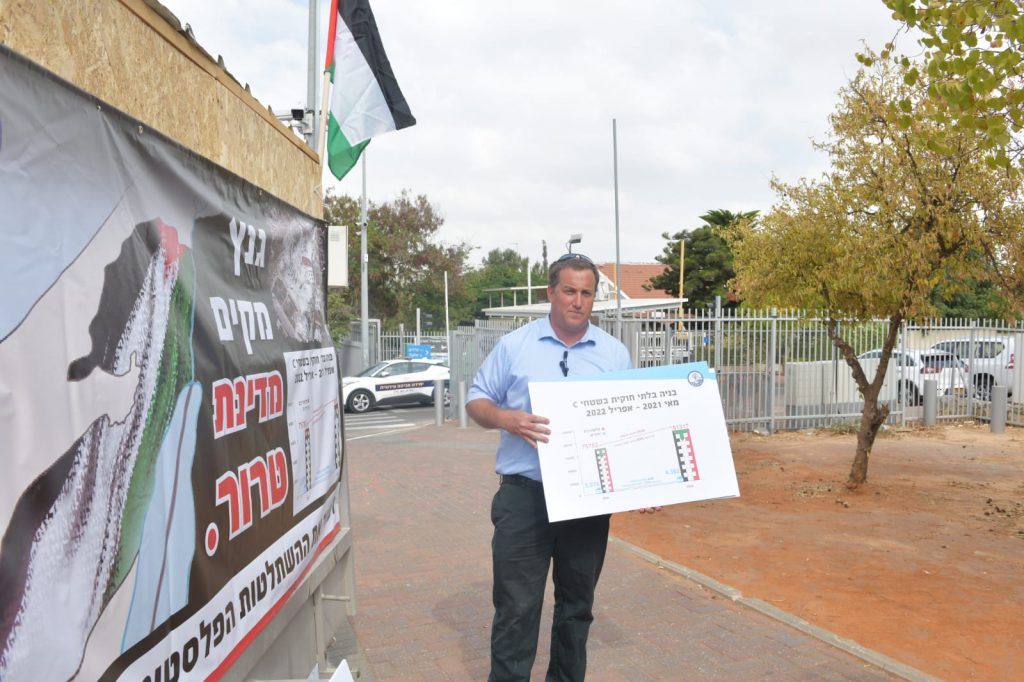
Standing outside Benny Gantz’s house, Regavim’s Meir Deutsch presents the latest data on illegal construction in Judea & Samaria
The Regavim Movement constructed a “Palestinian outpost” outside the home of Minister of Defense Benny Gantz – and within minutes were “evicted.” “Gantz is singlehandedly creating the Palestinian state.”
This morning (Monday), members of the Regavim Movement erected a structure, decorated with Palestinian and European Union flags, near the Rosh Ha’ayin home of the Minister of Defense. In a matter of minutes, municipal patrol units and a police enforcement team arrived at the scene and demanded they evacuate the area.
The structure was built as part of the launch of Regavim’s most recent report on the status of land in Area C of Judea and Samaria. The “War of Attrition 2022” report reveals that the rate of illegal Arab construction has increased dramatically over the past year.
Meir Deutsch, Director General of Regavim, presented the central findings of the new study: “During Benny Gantz’s tenure as Minister of Defense, 5535 new illegal Palestinian structures were built in Area C, the Israeli-controlled section of Judea and Samaria. Regavim conducts precise and in-depth analysis of the situation on the ground every year, and carefully monitors the spread of illegal construction. This month, when we completed our mapping and analysis of the most current data, we were shocked and appalled. Although we had strong suspicions that the situation was devolving, the facts are even worse than we imagined: Over the past year, the rate of illegal construction skyrocketed by 80%. Gantz is not merely abandoning Judea and Samaria, he is actively establishing a de facto Palestinian state. Israeli voters should make no mistake; the upcoming elections are about one thing: will a Palestinian state arise in the heart of the Land of Israel.”
A reportreleased by the Regavim Movement reveals that in 2022, illegal Palestinian construction in Area C, the portion of Judea and Samaria under full Israeli jurisdiction, increased by 80%. The report documents 5535 new illegal structures built in 2022, compared to 3076 structures in the same period in 2021. Regavim: “The Israeli government is creating a de facto Palestinian state.“
In 2022, illegal Palestinian construction in Area C of Judea and Samaria boomed, outpacing the already-alarming rate seen in 2021 by 80%. Regavim’s most recent report, based on data collected through meticulous fieldwork, aerial photography and GIS mapping, compared the situation on the ground in 2021 to that of 2022. The study covered the period of April 2021 through April 2022, analyzing the number of structures, the legal status of the land on which they were built and the jurisdictional lines dictated by international law.
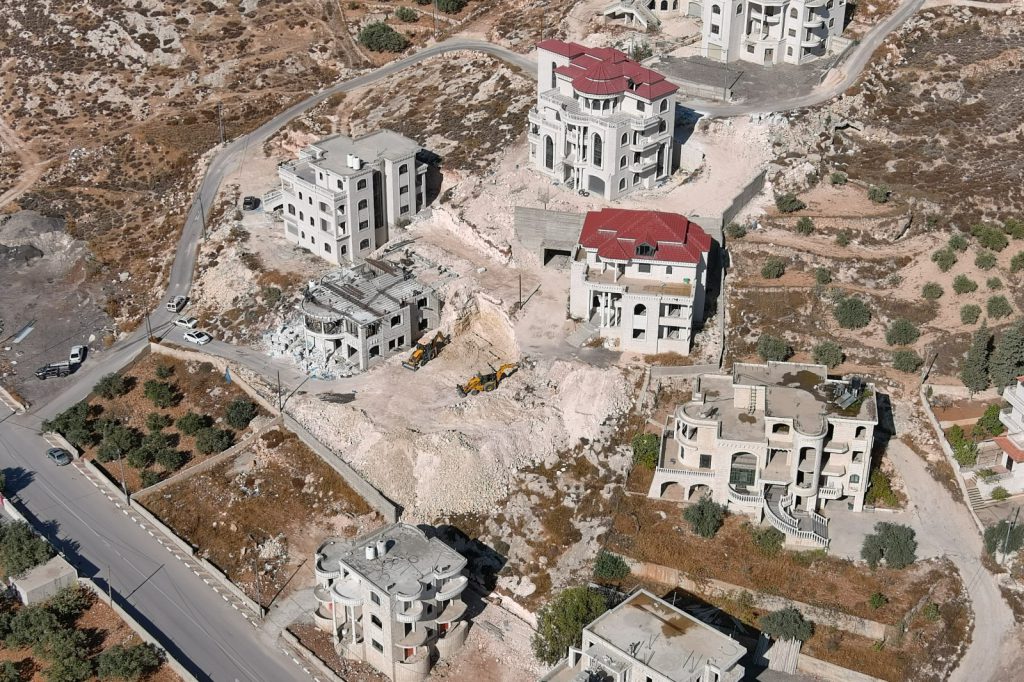
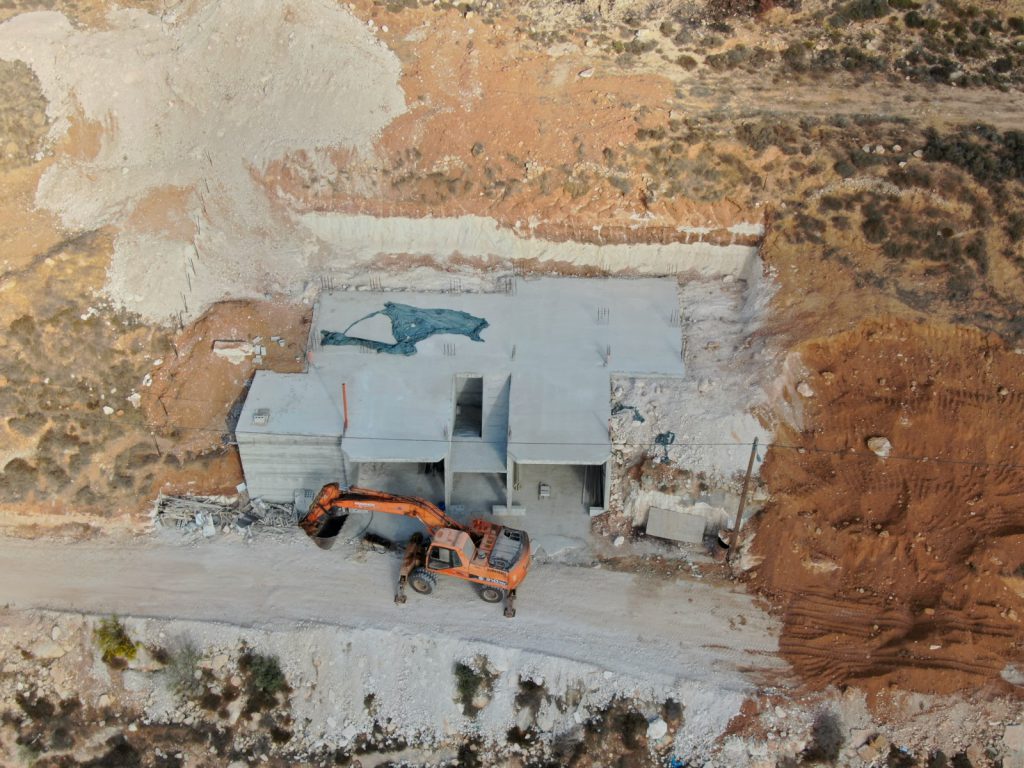
Regavim’s exhaustive study indicates that in comparison to previous years, the data for the most recent period are unprecedented, both in quality and quantity. The structures in built in recent months are not temporary shacks or makeshift shelters that characterized much of the illegal activity in earlier years; in 2022, new Palestinian construction is characterized by “palatial residences, sprawling holiday resorts, amusement and entertainment compounds and event halls, swimming pools and vacation villages, and high-rise residential and commercial towers.” In addition to the mass-scale construction, in many areas development and infrastructure work was carried out to lay the groundwork for future full-scale neighborhoods, such as at Khirbet Khattha near Tarkumiyeh and Lakef near Karnei Shomron.
Regavim studied construction patterns exclusively in Area C, the portion of Judea and Samaria placed under full Israeli jurisdiction in the Oslo Accords framework. At present, according to Regavim’s research, there are 81,317 illegal Arab-built structures in this area, covering an area of approximately 150,000 dunams – twice the total area of Jewish settlement in Judea and Samaria all told, legal and illegal. Illegal Jewish construction stands at 4,382 structures, of which 406 new structures were built in the time period of the new study. Although the disparity in number is striking, it is far overshadowed by the disparity in quality: Whereas illegal Arab-built structures are located in desolate, remote areas far from existing villages or settlement clusters, all of the illegal construction in the Jewish sector is located within the municipal “blue line” boundaries of Jewish settlements.
Analysis of the hard data reveals several additional important facts: Aerial photos show that in Areas A and B – the sections of Judea and Samaria placed under full Palestinian Authority civil jurisdiction under the Oslo framework, there are abundant empty spaces that remain undeveloped and completely un-utilized. Rather than developing these areas, Arab construction has continued to seep into the open spaces of Area C. Additionally, these same aerial photos leave no room for doubt: Arab construction is neither random nor haphazard. Construction is strategically placed, in accordance with the Fayyad Plan, according to pre-established criteria and objectives: Creating contiguous Arab settlement – a pattern that is particularly pronounced in northern Samaria; isolation and strangulation of Jewish communities; construction on the route of planned traffic arteries such as the Funduk Bypass Road and the Tekoa–Ibei HaNachal Access Road in eastern Gush Etzion; construction alongside existing highways, including Route 55 and Route 60, the main roads of Samaria and Judea respectively.
The Days of Awe are upon us – a time for taking stock, personally and collectively – which makes all of us at Regavim particularly proud of being chosen as the Jewish Press “Man of the Year.”
For over 16 years, Regavim has been waging the battle to protect Israel’s most basic resources and to preserve Israeli sovereignty. With a solid, significant impact on Israeli public policy and discourse and a reputation for impeccable fieldwork, uncompromisingly precise data collection and analysis, precedent-setting legal activism and forward-thinking, comprehensive solutions to the most serious challenges facing Zionist policy – we truly are “the most grownup … NGO in the room.”
**
On Yom Kippur, the holiest day in the Jewish calendar, we pray: “Avinu Malkeinu… inscribe us in the Book of Merit”
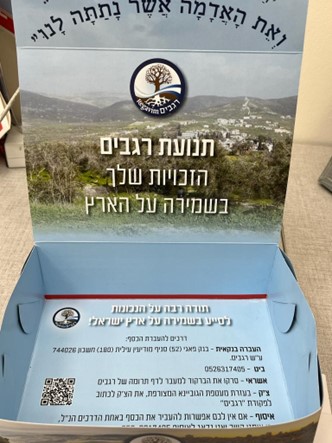
Support Regavim – and merit a share in protecting the Land of Israel. Look for Regavim’s Pidyon Kaparot collection box in synagogues throughout Israel – or dedicate your Yom Kippur donation to supporting another year of activism to protect our precious Homeland. Simply click here to make a tax-exempt donation.
On Thursday afternoon (29 September), shots were fired at Regavim’s Field Coordinator for Judea and Samaria.
On a routine field patrol near Kiryat Arba, Regavim’s Field Coordinator for Judea and Samaria and the Municipality’s Land Protection Officer were targeted by gunfire. The incident ended without casualties. Regavim’s Field Coordinator, Menash Shmueli, alerted security forces who are combing the area in search of the terrorists.
The field team was documenting a new phenomenon in Area C: the creation of cemeteries in open areas, as another element in the massive takeover of land by the Palestinians to create Arab territorial contiguity while isolating and suffocating Jewish communities and disrupting their access to major traffic arteries.
Today we got a close-up view of how the battle for Area C, which we have been sounding the alarm about for years, morphs from illegal construction and seemingly-innocent agricultural expansion into life-threatening live fire – all in the blink of an eye.
In the video that was being filmed on location, the sounds of gunfire can be heard clearly in the final seconds.
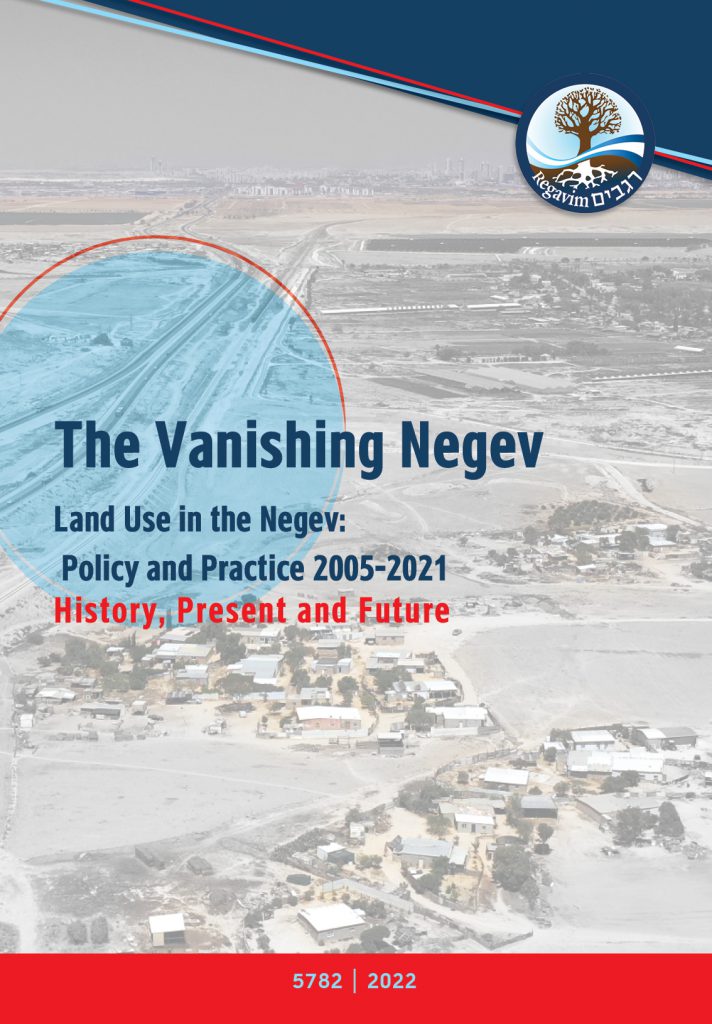
Our most recent report, currently being translated into English, is an in-depth, up-to-date study of land use policy in the Negev, offering a comprehensive survey of the history and land ownership claims of the Negev Bedouin community, settlement and regulation efforts and the current realities created by illegal construction and more.
This report offers multi-disciplinary analysis – and presents Regavim’s proposed solutions for the Negev Challenge. To read the full version in Hebrew, click here.
EXECUTIVE SUMMARY:
Regulation of illegal settlements and land ownership The Vanishing Negev report is a study of mass-scale illegal construction in the Negev, focusing in particular on the development of this phenomenon in the years 2005 – 2021, and on the means by which settlement in the region can be regulated and organized.
The question of regulation of the illegal settlements of the Negev is integrally related to the issue of land status regulation in this region. As of this writing, there are approximately 470,000 dunams of land in the Negev for which Bedouin maintain unresolved ownership claims. These claimants hold no official title or deed, and the land is not registered to their ownership; nonetheless, within the Bedouin community, their ownership is considered inviolable: According to Bedouin law, no one may settle on land that another Bedouin claims as his own, whether or not it is officially registered as the property of the State of Israel or another individual.
These issues impact many other areas, from the Bedouin community’s standard of living, through the regulation of settlement and the development of the Negev for the benefit of all residents of the region, to the erosion of governance in the Negev.
As of January 2021, the Bedouin population of the Negev is 278,616. Of this number, 82,084 reside in illegal settlements and 174,420 in the seven townships; the remaining 22,112 live in the rural regional municipalities (the Abu Bassma settlements).
The fertility rate of the Bedouin population of the Negev is the highest in Israel, and among the highest in the world. As a result, the population of the illegal encampments and the number of new illegal structures that comprise these sprawling clusters of settlement increase at a rapidly accelerating pace each year. At the same time, the number of ownership claimants – the descendants of the original claimants – continues to grow exponentially, making efficient, timely resolution of ownership claims and regulation of illegal settlements increasingly urgent.
From the establishment of the state until 1966, the Bedouin, who maintained a nomadic lifestyle, lived under military rule in an area known as “sayig,“ spanning some 1.1 million dunams in the triangle between Dimona, Arad and Beer Sheva. In 1966, military rule was lifted, and between 1966 and 1990 the state established 7 all-Bedouin towns (each with the status of a local municipality): Rahat, Tel Sheva, Segev Shalom, Hura, Ar’ara, Kseifeh and Lakiya (“the 7 townships“).
The westernized character of these townships did not necessarily reflect or respond to the social and cultural characteristics or the needs of the Bedouin population. These townships suffered from chronic deficiencies of municipal services and employment opportunities, and to this day they continue to languish at the bottom of the socio-economic scale. As a result, many of the residents of the illegal encampments refused to relocate to these failed communities.
Additionally, nearly 45% of the area of the seven townships is comprised of land for which individual Bedouin claim ownership, and a considerable portion of the residential plots developed or zoned by the government are on this land, resulting in the Bedouins’ refusal to relocate to these plots, and ongoing obstruction of development and infrastructure projects. For these reasons, the seven townships continue to suffer from inferior infrastructure systems and desolate neighborhoods that coexists alongside populated, developed ones. After years of stagnation, most of the plots for which there are ownership claims were designated for “natural growth,” – for descendants of the claimants – rather than for resettlement of families that remained in the illegal squatters’ camps outside the township boundaries, creating a shortage of plots for relocation of Bedouin who are not descendants of land claimants.
The Abu Bassma Settlements The government sought a solution for the Bedouin residents of the illegal encampments, but rather than creating organized communities through a careful process of detailed planning that would provide electricity and sewage infrastructure, the government took the path of whitewashing or legalizing existing clusters of illegal structures, cobbling them together to form municipalities. From 2003-2006, these illegal clusters were given official recognition and post-facto permits as new rural municipal entities. One exception was Tarabin a-Sanaa, which was planned and built in an organized fashion, “from scratch,” on registered state land. In 2003, the Abu Bassma Regional Council was established, bringing together 11 of these “legalized” villages.
In 2012, the Abu Bassma Regional Council was divided into The Al Qassum Regional Council, which includes Umm Batin, El Sayyed, Darijat, Kohlah, Sa’wa (formerly Molada) Makchul and Tarabin a-Sanaa, and the Naveh Midbar Regional Council, comprised of Abu Qrenat, Bir Hadaj, Kasr a-Sir, and Abu Tlul.
Very quickly, the land reserves designated for these villages was filled with illegal structures, including massive villas, agricultural structures, commercial structures, fenced-off areas and more – in order to stake claims to the land that would soon be within the boundaries of the soon-to-be-established villages. The new structures joined hundreds of others that pre-dated the “legalization” plan, all of which interfered with -and eventually overwhelmed the planning process. The result was large settlements spread over vast swaths of land, with no viable infrastructure systems and no possibility of creating them. Some of these settlements developed characteristics of rural communities, while others resemble massive illegal squatters’ camps rather than new legal settlements.
Other than the Bir Hadaj and Tarabin a-Sanaa villages, which were established for the most part on state land, the legalized settlements include sections for which there are outstanding ownership claims. This, too, has made it difficult for the government to develop these communities, to connect them to water and electricity, or to complete the process of physical regulation; efforts to do so have been blocked by ownership claimants. Additionally, because the land cannot be officially registered due to these ownership disputes, the Israel Lands Authority does not grant the approval necessary for building permits.
In order to encourage Bedouin from the illegal encampments to relocate to these legalized settlements, the government offered economic incentives. Since the 1970s, every young Bedouin is entitled to a parcel of land between 800 – 1000 square meters – gratis – as well as subsidies to cover the costs of development. Over the years, the state has increased these incentives, which currently include a cash grant of NIS 250,000 in addition to the free plot of land.
In practice, the incentives have achieved the opposite of their intended goal. Because the incentives are a one-time offer per family, and these families are well aware that the value of the plots of land continues to rise and the incentive payments continue to be more and more generous, they choose to wait until their children come of age, at which time they will be eligible individually. When these children come of age, they, too, consider the next generation – and remain in the illegal squatters’ camps. This is exacerbated by the fact that the legal communities are not an attractive alternative to the squatters’ camps: The standard of living is no different, and the basic services provided to residents are virtually identical – but residents of the illegal encampments pay no taxes. In fact, there is considerable reverse emigration, from the legal communities to the illegal encampments.
Rather than shrinking, the illegal encampments continue to grow, both in size and population – not despite the relocation-compensation package offered by the Israeli government, but because of it.
Illegal construction From the end of the military rule in 1966 through 1994, every year another 200-300 new illegal structures were built in the Negev. From 1994 through 2003, an average of 3,000 new illegal structures were built annually. In 2005, there were 33,783 illegal structures in the Negev; between 2005 and 2010 another 14,700 were added to that number. By 2015, there were 65,911 illegal structures in the Negev, and in the following two year period, by 2017, an additional 11,529 were added – an annual average of more than 5,750 . By 2018, there were 80,282 illegal structures in the Negev, of them 18,661 in the Abu Bassma settlements and 61,621 in the illegal encampments. In the 2018-2021 period, another 5,774 illegal structures were built, so that by 2021 the total number of illegal structures in the Negev stood at 86,056.
Illegal Structures in the Negev 2005-2021
The structures of the illegal encampments, home to 82,000 Bedouin (comprising less than 1% of the total population of the State of Israel), are spread across some 2,00 cluster that cover nearly 600,000 dunams (600 square kilometers). By way of comparison, the remaining 99% of Israel’s population populates an area of some 940 square kilometers (the total built-up area, including residential, commercial, industrial, trade and office structures). The area of the illegal squatters’ camps is 11.5 times greater than the area of Tel Aviv, where some 460,000 people live.
The consequences of the rampant illegal construction in the Negev are far-reaching and long term, and include very serious harm to the State of Israel’s governance in the Negev, where the rule of law has broken down. It also has a detrimental impact on planning and development of the Bedouin communities and on the Negev as a whole, both in the short term and for future generations. It has a very negative impact on the quality of life, and leads to rising levels of violence and crime, as well as an extraordinarily high rate of road accidents, and harms the environment and the ecosystem.
Government attempts to resolve ownership claims
Until 1979, some 3,200 ownership claims were submitted by Bedouin citizens in the Negev, covering an area of 776,856 dunams. The Israeli government’s policy regarding these claims has zigzagged: At times, the state attempted to resolve ownership claims through the judicial process, including submission of counter-claims as a means of precipitating a judicial decision; in every case the counter-claims process resulted in registration of the disputed land to state ownership. Other times, the state suspended the process of judicial counter-claims and incentivized Bedouin squatters to settle ownership claims through arbitration and compromise, relying on cash and land-swap compensation packages that become more and more lucrative over the years. Either way, the process of resolving ownership claims has been a slow, painstaking one. As of 2017, a full 50 years after the ownership claims were first filed with the special registrar’s office in Beer Sheva, the State of Israel had managed to reach agreements and resolve claims for only 160,000 dunams (with the largest number of agreements recorded in 1980, in the context of the peace treaty with Egypt, when Israel Airforce bases had to be relocated from the Sinai Peninsula to the Nevatim Airforce Base and some 5000 Israeli Bedouin who had been squatting on the land had to be relocated quickly). There were also legal proceedings conducted regarding 140,000 dunams, at the end of which the land was registered to the State of Israel. Some 470,000 dunams of land remain in dispute. As time goes by and claimants’ heirs come of age, the number of claimants continues to grow, as we have noted, making compromise and resolution of ownership claims less and less attractive and lucrative to those who now hold an interest in only a fraction of the original claim.
In an attempt to establish a comprehensive policy for dealing with the Bedouin sector in the Negev, including the issues of land that we have described, over the years a number of committees and other frameworks have been established; each presented its own proposals, plans and documents. In practice, the core challenges were passed from one committee to the next, and from one government to its successor, without formulation of a comprehensive policy and without formulating a multi-year, budgeted program. The breakthrough came with the Goldberg Commission, which the government established in order to formulate policy for the regulation of Bedouin settlement in the Negev, including legislative amendments. The conclusion of the Goldberg Commission’s report, presented to the government in December 2008, was that the problem of settlement and the issue of resolving ownership claims were intertwined, and that it would be impossible to resolve one without the other.
In regard to settlement, the committee recommended “recognizing” clusters that were large enough to subsist as municipalities, and relocating those clusters that could not be regulated or legalized, subsuming them within legal townships or rural settlements. Addition recommendations included establishing an enforcement framework that would act vigorously and decisively against new illegal construction, streamlining and concentrating enforcement authority, and fast-tracking legislation to carry out the processes of legalization and relocation.
In light of the Goldberg Commission’s recommendations, a team, headed by Ehud Prawer, Director of the Planning and Policy Division in the Office of the Prime Minister, was tasked with implementing the Goldberg Commission’s recommendations, and the Prawer Committee submitted draft legislation for regulation of Bedouin settlement in the Negev. When the government passed the bill, it appointed Minister Binyamin Zeev Begin to lead the implementation process, and passed a government decision to launch a five-year plan with a budget of NIS 1.2 billion for the social and economic development of the recognized Bedouin settlements in the Negev and to provide support for the population of those settlements. Minister Begin launched a “listening process,” sitting down with hundreds of representatives of the Bedouin community, which he summarized in a report that included a series of amendments to the legislation submitted by the Prawer team – for the most part mandating increased incentives and compensation packages. Begin, like Goldberg, stressed that the questions of Bedouin settlement and land ownership claims were inextricably related, and he warned against any further delay in regulating and registering the ownership of the land in the Negev.
In 2013 the government submitted the legislation, “Law Concerning the Regulation of Bedouin Settlement in the Negev 5773 – 2013.” In December 2013, against the backdrop of fierce opposition to the legislation by representatives of the Bedouin community and Members of Knesset who spoke for them, and in light of changes made to the original wording of the legislation that were not to his liking (based on recommendations of the Regavim Movement), Minister Begin decided to withdraw the bill.
The resulting legislative vacuum, exacerbated by the government’s failure to formulate and communicate coherent, cohesive policy, continues to be filled by a variety of organizations; operative issues, such as land offers, compensation ceilings, relocation incentives and formulas for compensation of claimants were determined by unilateral decisions of the Israel Lands Authority.
In 2015, Uri Ariel was appointed Minister of Agriculture, and was given ministerial responsibility for the Government Authority for Regulation of Bedouin Settlement in the Negev (“the Bedouin Authority”). In 2017, Minister Ariel decided to change the approach and to separate the settlement issue from the resolution of ownership claims. He developed a large-scale plan, and the government adopted it as its Five-Year Plan for Socioeconomic Development of Bedouin Society in the Negev 2017-2021, with a budget of NIS 3 billion. The plan’s objectives included improving the socioeconomic status of the Bedouin population, development and stabilization of the settlements from an economic, social and communal perspective, closing education and other gaps and mainstreaming the Bedouin population in Israel’s society and economy.
Regarding development of the settlements, Minister Ariel’s goal was to complete planning, regulation, development and marketing of 25,000 residential units in the local municipalities. To meet this goal, tens of thousands of plots of land were prepared and marketed, while at the same time enforcement against new illegal construction was significantly increased.
But there was a catch: The plots that were planned and marketed went mainly to “natural growth,” meeting the needs of the second generation of the families that were already living in the legal communities. Thousands of other plots were essentially “whitewash” projects within the Abu Bassma villages or post-facto legalization of “internal squatters’ camps” (in other words, structures that had been built illegally within the municipality borders, either violating or disregarding the municipal plans that had been approved for the settlement). Once again, the government stuck to the path of legalization, with the myriad deficiencies detailed in the pages above, rather than leading a methodical process of planning.
While these decisions were taking shape, enforcement was lagging far behind the pace of new illegal construction throughout the Negev – very far behind. Even worse, due to the lack of comprehensive policy and clear enforcement guidelines, whatever enforcement was carried out served the goal of legalizing internal squatters’ clusters, rather than serving the original purpose of resettlement of squatters from the outlying encampments into the legal communities and returning poached land to state hands.
In short, the relocation of squatters out of the sprawling illegal encampments into legal communities was neglected; the failure to make the necessary preparations for absorbing the squatters into legal communities was coupled with failure to enforce the law against new illegal construction in the illegal encampments.
The attempts made by Prawer, Begin and Ariel each had deficiencies and difficulties; the most critical of these lacunae were:
1. Inconsistent, zigzagging policy regarding resolution of ownership claims;
2. Failure to consider Bedouin traditional law, which was not taken into account in the planning of the seven original townships, was given no consideration in the process of legalizing the Abu Bassma villages, and is not a consideration in proposed solutions for absorption of relocated squatters;
3. Lack of comprehensive policy and clear, detailed law enforcement plans against illegal construction and for the evacuation of squatters’ camps. The “carrots” offered by each of the plans were hungrily consumed, but the “sticks” were left propped in a forgotten corner of the room.
These lacunae have had direct and immediate consequences:
1. The State of Israel has not yet succeeded in resolving ownership claims, and no resolution of this problem is in sight.
2. Infrastructure in the legal settlements – and particularly in the Abu Bassma communities – is severely lacking. Some of these legal towns and villages contain large sections of desolate, phantom neighborhoods and roads that lead nowhere; other sections bear far more resemblance to squatters’ camps than to normal, modern settlements.
3. Illegal construction is out of control, and the population of the illegal hinterland is growing by leaps and bounds.
A broader consequence of the massive scale of illegal construction in this region is that the State of Israel is losing its governance in the Negev. For all intents and purposes, the situation has devolved into a free-for-all, reflected in skyrocketing crime rates, high rates of truancy and attrition from the education system, a very high incidence of polygamy, and more. Disenfranchisement among Bedouin teens and young adults and the widening chasm between Bedouin society and Israeli society at large are expressed in shrinking rates of conscription to the IDF, a highly disproportionate rate of involvement in serious road accidents, and a general atmosphere of lawlessness that is victimizing the residents of the Negev and beyond – Bedouins and Jews alike.
The State of Israel must take courageous, swift action in four specific areas:
1. Policy:
The government must establish and promote clear policy, and create a an independent policy body within the Office of the Prime Minister tasked with formulating and enunciating comprehensive policy parameters to be implemented consistently over the coming years.
2. Development of settlements:
a. Planning and preparation of settlements to absorb residents of all of the illegal encampments;
b. Expansion of existing settlements exclusively on state land for which there are no unresolved ownership claims, based on the availability of land in each of the settlements.
3. Regulation of the illegal encampments and enforcement against illegal construction:
a. Create a methodical multi-year plan for the resettlement of residents of the illegal encampments in permanent, legal communities, according to a detailed, predetermined map (either to single-tribe settlements, or to an urban, pan-tribal settlement) and according to a non-negotiable timetable upon which compensation will be contingent. b. A clear, detailed program for regulation of the illegal construction in the Abu Bassma villages and demolition of structures that cannot be given permits or whose owners are not interested in legalizaing.
c. Increasing manpower in enforcement bodies, improving for regulation-related enforcement and enforcement against illegal construction.
4. Resolution of ownership claims:
a. A final, non-negotiable timetable must be established for resolution of ownership claims with a scale of compensation that is lowered as time goes by. When the time allotted for negotiation expires, the government must resume the process of judicial counter-claims and the registration of land to state ownership.
***
Time is running out. It’s time to shake off the indifference. We need courageous, dedicated, strong and responsible leaders who are not afraid to carry the weight of this process and who have the necessary strategic vision to act. It’s time to return the State of Israel’s governance to the Negev.
**
Regavim has been studying, documenting and recommending solutions for the Negev for over 16 years. Our Director General, Meir Deutsch, recently published a book that offers an insider’s view of the situation on the ground. Order your copy today.
Each year, as the New Year approaches, we at Regavim take a moment for introspection – as individuals and as members of the larger circles of our lives: family, community and nation. We look back on the year that has passed, and look ahead to the year that lies just around the corner.
The cusp of the new year also gives us an opportunity to thank you for your support over the course of the past year, and for your continued interest and participation in Regavim’s Zionist activism.
From our perspective, this past year was particularly challenging – which made our achievements, attained through constant, Sisyphean effort and unwavering focus, all the more significant.
In some cases, success was measured by our ability to prevent potentially catastrophic developments: We blocked dangerous initiatives by the Ra’am Party that would have had far-reaching, devastating impacts on the Negev. In other cases, our success created positive new realities: We helped formulate and promote the government decision to establish new communities in southern Israel while protecting our national land resources. We mobilized a coalition of organizations to fight the scourge of illegal quarrying in Judea and Samaria. We trained and mentored municipal land-protection specialists in the Judea and Samaria municipalities. Our very significant input resulted in the State Comptroller’s paradigm-changing report and recommendations, “Aspects of Governance in the Negev.” Thousands of copies of our most recent publication, “Bedouistan: How the State of Israel is Losing the Negev,” were sold, and this overview of our work has become a must-read for Israeli legislators and the public at large.
For all this, and so much more, we thank you.
At this very special time of year, as we do throughout the year, we remind ourselves that our work, our achievements, and the strength to face the challenges ahead are made possible by God’s help and your support.
May you and yours be blessed with a sweet and fulfilling new year, good health and good news.
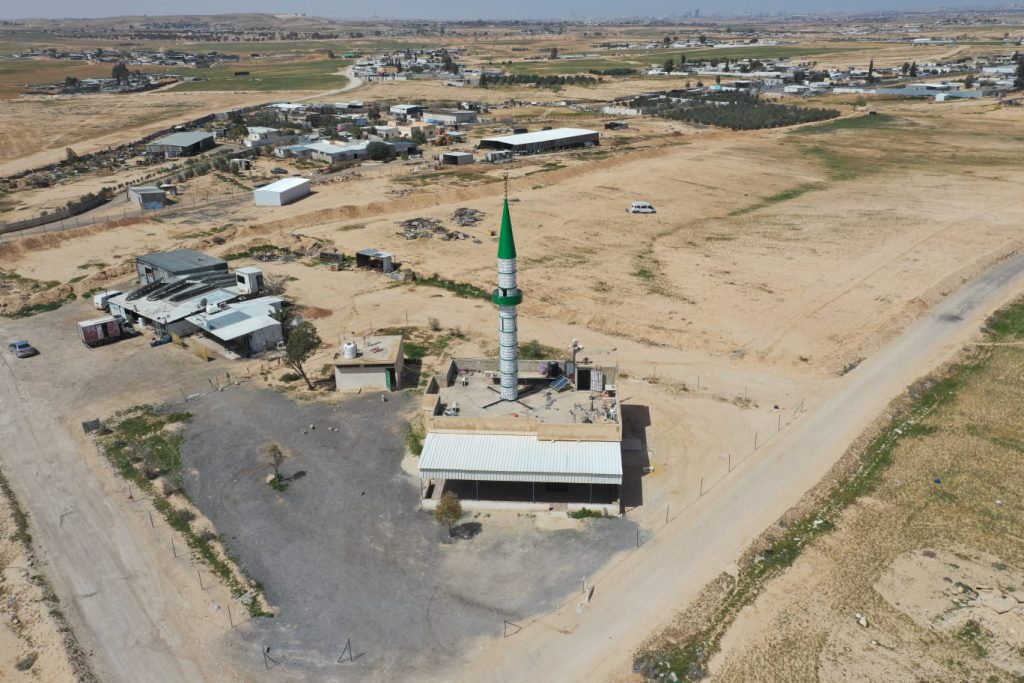
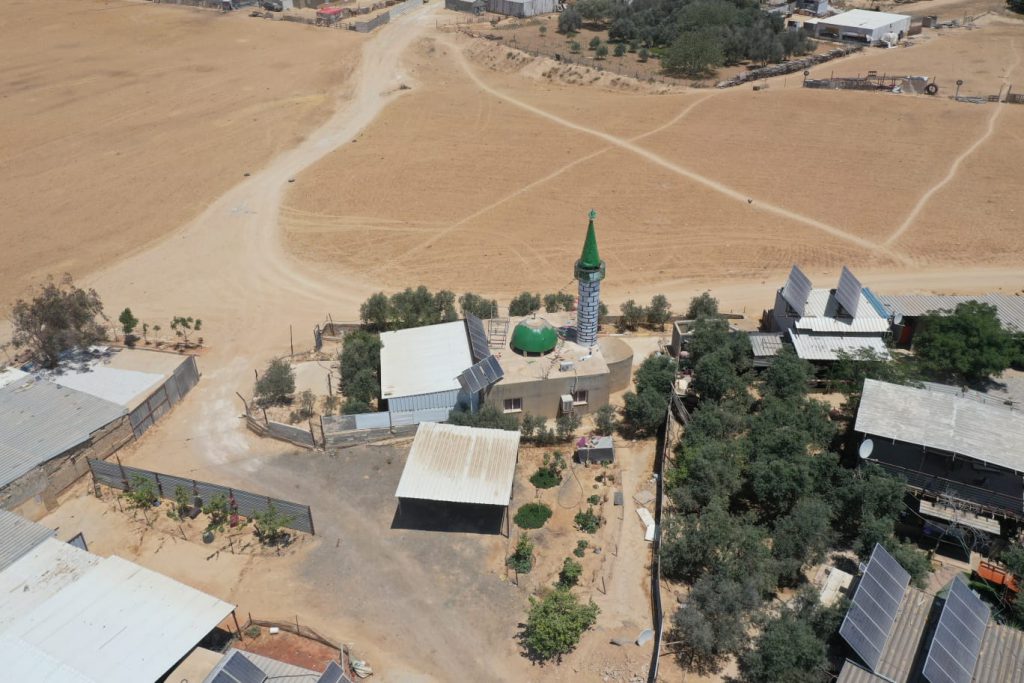
It all started a few months ago. Our field coordinator in the South discovered at least six new, identical, and illegal mosques constructed in the Negev, one after the other.
Not long afterward, we got our hands on a video clip that documented a group of Palestinian infiltrators hiding in one of these mosques until it was “safe” to leave.
An investigation by Hakol HaYehudi exposed that Sheikh Ali Sulieman Abu-Sebith is the man behind the project. The Sheikh is part of the Islamic Movement and funded the minarets.
During Operation “Guardian of the Walls” last year he wrote: “Rockets from Gaza are showering down on the State we are fighting against”.
In another post he expressed his wish that “From the mountain, the plan and the valley will arise a generation of the heroic and the free. A generation of Al-Aqsa protectors. From the Triangle region, the Galil and Palestine. All our Palestinian. Not divdied by geographical borders, weapons or army, united around the Nakba which inshallah will soon pass”.
In the last few years, Bedouistan has changed: from nomadic Bedouin tribes unaffiliated with any religion or nationality, we’re now seeing Islamization and Palestinian nationalism. These mosques are only the tip of the iceberg.
¹Watch: 8 infiltrators are smuggled from the heart of Judea & Samaria to the Negev, skipping past IDF forces posted nearby.
To avoid being caught by the security forces, the infiltrators hid in an illegal mosque that we recently reported about to the authorities. >> pic.twitter.com/rfsFQpUP7g
There seems to be no limit to the hypocrisy and double-talk to which Israeli voters are being exposed in this election season.
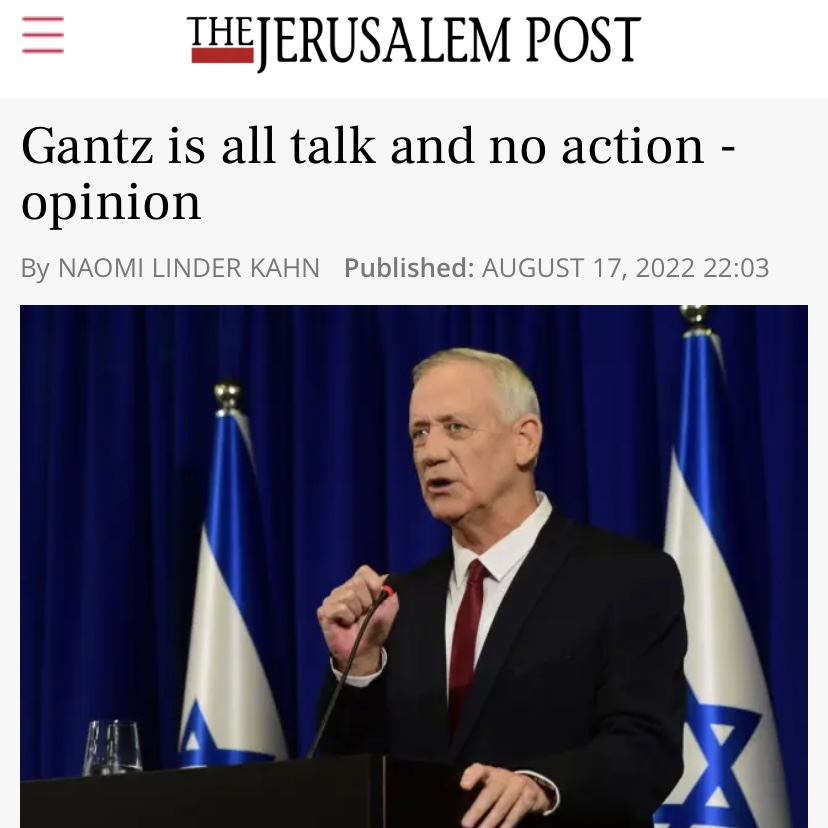
This week’s installment of double-speak came from no lesser a luminary than Minister of Defense Benny Gantz, who is quickly proving himself to be a master of the genre. Speaking from the podium of the Knesset plenum, Minister Gantz, who has held this position for three years under as many Prime Ministers, is the man responsible for waging and winning Israel’s Battle for Area C, the section of Judea and Samaria under full Israeli jurisdiction under international law.
In the three years of Gantz’s tenure, Israel’s activities in Area C, which require resolute action to uphold the stated policy of the Israeli government, have degenerated to the point of being virtually non-existent. Rather than confronting the relentless takeover of the territory by the Palestinian Authority with a show of force, under Gantz’s command, protection of Israel’s vital interests in the region has become a show and a farce.
At last count, over 100,000 dunams of Israeli state land in Area C have been overtaken by hostile concerns as the Israeli government purposefully ignores what is happening right under our noses. Through a clearly-stated program of illegal construction and agricultural projects, the Palestinian Authority has accelerated the already-staggering pace at which it is creating a de facto State of Palestine in area C of Judea and Samaria.
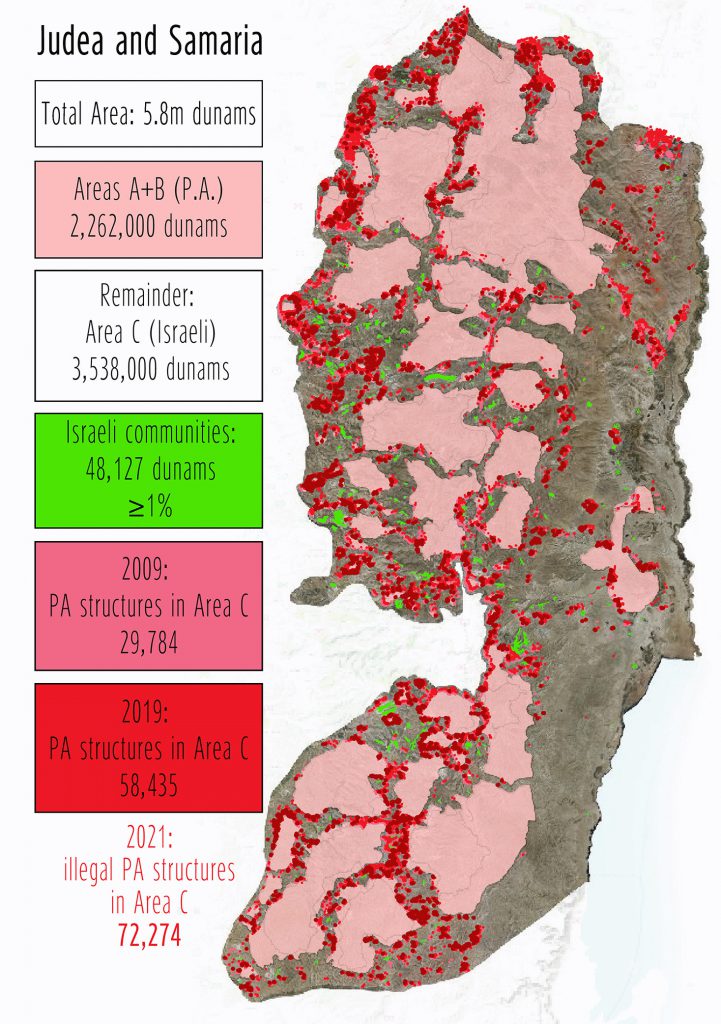
Analysis of aerial photography indicates that as of December 2021 Palestinians had built 70,000 illegal structures in Area C – averaging 7 new illegal structures every day, day in and day out. According to United Nations data, which are notoriously skewed against Israel, the sum total of all demolitions carried out by Israel’s Civil Administration in Area C in the past 13 years (1 August 2009 – 1 August 2022) is 6,802. Of this paltry 10% of illegal structures, the vast majority were insignificant agricultural or commercial structures, amounting to “cosmetic” demolitions.
Nonetheless, earlier this week our Minister of Defense stood at the Knesset podium and delivered a classic electioneering speech, touting his dedication to law and order and even-handed enforcement. Without batting an eyelash, Gantz drew a specious parallel between illegal construction in the Jewish and Arab sectors in Area C – an equivalence so far-fetched as to be akin to a blood libel.
Illegal Palestinian-sector construction in Area C – planned, funded and carried out by hostile foreign concerns with the expressed intention of ridding all of Judea and Samaria of any Jewish presence, as per the precedent set by the Jordanians during their illegal 19-year occupation – bears no resemblance to construction violations committed by Jews in Area C. Any and every parameter of comparison illustrates the absurdity of Gantz’s statement: The extent of illegal construction in each sector, the rationale and impetus for that construction, and most particularly the wildly divergent rates of enforcement against illegal construction, leave no room for any comparison.
Never has such cynical sloganeering so abused the concept of equal and universal law enforcement. Never before have the Jewish communities of Judea and Samaria been subjected to such outrageous, slanderous and unfounded comparisons with those who seek our eradication. Never in Israel’s history has a Minister of Defense had so poor a grasp of the importance of controlling strategic ground. Benny Gantz’s double-speak in the Knesset was an apt reflection of his “policy” as Minister of Defense: pathetic, infuriating – and dangerous.
Regavim’s diagram that demonstrates the illegal Palestinian construction in Area C
An extravagant event hall built illegally, documented by Regavim
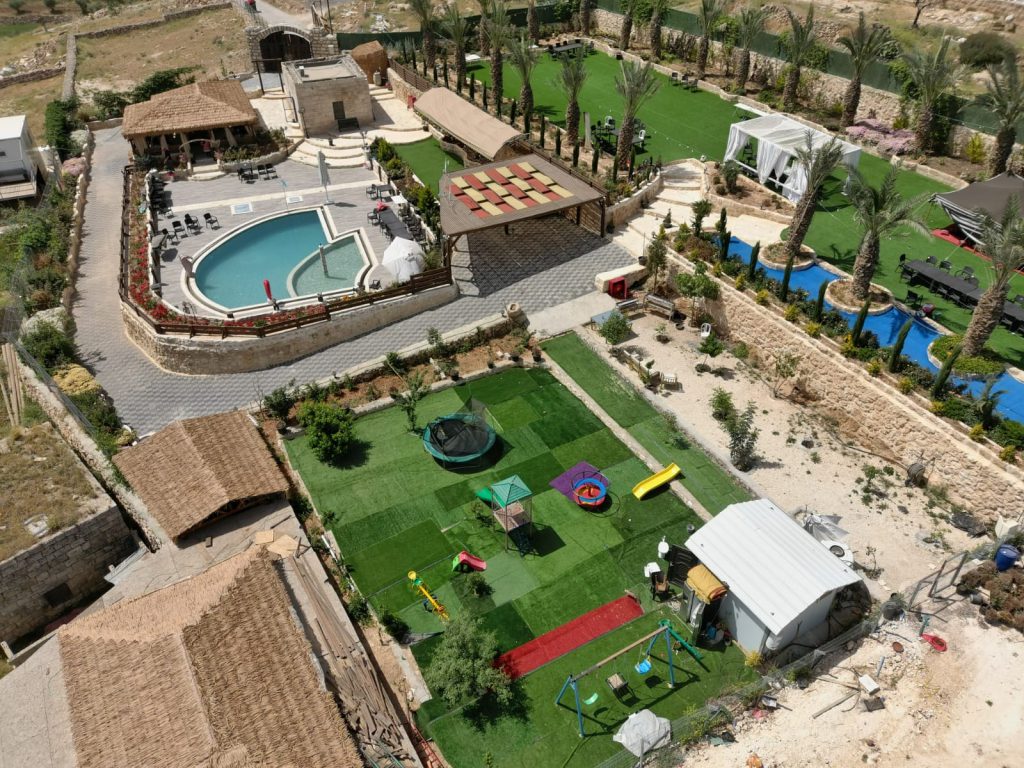
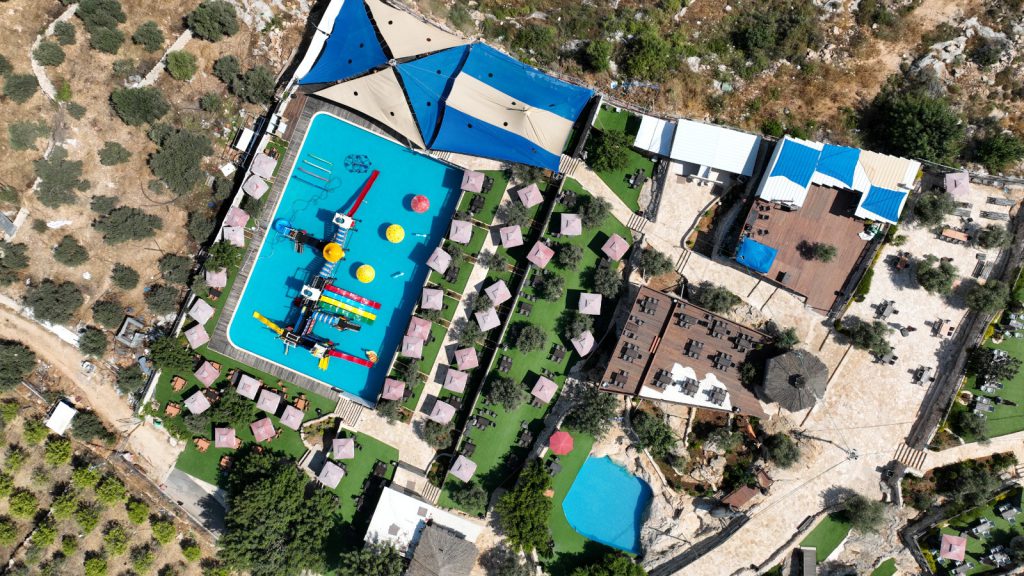
In recent months, we’ve documented the illegal construction of a Palestinian water park in Area C, the portion of Judea and Samaria under full Israeli jurisdiction.
The complex, which opened this summer, is located just 200 meters away from a major road in the heart of Area C, and has a large lawn, pools and facilities, including a massive parking lot where hundreds of people arrive every week to enjoy the attractions that were built without permits or supervision.
An aerial photo of a water park built illegally by Palestinian Arabs
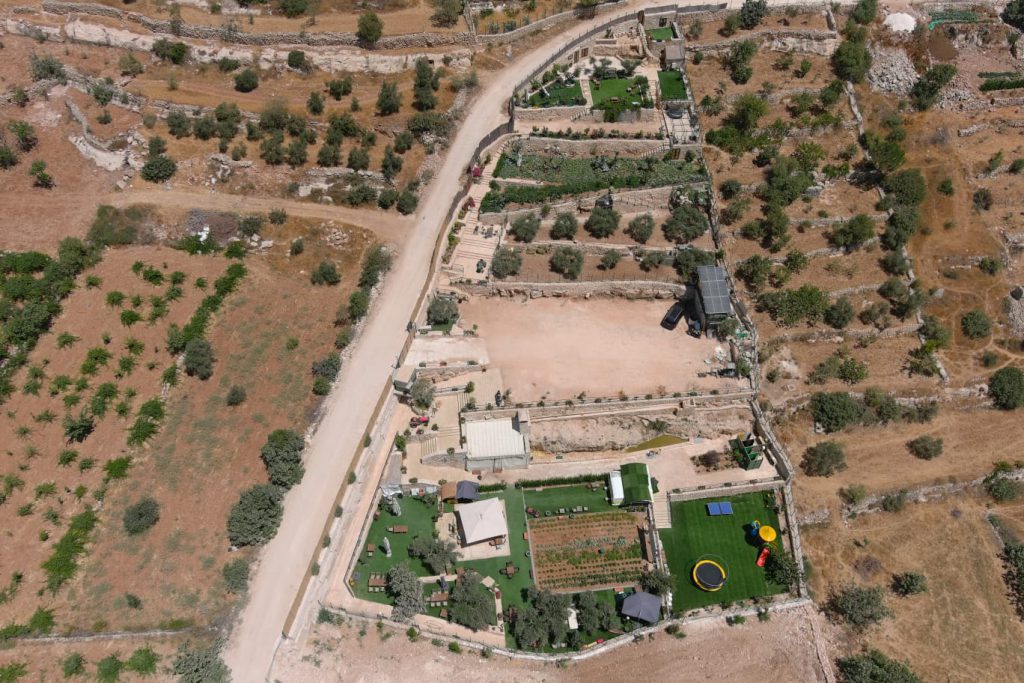
Palestinians have also built two event halls, also adjacent to critical roads, in Gush Etzion. These include magnificent gardens, pools, food trucks, playgrounds, soccer fields, volleyball courts, all built illegally on Israeli state lands.
Both halls were built in areas declared non-construction zones by the military, with the hall in eastern Gush Etzion next to a road where tens of thousands of Israeli vehicles pass by every day and is a known stone-throwing spot. The building works also damaged Jewish archaeological sites.
The Civil Administration has said that it’s aware of these illegal structures and issued stop-work orders. However, the two event halls remain standing, the criminals have not been brought to justice, and Israel continues to squander its precious land resources.
An illegal event hall in Gush Etzion, part of the Palestinian takeover of Area C
In a renewed petition submitted to the High Court of Justice, the Regavim Movement calls for changes in Civil Administration procedures that automatically freeze enforcement against thousands of illegal structures in Area C. Regavim: “This procedural distortion encourages illegal construction, entrenches and enables the Palestinian takeover of Area C.”
In 2021, a Regavim petition to the High Court of Justice (HCJ) challenged Civil Administration and Ministry of Defense operational guidelines, in force for years, that actively violate the Planning and Construction Law. The implementation of these guidelines has created a protective shield for illegal structures by granting indefinite suspension of enforcement procedures against thousands of illegal Arab-built structures, entrenching their status and permanence and encouraging a surge of new illegal Arab construction.
The operational guidelines grant automatic, open-ended suspension of enforcement procedures against illegal construction in Judea and Samaria from the moment statutory appeals are submitted for any illegally-built structure – including requests for TABA (municipal masterplan), requests for a waiver of building permit requirements, appeals against demolition orders, requests to freeze enforcement procedures, appeals to the High Court of Justice – even when it is clear from the outset that these motions are totally without basis and will not be upheld due to insurmountable flaws in design, engineering, location, land ownership or other objective facts. By simply submitting unfounded or even absurd requests or applications, illegal structures enjoy an umbrella of protection, as enforcement is automatically frozen – indefinitely.
Regavim’s 2021 petition was dismissed when the State claimed that it had revised the problematic procedural guidelines – but Regavim’s petition argues that the changes instituted by the Civil Administration involve a minor procedural sub-paragraph that has no substantive impact on the operational guidelines or their problematic results. Regavim has now submitted a second petition, arguing that although the correction limits the blanket enforcement freeze to a certain degree, the procedural guidelines continue to uphold illegal practices and grant offenders protection from enforcement.
“The Civil Administration, which is responsible for enforcing the law in Judea and Samaria, has inexplicably expanded a loophole in the Jordanian law that is in force in this area, enabling illegal construction on a massive scale,” says Attorney Boaz Arzi of Regavim’s Legal Division. “There are currently some 80,000 illegal Palestinian structures in Area C of Judea and Samaria, the area ostensibly under Israeli civil and security jurisdiction. Every day, an average of 8 new structures is added to this incomprehensible number, alongside the massive territorial takeover through agricultural and roadwork projects – all of which are planned and carried out by the Palestinian Authority with the support of foreign concerns.” Arzi adds: “This absurdity must be stopped – immediately. There’s a battle raging on the ground for control of Area C, and the Civil Administration’s illegal procedural protocols are aiding and abetting the Palestinian Authority’s takeover.”