


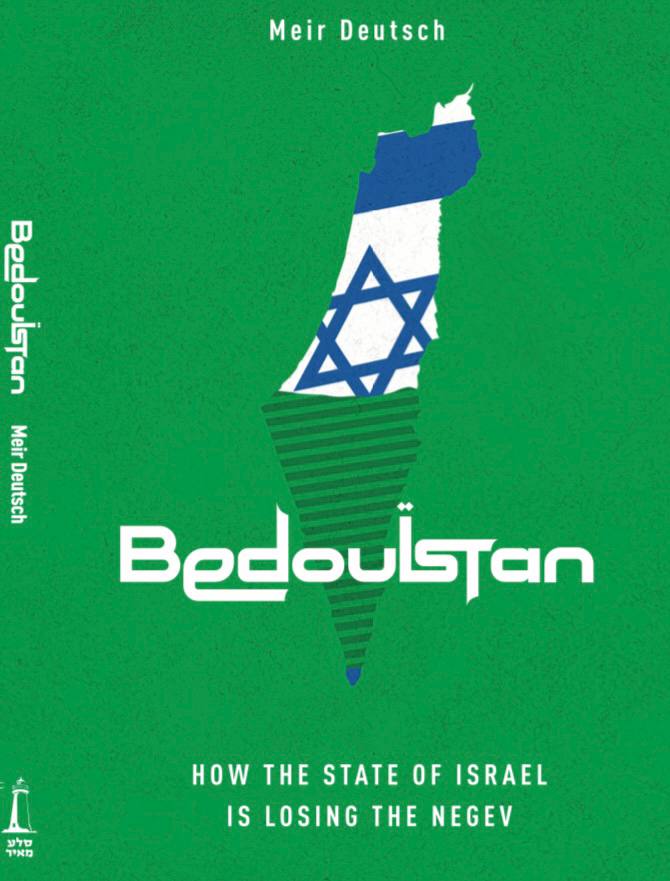
A state-within-a-state has taken shape in southern Israel: Bedouistan, the lawless state of the Negev.
Astonishing quantities of illegal weapons, land-grabs, water and electricity theft, drug trafficking and marijuana plantations on IDF firing zones, agricultural terrorism, protection rackets, home invasions, theft and armed robbery – all this and more make up the daily reality of the Negev.
“Bedouistan” raises some hard questions:
Why does every Bedouin receive a free parcel of land for their 18th birthday?
Why is the Negev the world’s polygamy capital?
How is it possible that some 400 million shekels is being stolen by illegal petrol stations in the Negev each year?
What’s the truth behind the claim that the Bedouin are the Negev’s “indigenous population”?
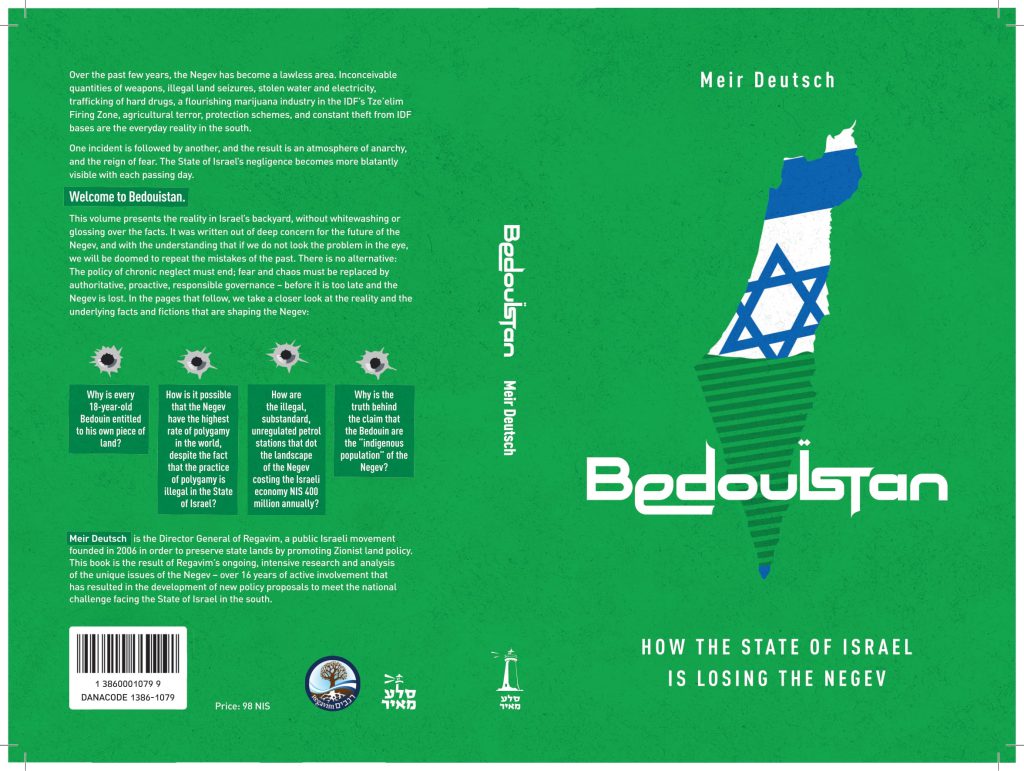
The Regavim Movement has been studying, documenting and recommending solutions for the Negev for over 16 years, and now Meir Deutsch, Director General of Regavim, has published a book that offers an insider’s view of the situation on the ground in the region that comprises some 60% of the territory of the State of Israel. This important and unique volume presents a factual view of what’s really happening down south – and what can be done to turn the situation around.
It’s not too late reassert Israel’s sovereignty in the Negev.
Order your copy today, and learn more!
Related Posts
THE SHOWCASE HOMES THE WORLD DOESN’T WANT YOU TO SEE
Pools. Fountains. Marble staircases. Sprawling estates. Regavim spent one day documenting Palestinian luxury homes across Judea and Samaria. The result is a striking new book challenging one of the international community’s most persistent narratives about life in the region. What does Palestinian life in Judea and Samaria really look like? A new photographic investigation by […]
Regavim Study: Jerusalem Has Lost Over 3,500 Dunams of Open Land to Illegal Construction — Enforcement Gaps Persist Despite Recent Improvements
A new Regavim study presented Wednesday at the Knesset Interior and Environment Committee reveals the extent of illegal construction in Jerusalem’s open areas, exposing a widening gap between the city’s eastern and western sides.


