
A new report reveals that nearly 80 officers of the Palestinian Authority Security Forces have been killed or arrested while carrying out terror attacks against Israeli citizens and IDF soldiers in the past three years. Regavim: “To continue to claim that the Palestinian Authority is a moderating force that fights terrorism is to prop up the same failed concepts and paradigms that went up in blood, smoke, and tears on October 7th.”

A shocking new study released by the Regavim Movement reveals the deep and growing involvement of officers of the Palestinian Authority’s security apparatus – officers who are trained, armed and equipped by the US and Europe – in terrorism against Israeli civilians and IDF soldiers.

The report, titled “Officers by Day, Terrorists by Night,” provides details on 44 “PASF terrorists,” who were posthumously declared “martyrs of the Palestinian Authority Security Forces” after they were killed in the course of terror attacks they carried out against Israelis between 2021 and 2023. In this short period, at least 25 additional officers of the PASF were arrested by Israeli security forces for involvement in acts of terrorism. At least another 7 PASF officers were wounded in the course of terror attacks against Israeli civilian or military targets.

Regavim’s study focuses exclusively on acts of terrorism perpetrated by officers of the Palestinian Authority’s various security branches – Civilian Police, the Liaison and Coordination Office, the General Intelligence Service and other official PA bodies that ostensibly prevent and uproot terrorism and cooperate with Israel’s security system – and does not include acts of terrorism perpetrated by members of Fatah, despite its very close affiliation with the PA. “The study,” explained Regavim’s Naomi Kahn, “focuses on the officers who turned their western-supplied guns on the State of Israel.”


Officers by Day, Terrorists by Night” draws upon a wide range of primary sources, foremost among them the “martyrdom proclamations” published by the PA, the various branches of the PASF and Fatah, all of which glorify and take pride in the terrorists within their ranks. Regavim’s researchers dug into their backgrounds, revealing proof of the official positions of these terrorists in the PA’s security frameworks. Additional sources shed light on the terrorists’ personal histories, organizational affiliations, time spent incarcerated for security offenses, family affiliations and more.

Cross-reference of the incidents with publicly available information allowed Regavim’s researchers to account for these terrorists’ victims, and to track their broader impact on the narrative and ethos of Palestinian armed struggle against Israel.

The report makes it clear that the Palestinian Authority not only fails to condemn the acts of terrorism that arise from its own ranks, it glorifies the perpetrators; it provides ostentatious military funerals, makes ostentatious, official condolence visits, memorializes the terrorists in public institutions, naming streets, buildings and other projects after them, and more. This conduct is only one aspect of the Palestinian Authority’s support for terrorists who murder Jews – support that is also expressed in the generous salaries for terrorists who are apprehended and incarcerated in Israeli prisons or to the families of terrorists killed in the act.

Regavim’s researchers preface the report by stressing that the data presented is an under-estimate; it does not include PASF terrorists who have not been apprehended or killed in action and who have managed to escape justice. It also does not include terrorists whose personal details or connection with the Palestinian Authority’s Security Forces were not found. Additionally, they note that official statements released by the IDF and the Israeli security system following terror incidents tend to obscure the affiliations of the perpetrators, whether to Fatah or to the Al Aqsa Martyrs Brigades (Fatah’s military wing) – and even more so, if the attack was carried out by officers of the PASF.

The report cites abundant evidence of the depth of PASF involvement in terrorism, including statements by PASF Spokesman Colonel Tala Dweikat, who boasted in an interview televised in late October 2023 that “over the past 30 years, the PASF has sacrificed more than 2,000 martyrs,” – in other words, terrorists killed while carrying out attacks against Israeli civilians or IDF forces.

“Our objective is to dispel the fog that has been blinding the Israeli public to reality,” said Meir Deutsch, Director General of Regavim. “Senior Israeli political and military decision-makers regard the Palestinian Authority as a positive force that prevents terrorism and treats the possibility that the PA will turn its guns against Israel as an unlikely threat scenario lurking in the distant future. These attitudes and misperceptions endanger the safety and security of every citizen of Israel.”

“The failure to publicize the information we have uncovered and which we present to the public in our new report has served international anti-Israel forces that advocate turning the Palestinian Authority into an independent State of Palestine under the leadership of Abu Mazen and his cohorts,” continued Deutsch. “To continue to claim that the Palestinian Authority is a moderating force that fights terrorism is to prop up the same failed concepts and paradigms that collapsed on October 7th. The citizens of Israel have been shaken out of their reverie and they are no longer willing to accept statements that are disconnected from reality and that may lead to the next ‘October 7th’.”

To read the full report, click here: https://bit.ly/3ThhTLt

To watch a video about the report, click here:

https://youtu.be/NGYmZQCz4qU?si=ej8SL69BpTn3Jwtg

PRESIDENT ISAAC Herzog speaks as US Secretary of State Antony Blinken looks on, in Tel Aviv on Tuesday. While the PA proudly declares its full partnership with Hamas, the US continues to maintain that this twisted leadership is a viable alternative for post-war Gaza, says the writer.

Many Israelis have begun to understand that on the “day after,” we cannot simply revert to the “day before.”

The basic, underlying assumptions and security paradigms upon which Israeli policy has been built for decades came crashing down on October 7. On that day, it became painfully clear that the underlying assumptions upon which Israel has based its relationship with the Palestinian Authority (PA) and with the Arab population of Judea and Samaria and the Gaza Strip were rooted in fallacies, misconceptions, and even self-delusion.

Despite all evidence to the contrary, we continued to pretend – and behave – as if we had a partner that shared the values we Israelis cherish, and we ascribed our own aspirations to our Palestinian interlocutors: to live in peace and prosperity; to provide a better future for our families; and to live in dignity under strong democratic institutions that protect our values and nurture progress and development.

Unfortunately, all our wishful thinking was proven to be nothing more than self-delusion but if misery loves company, we can console ourselves in the knowledge that we are not alone in this massive failure. Our Western allies – principal among them our closest and staunchest ally, the United States – continue to operate under the same delusions.

Palestinian Authority declares full partnership with Hamas

While the PA proudly declares its full partnership with Hamas, not only in spirit but also in the murderous actions of October 7, the US continues to maintain that this twisted leadership is a viable alternative for post-war Gaza. The “martyrs” and “prisoners” funded by the PA – those who either succeeded or attempted to murder Israelis but were neutralized or apprehended by the IDF – are as much a testament to the PA’s intentions as the official PA curriculum, the countless public pronouncements by PA officials, or the refusal of the PA to amend its charter, which continues to call for jihad and the eradication of Israel.

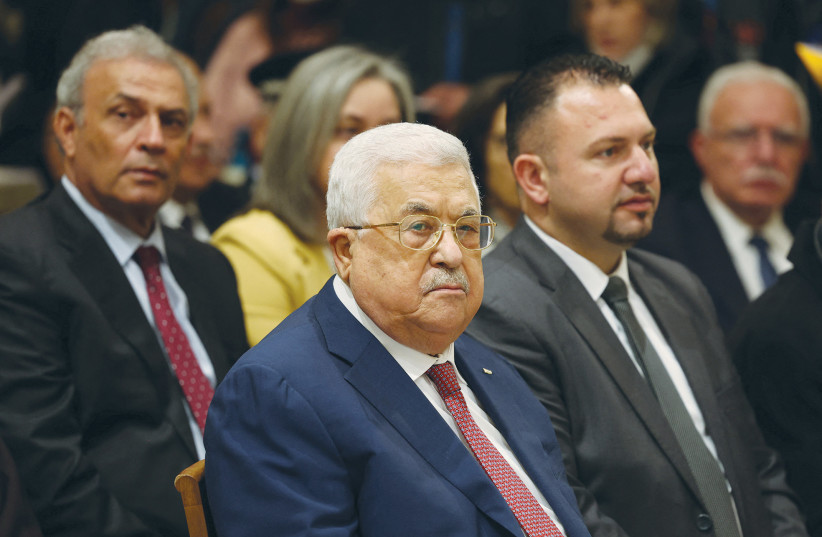
PALESTINIAN AUTHORITY head Mahmoud Abbas attends Christmas Midnight Mass at the Church of the Nativity in Bethlehem, last year. Abbas, in recent years, has depicted Jesus as Palestinian, says the writer. (credit: Ahmad Gharabli/Reuters)

Similarly, the unchecked illegal PA program of de facto annexation of areas under full Israeli jurisdiction – “Area C” – has been willfully ignored by successive Israeli governments in the decades since the PA launched the Fayyad Plan. This openly violates international law with the support of the European Union and a host of governments that pay lip service to their commitment to that same law and to “a negotiated resolution of the conflict.” Israel continues to cling to collapsed enforcement paradigms and delusional “appeasement” and “tolerance” that have turned its national interest into nothing more than a rumor.

It’s time for a reality check. It’s time to reexamine the underlying assumptions and begin to rebuild our security paradigm. Some in the US have started to demand that their government shake off the reverie of self-delusion; a recent opinion piece in The Wall Street Journal calling for an end to US tax dollars funding the PA’s pay-for-slay program, to which the October 7 murderers have been added, is a case in point.

Israelis should be doing the same.

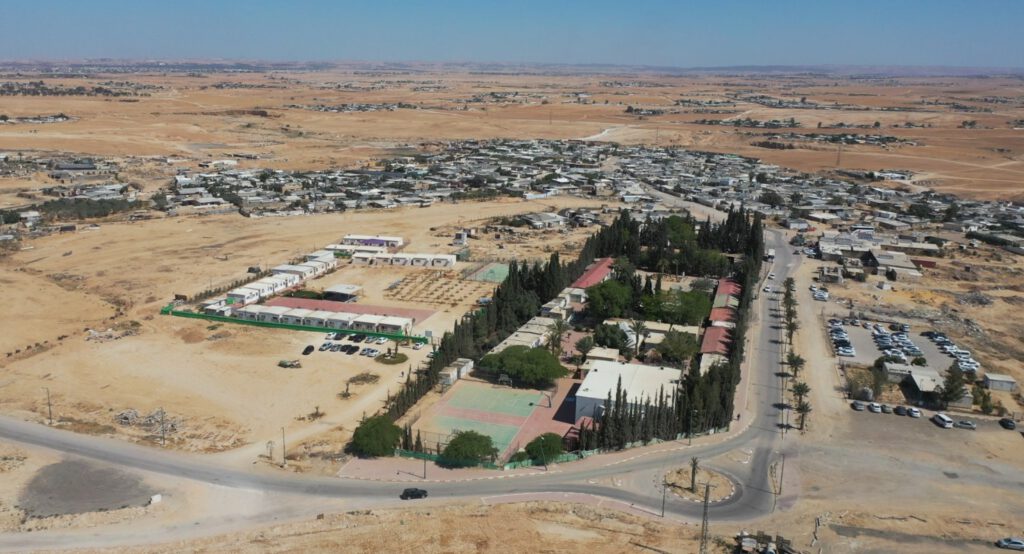
An aerial view of the Al Zarnog squatters’ camp

Beer Sheva District Court instructs the government to remove the squatters of Al Zarnog: “The State cannot condone the violation of individual proprietary rights.”

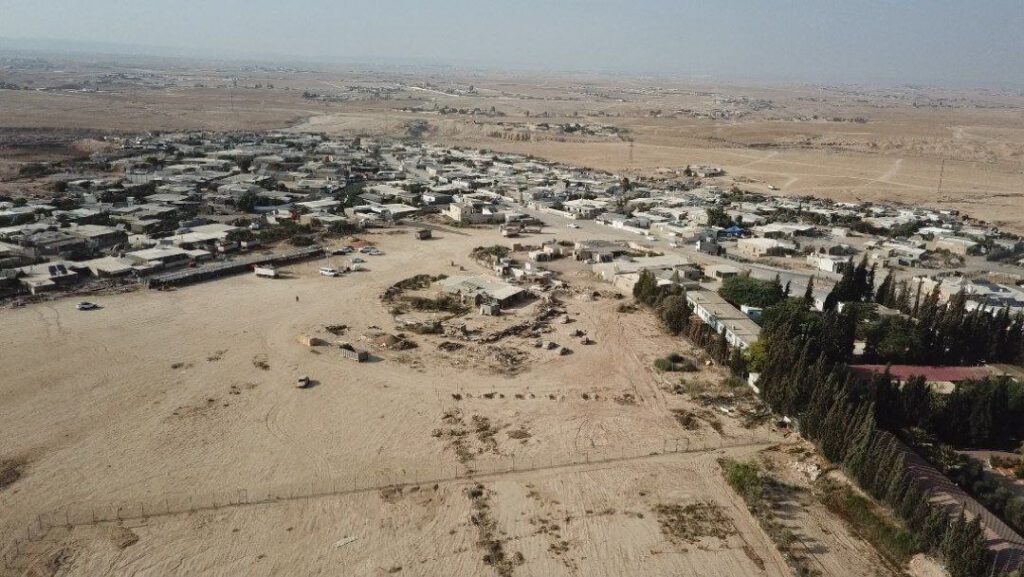
A decisively-worded verdict was recently handed down by Judge Chani Slotki of the Be’er Sheva District Court, in a petition demanding that enforcement procedures be taken against hundreds of Bedouin squatters from the Abu-Quider tribe who invaded private, Jewish-owned land near Moshav Nevatim in the Negev. The decision ends a legal battle and countless attempts at mediation that have dragged on for over a decade.

“The state may accept the violation of its own property rights, but it cannot condone the violation of the property rights of individuals,” noted Slotki, who ordered the issuance of demolition orders for all the structures in the Al Zarnog encampment, prioritizing enforcement against structures located on privately owned land and finding immediate accommodations for relocating the residents. In addition, legal expenses were awarded to the petitioners in the amount of NIS 15,000.

This is the second petition involving this land parcel; the first petition, submitted in 2012, was set aside in light of the state’s commitment to curb further invasion of squatters, and to develop a residential complex in the south of Rahat to which the existing squatters would be relocated within 6 years. The state further committed to strict enforcement against any new illegal construction in the interim period.

In practice, construction of the new neighborhood has taken more than a decade, during which hundreds of additional families invaded the private plot and law enforcement against new illegal construction in the ever-expanding squatters camp was virtually non-existent.

As the new neighborhood of Rahat neared completion, it became clear that the state had designated most of the plots to the families that have been squatting on state land adjacent to the privately-owned land; no relocation site was set aside for the families squatting on the privately-owned lands of Al Zarnog. Additionally, the state has refrained from taking enforcement action against the illegal structures that continue to pop up on the privately owned property.

Arguments were heard in the Beer Sheva District Court this past May. Attorney Amir Fisher, who represented the petitioners, argued that the state violated its commitments to the legal owners of the land and to the court by enabling the continued growth of the illegal encampment and is now washing its hands of the problem, resulting in expropriation of the petitioners’ property without compensation and violation of their rights.

Attorney Yaari Roash, representing the state, argued that due to the opposition of the Rahat Municipality, the development of plots to accommodate the evacuees was delayed for years, during which time the state allotted the plots in the new section of Rahat to any families willing to sign relocation agreements – without distinguishing between those who were squatting on private versus state land. “While the Bedouin Authority is obviously interested in relocating all the squatters,” Roash argued, “no additional solutions are available.” The representative of the Bedouin Authority presented official data on the situation: There are 550 households squatting on the private land, and only 50 families have signed relocation agreements; the remaining families are adamantly opposed to relocation and do not cooperate at all with the authorities or engage in negotiations.

Judge Slotkin opined that families living illegally on privately-owned land should be prioritized in receiving lots, in order to speed up enforcement procedures and regulation processes. The state’s representatives explained that, “regrettably, there are no vacant lots left, and due to this situation the authorities refrain from enforcement; the longstanding policy is that no enforcement procedures are carried out against squatters who do not have a readily available alternative.”

Slotkin replied: “I’m looking for solutions; this situation cannot be allowed to continue. That is why what you ‘regret’ is not what I regret. I regret that there is a violation of property rights.” Judge Slotkin gave the parties 30 days to reach a compromise; after mediation attempts were unsuccessful, the parties returned to court and the decision was handed down.

“The court has required the state to remove the kid gloves with which it has dealt with Bedouin construction offenders,” says Meir Deutsch, Director General of the Regavim Movement. “The state admitted, during the course of the hearing of this petition, that the program for regulation and relocation it presented to the court ten years ago, which was the basis for dismissing the original petition, was a work of fiction. Not only did the state fail to relocate the squatters, it also failed to demolish new illegal construction as promised. Thus, we have reached a situation where instead of 150 families who were squatting on the property at the time of the original petition, there are now 550 families that have taken up residence on private property, and they flatly refuse to cooperate with any attempt at regulation and regularization.”

“The District Court’s verdict restores hope – to the owners who have been waiting for decades to redeerm their property, and to all Israelis, who have waited for too long for justice to be done and for governance to be restored to the Negev,” Deutsch added.

An aerial view of the Al Zarnog squatters’ camp
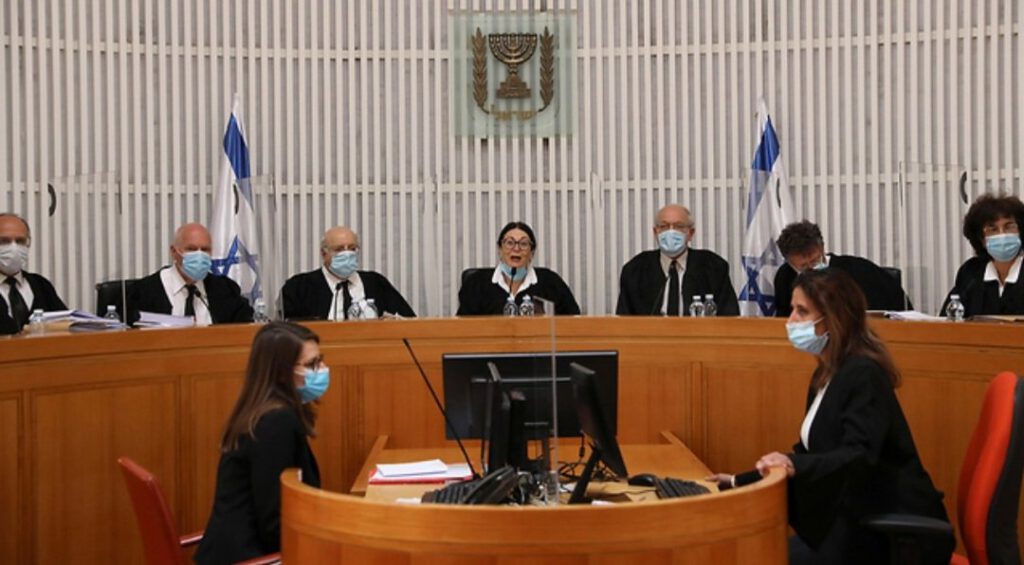
Israel’s High Court of Justice. Photo credit: EPA

Under a newly adopted law, the “reasonableness doctrine,” created by former Chief Justice Aharon Barak as a means of vastly expanding the power of Israel’s High Court to overrule policy choices made by officials, has been curtailed. 

In what may come as a surprise to critics of the move in Israel and abroad, the sky has not fallen, and Israel’s judicial branch has not lost its independence. The new law simply restores limits upon the Supreme Court’s ability to strike down ministerial appointments or other decisions by elected officials, while not touching the Court’s jurisdiction regarding decisions taken by the non-political echelon – the sweet spot that preserves powers for the Court that are unique in the Western world, but restores to the people their ability to govern themselves democratically through elections.

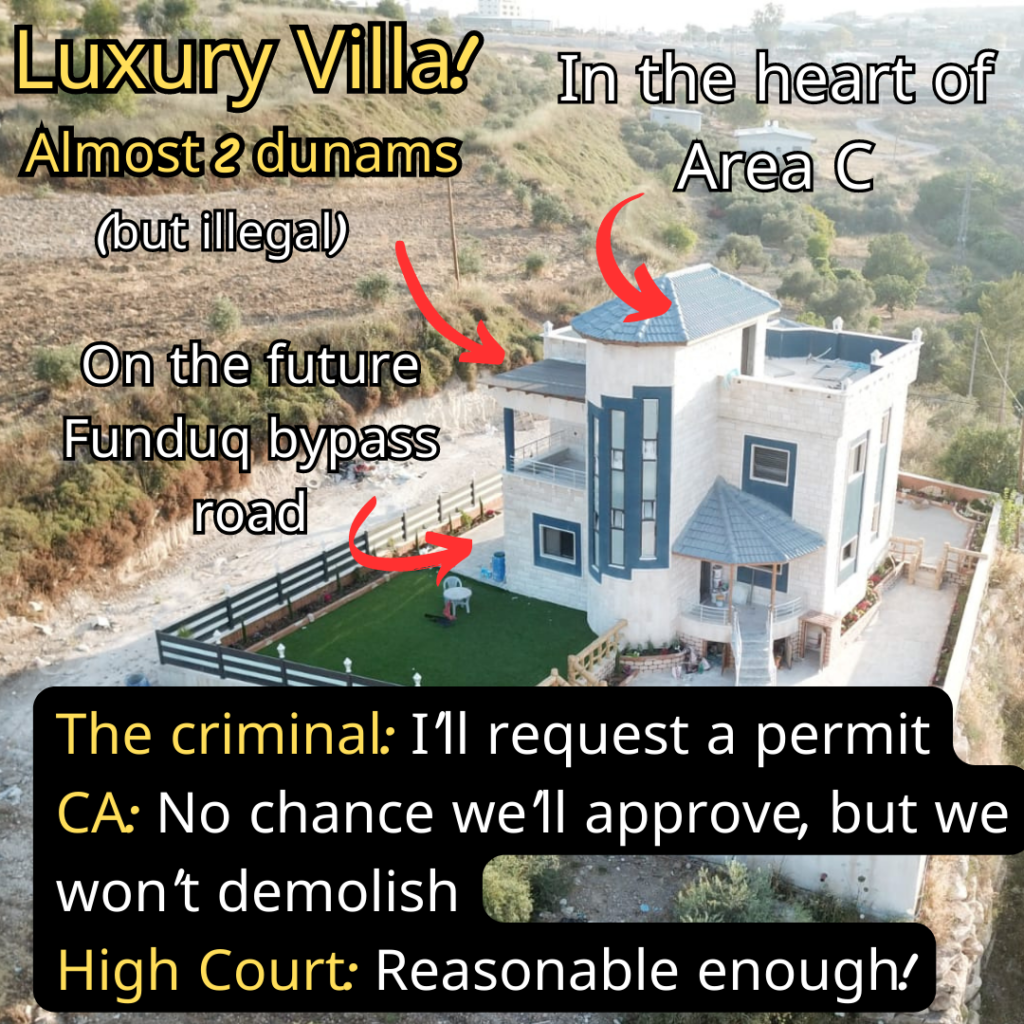
Consider a recent petition brought by the Regavim Movement against a Civil Administration protocol that automatically suspends enforcement against illegal Arab-built structures. The Civil Administration is an arm of the Israeli defense apparatus that administers “Area C” of Judea and Samaria, the territory over which Israel exercises full jurisdiction under the Israel-PLO Oslo Accords.

Although subject to the supervision of the Minister of Defense, the Civil Administration enjoys substantial autonomy in setting policy, and the protocol in question was not formulated by the minister or his staff, nor by any preceding holder of this office; it was instituted and enforced by the Civil Administration alone. 

In fact, Justice Groskopf noted in the decision, that although the amendment limiting the “reasonableness doctrine” came into effect some three weeks ago, this case focuses on policies instituted by the “professional echelon” (OC Central Command and Commander of the Civil Administration), and is therefore unaffected by the new law.

Some might argue that this passing comment, intended to provide justification for hearing the petition in the first place, is an important insight into the bigger picture of the level at which Israel’s governance in Judea and Samaria is conducted in practice; more on this below.  

 The particulars of the case involve a petition filed by Regavim last year regarding a “standard operating procedure” applied by the Civil Administration to illegal Arab-built structures in Area C.

The upshot has been an umbrella of legal protection that lasts for years on end. The appeals process, if it can be called a process, drags on interminably as the structures are built to completion, inhabited for years thereafter, and accepted as one more fact on the ground in the Battle for Area C. No such protection is afforded to illegal Jewish construction, which the High Court has ordered demolished even when its legal status is unclear or in the process of legalization. 

This past May, when arguments were heard in the High Court of Justice, Regavim presented data that paints a very clear picture of the abuse of the system by Arab construction offenders: From 2018 to 2020, a whopping 1302 permit requests were submitted – and not a single one was approved.

These requests were for post-facto “whitewashing” of illegal structures that were already in various stages of completion, built, for example, in nature reserves, on archaeological sites, in active military firing zones, within the municipal lines of existing Jewish communities, on privately owned land, adjacent to major traffic arteries or on land slated for new roads, and other such locations.

Eight-hundred-and-one requests were rejected outright and another 501 are still pending. In that same time period, 479 appeals were filed, of which 475 were denied. 

In other words, the overwhelming majority of requests and appeals were frivolous, baseless, utterly without merit – and were clearly nothing more than a means of protecting existing illegal structures that cannot and will not be granted legal status.

The stalling tactic of submitting a permit request followed by an appeal when the request is rejected, has effectively turned the system against itself and provided the legal cover for mass-scale annexation of the open spaces of Area C by the Palestinian Authority. 

The state’s representatives argued that enforcement bodies have the authority to suspend enforcement against illegal structures according to priorities based on a variety of considerations. Additionally, the state’s attorney presented a very broad interpretation of the Jordanian law to justify the policy of suspending enforcement until all procedural and legal steps are exhausted.

Justice Groskopf noted that the government’s arguments were inconsistent, and Chief Justice Hayut criticized the government for failing to present accurate data regarding the number of permit requests and appeals: “The respondents are expected to periodically examine the policy they adopt in this context, and to formulate an opinion based on the data… in order to determine whether the data supports the policy they have instituted,” said the Chief Justice. 

Nonetheless, the High Court found insufficient cause to intervene, agreeing that continued reliance on this policy “does not overstep the boundaries of reasonableness.” Regavim’s petition was rejected.

This gives us an opportunity to think about what is “reasonable” about current Israeli policy in Judea and Samaria, and what is “unreasonable.” Although the High Court found that the Civil Administration’s authority to implement its current policy is “not unreasonable,” its policy is bringing about unreasonable results. 

On a purely legal level, the Civil Administration clearly has a mandate to formulate and implement enforcement policy, but this mandate is itself unreasonable. The Civil Administration is an arm of the military, and its primary objective is to maintain peace and quiet.

Unfortunately, this objective is all too often achieved through unreasonable means that are beyond the purview of military operations and go to the heart of politics, geopolitics, international relations, and Israel’s future. In the case of wholesale, open-ended suspension of enforcement, the price for avoiding confrontation with Arab construction offenders – and with the international community that is supporting this activity as a means of creating a de facto Palestinian state – is the sacrifice of Israel’s security, the decimation of Israeli governance, discrimination against Jews, and deprivation of their right to live in and develop Jewish communities in Area C. 

The very expansive interpretation given by the Civil Administration to Jordanian law is itself unreasonable, even if it is “legal”: It protects, encourages, and rewards illegal construction; undermines governance and the rule of law; and enables de facto annexation of what is, at the very least, disputed territory that the State of Israel has been entrusted and empowered to protect – very unreasonable outcomes indeed. 

It would be reasonable to require a less expansive interpretation and application of the Jordanian law. It would be no less reasonable to require the application of legal norms as they are applied throughout all other areas under Israeli jurisdiction. 

It would certainly be no less reasonable to require the Civil Administration to uphold standards in the Arab sector that equal those for planning, construction, and environmental sustainability equal to those applied to the Jewish sector. Israel’s High Court of Justice has failed to grasp the magnitude and intensity of the battle for the open spaces of Area C that is being waged by the Palestinian Authority – and is being lost by the State of Israel. The Civil Administration has failed to defend Israel in that war. Neither the Civil Administration nor the High Court of Justice should be entrusted to provide solutions to these problems; the High Court’s decision in this case makes it clear that it does not intend to do so.

Regavim’s petition on this matter, as in so many others, was an attempt to force the Israeli government to act as any reasonable government should, and the decision that was handed down leaves the door wide open for the government to do so. The time has come for Israeli legislators to roll up their sleeves, wade into the muddy waters, and restore reasonableness to Civil Administration protocols. In other words, it’s time for the Israeli government to govern. 

The illegal events venue in Gush Etzion

After months of unanswered complaints and correspondence, Regavim has taken its battle against an illegal events venue up a notch: A new petition filed jointly with the Gush Etzion Regional Council demands immediate enforcement. “The Palestinians are partying at our expense.

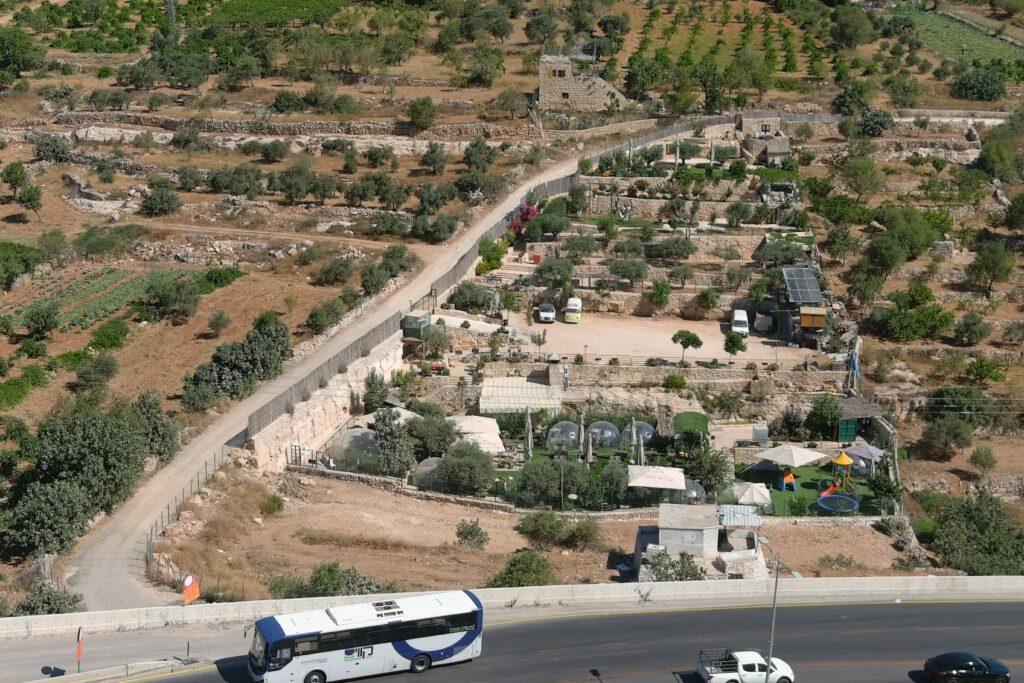
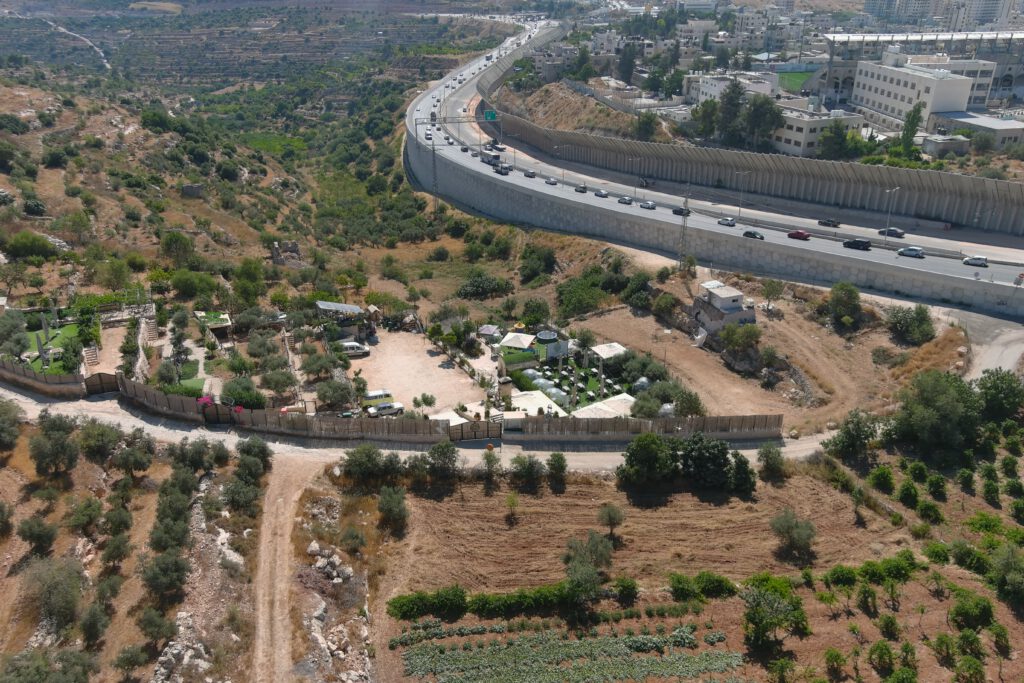
A new petition to the Jerusalem District Court demands the immediate demolition of an illegal event complex, built without the necessary permits on the outskirts of the village of Al-Khader – in Area C, which is under full Israeli jurisdiction. The complex has a commanding location adjacent to Route 60, the major thoroughfare connecting the communities of Gush Etzion and Mount Hebron to Jerusalem that is traveled by thousands of motorists every day.

The site houses several structures in a multi-level entertainment and events compound complete with a spacious parking lot. When work at the site first began, Regavim and the Gush Etzion Regional Council appealed to the enforcement authorities to prevent the land-grab and illegal construction. It took months and months for the Civil Administration to respond to the repeated appeals, and the response was the same as in thousands of cases Regavim has pursued over the years: The Civil Administration claimed that stop-work orders and demolition orders had indeed been issued – and enforcement would be carried out “according to established priorities.”

Nonetheless, over the course of the past year, development work was completed – in complete disregard for any orders that were or were not issued, and the perpetrators even submitted a request for a retroactive permit, which was rejected. Throughout this entire farce, the compound has continued to host events every day. There has been absolutely no enforcement of any kind against this illegal business enterprise, the structures built at the site, or the perpetrators – who continue to laugh all the way to the bank.

The Regavim-Gush Etzion petition mentions both the close proximity to the road, and the fact that the structures were built within an area under military orders that prohibit construction of any kind due to the sensitivity of the location: “The very real security risk posed by the compound to all users of the road requires increased enforcement, not tacit acceptance of illegal activity by enforcement authorities that have made a habit of turning a blind eye to Arab construction offenses.”

Proximity to the Highway: The illegal complex with Route 60 in the background

According to Regavim’s data, there are more than 370 illegal structures and dozens of agricultural encroachments in this area alone, resulting in a takeover of thousands of dunams of land in the open areas that is suffocating the southern approaches to Jerusalem and forming a stranglehold around the capital.

“The Palestinians are celebrating here – and what they’re celebrating is Israel’s lack of governance,” says Moshe Shmueli, Regavim’s Field Coordinator for Judea and Samaria. “This is a complex that hosts weddings and parties every evening, on one of the busiest roads in the vicinity of Jerusalem, less than half a kilometer from the tunnel road. We see again and again how the Battle for Area C has long been waged: annexation tactics are not limited to planting trees and other agricultural projects, or construction of shacks and shanties. The Palestinian Authority is on a massive construction spree in all of Judea and Samaria from south to north – building parks, event venues, recreation complexes, institutions and factories. We are witnessing the fulfillment of Palestinian declarations about the unilateral establishment of a state – and the State of Israel continues to ignore it.”

Shlomo Ne’eman, Head of the Gush Etzion Regional Council and Chairman of the Council of Jewish Communities in Judea and Samaria, adds: “It’s time to put an end to the celebration! This complex was built by Arabs who are taking advantage of the lack of enforcement against the rampage of illegal construction in the area. The compound is located on land which for the most part falls under a military order prohibiting construction of any kind. To make matters worse, it is built on archeological antiquities: the complex’s pool is built on a burial cave, trampling not only the priceless history but the law that requires preservation and scientific examination and documentation of our heritage.”

Despite Civil Administration orders, these lawbreakers violated the law time and time again and continued with illegal construction. The Gush Etzion Council invests massive efforts in the fight against the hostile Arab takeover of our national land resources. This illegal complex is located in a strategic area that connects Gush Etzion to Jerusalem, and we demand immediate enforcement and oversight.”

Big news for the State of Israel: The government has outlined a historic and strategic plan that will restore governance and personal safety to the Negev.

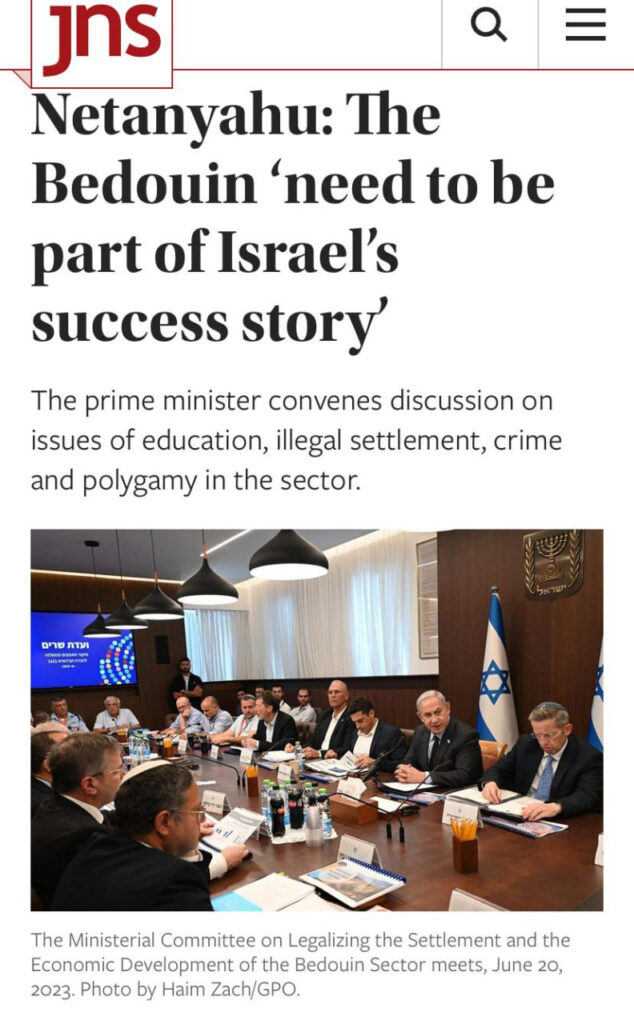
Last week, Prime Minister Netanyahu convened a meeting of the Ministerial Committee on Legalizing the Settlement, and the Economic Development, of the Bedouin Sector in the Negev to discuss the new plan. After a few adjustments, the plan, which will advance legalization of the settlement of the Bedouin population in the Negev for 2023-2025, will be voted on by the government in the next few weeks.

We congratulate Minister Amichai Chikli for his hard work to make this happen, and for insisting months ago, during the coalition negotiations, to take on the complicated task of legalizing Bedouin settlement in the Negev. We also thank Ministers Smotrich and Ben Gvir for their assistance.

There’s a long way to go, but this is a significant step in the right direction.

*

Meanwhile, recently, we launched the Hebrew-language version of our most recent report, “Virtual Reality: The Myth of Historic Bedouin Villages of the Negev.”

The report examines the factuality – more precisely, reveals the ‘fake’ – behind the Bedouin narrative of historic villages of the Negev for which they demand the State of Israel’s official recognition.

The report, based on analysis of aerial photographs of the Negev dating back to the 1940s, proves that in almost all of the locations currently claimed to be historic villages, not a single tent was erected before the establishment of the State of Israel; the locations were equally barren in the 1950s and 1960s. No tents, no houses – and certainly no villages.

The report has sent shockwaves through Israeli public discourse, and a barrage of attempts and rebuttal and denial from left-wing organizations.

The full English-language version is scheduled for publication later this summer; meanwhile, check out the Executive Summary here.

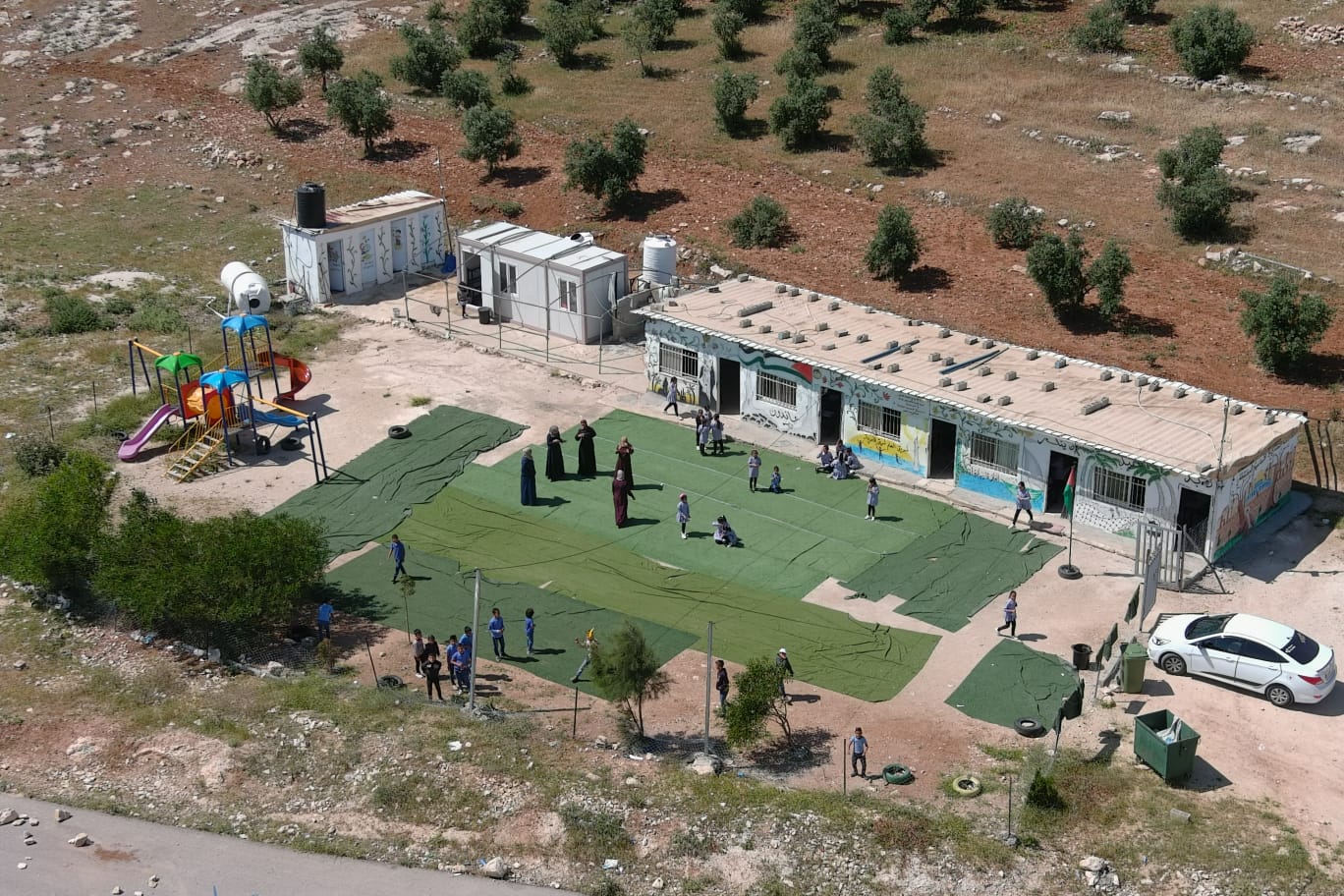
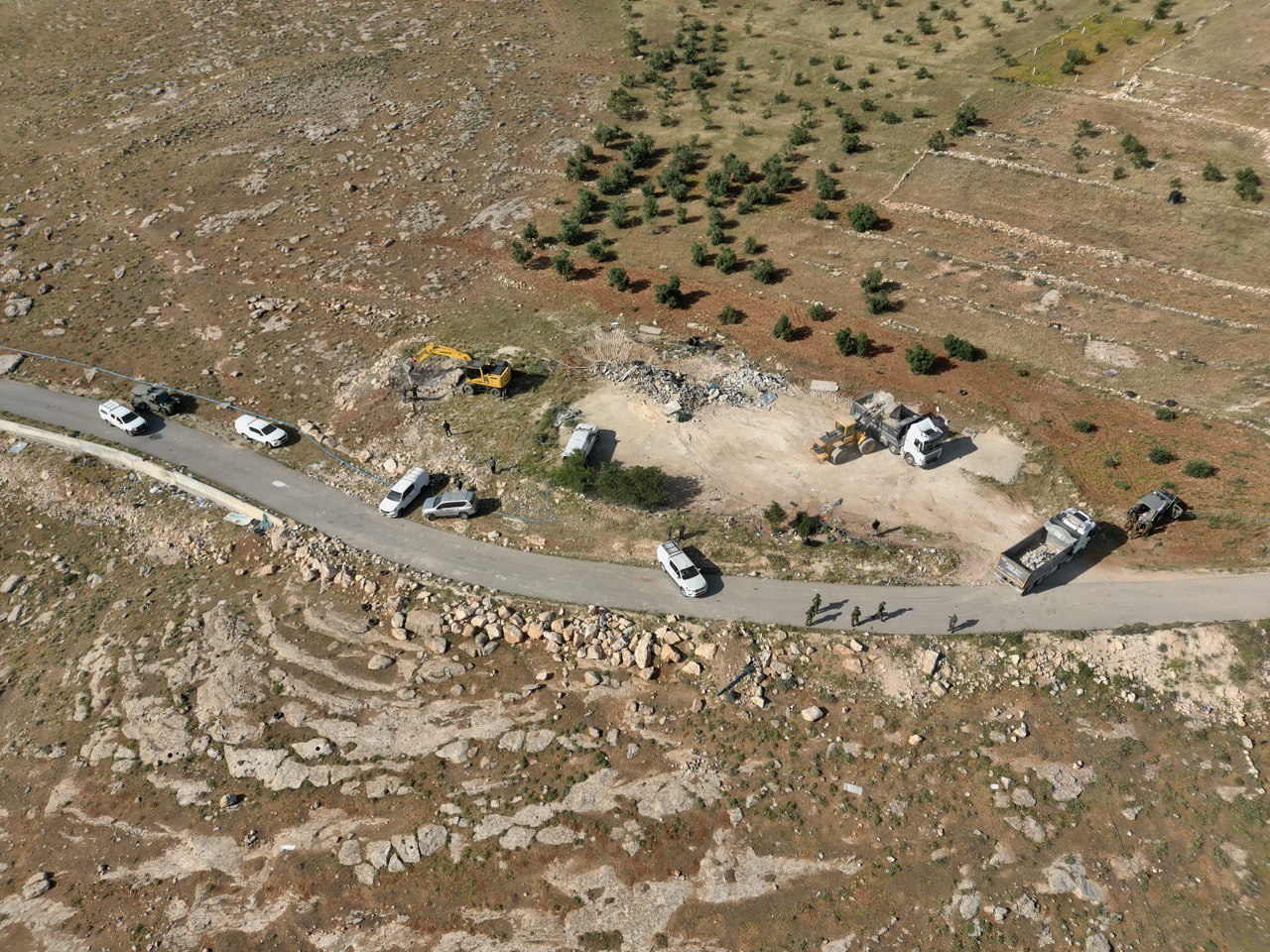
Following our petition, Civil Administration forces tore down an illegal Palestinian school, built in the Herodion Nature Reserve and Heritage Site in Gush Etzion.

63 days after the Jerusalem District Court ordered to seal off and demolish the illegal structure, and despite UN efforts to delay law enforcement, the school was taken down.

This school is only one out of more than 100 illegal school buildings that were built in Judea and Samaria, as part of the Palestinian Authority’s plan to take over Area C and the open spaces.

Yesterday morning’s enforcement is the first step in restoring law and order to the area, and it is certainly not the last: now, we need to restore the site and deal with the hundreds of similar cases of illegal takeovers of lands and nature reserves in this area and beyond.

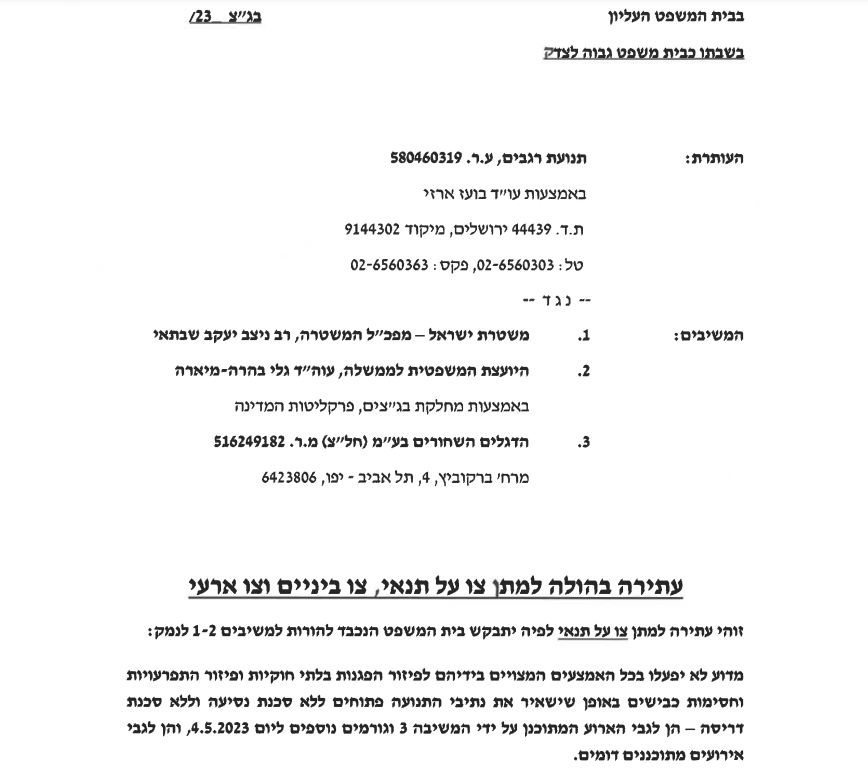
A screenshot of the petition

The Regavim Movement submitted a petition to the High Court this morning (Wednesday) demanding that the Police Commissioner and the Attorney General be required to stop the ‘Day of Disruption’ protest planned this week and investigate its leaders for sedition and incitement to commit crimes.

After a number of urgent appeals to the Police Commissioner went unanswered, this morning the Regavim Movement filed a petition in the High Court of Justice against the Israel Police, the Attorney General and the “Black Flags” Movement, demanding investigation and indictment of “protest” leaders who are calling for large-scale illegal action, including blocking roads and intersections, demonstrations and rioting – all without permits as required by law, in violation of freedom of movement, freedom of occupation, security and public order.

“The publicity for the “Day of Disruption” encourages people to join protest actions, as it has in the past: planned, deliberate illegal activity including blocking roads and intersections and the disruption of public order at dozens of points throughout the State of Israel – none of it ever having received a demonstration permit. This wild and illegal activity has caused, and will cause, a risk to transportation routes and public spaces, confrontations with passers-by who object to the violation of their freedom of movement, and more,” according to the petition.

The petition further charges the Israel Police with repeatedly failure to fulfil its duty to maintain public order, to protect the public interest and to maintain and uphold the law. Thus, the Israeli public has become accustomed to weekly reports of the blockage of the Ayalon Highway by rioters who “spill over” from the anti-judicial reform demonstrations, leaving the Israel Police powerless to prevent the shutdown of the main traffic artery in the Gush Dan region.

Regavim’s petition cites former President Aharon Barak’s ruling regarding roadblocks during the 2005 Gaza Disengagement: “Freedom of speech is not a permit for rioting; violence is the opposite of permitted speech. Freedom of speech is not a permit for incitement; freedom of speech is not a permit for rebellion. Indeed, freedom of speech (and demonstration) does not protect the freedom to prevent a woman in labor from reaching the hospital; freedom of speech (and demonstration) does not protect the freedom to prevent the fire department from arriving at the scene of a fire; freedom of speech (and demonstration) does not protect the freedom to paralyze law enforcement mechanisms and bring about their collapse; freedom of demonstration does not protect freedom “to bring the country to a halt” and endanger personal and public security. Anyone claiming the right to take these liberties in the name of freedom of expression, does not make this claim from the point of view of democracy, but from the point of view of anarchy.”

“The State of Israel is in anarchy – under the auspices of the Israel Police and the judicial system,” says Meir Deutsch, CEO of the Regavim Movement. “We respect legitimate protest actions, but the opponents of the government have long since crossed every red line. The campaign of incitement and hatred that is being waged against millions of voters must be stopped, and the mortal blows that are being inflicted on the citizens of the State of Israel, the resilience of the IDF and the fabric of Israeli society must be halted. The time has come for the Supreme Court to intervene. This same Court knew how to stand up to the opponents of the Gaza disengagement, declaring “the rhetoric of democracy and human rights in their mouths, but their actions are of anarchy and violation of human rights. No democratic country should agree to this.” We demand that the law be upheld no less vigilantly today.”

Shortly before Pesach, Naomi Kahn, Director of Regavim’s International Division, participated in an international conference convened by thinc. – The Hague Initiative for International Cooperation – following the recent publication of their in-depth study of European policy in the Middle East, “Two States for Two Peoples? European Policy and the Arab-Israel Conflict.”

The conference, titled “Israel on Trial: The political and legal fight against Israel in the UN and other institutions – and possible ways forward,” brought together academics and activists, experts in international law, European policy makers and representatives of leading think-tanks and civil society organizations for a high-level discussion of current realities, policies and challenges facing Israel and Zionists around the world.

Plenary sessions, workshops and round-table discussions focused on “lawfare,” Europe’s two-state policy, European support for illegal activity in Judea and Samaria, and the unprecedented challenges facing Israeli in international bodies, including the UNHRC Commission of Inquiry, the International Criminal Court and the International Court of Justice.

Regavim’s presentation added an invaluable dimension to the discussion, providing documentation and analysis of the outcomes of European policy. Cooperation with the other leading organizations and experts in attendance is already in the works.

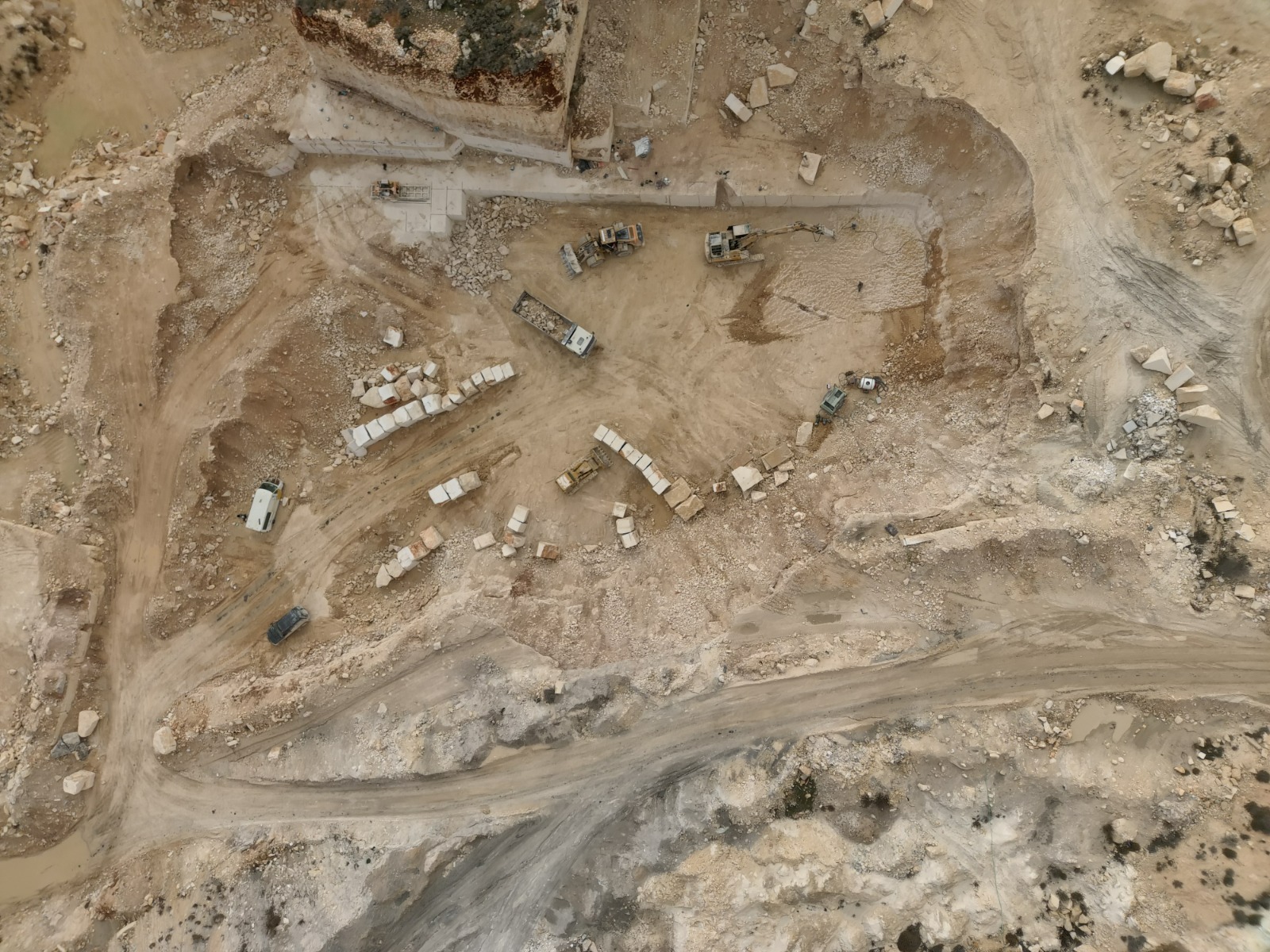
An aerial image of the illegal Beit Fajjar quarry

“Have any of you ever been to the quarry?” – that’s what the judge asked the State representatives in last week’s District Court hearing in the case of the Beit Fajjar quarry.

The Beit Fajjar quarry, located in east Gush Etzion and mainly in Area C, is the largest illegal quarry in the country, spreading over about 1,600 acres.

In the last decade, Regavim has filed two petitions against the illegal quarrying – which, besides taking over huge swaths of land, causes major damage to archaeological sites.

Photo credit: Preserving The Eternal

In last week’s hearing, the State rejected the claims that there is ongoing damage to archeology, and claimed that quarry has not expanded significantly since 2005. Regavim’s lawyers presented findings that prove the opposite, causing the judge to wonder why the State authorities are unaware of the current reality. The judge demanded that up-to-date evaluations be carried out and an answer submitted to the courts within 60 days.

We’ll continue to monitor the situation on the ground, as part of the battle to preserve Israel’s land resources.