In response to Regavim’s complaint over new environmental hazards in Nahal Alexander, the Ministry of Environmental Protection has placed the blame elsewhere.
Nahal Alexander, which flows from the western side of the Samaria mountain belt through the Sharon area and into the Mediterranean Sea, has been plagued by an ecological disaster — mainly due to sewage coming from areas controlled by the Palestinian Authority.
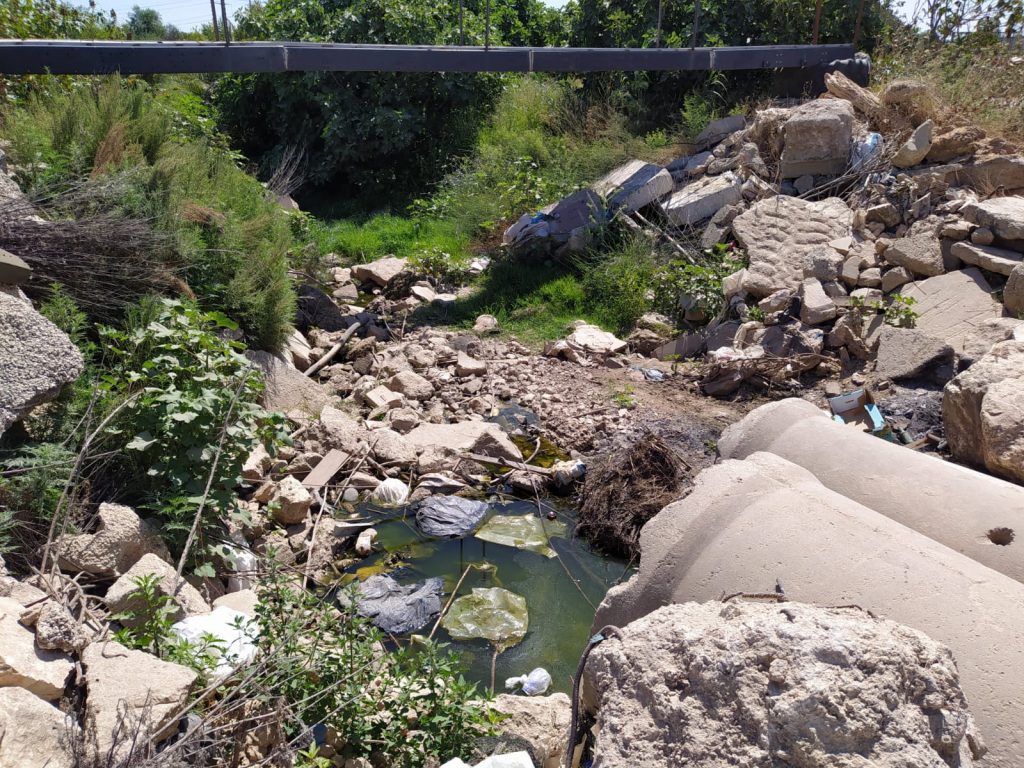
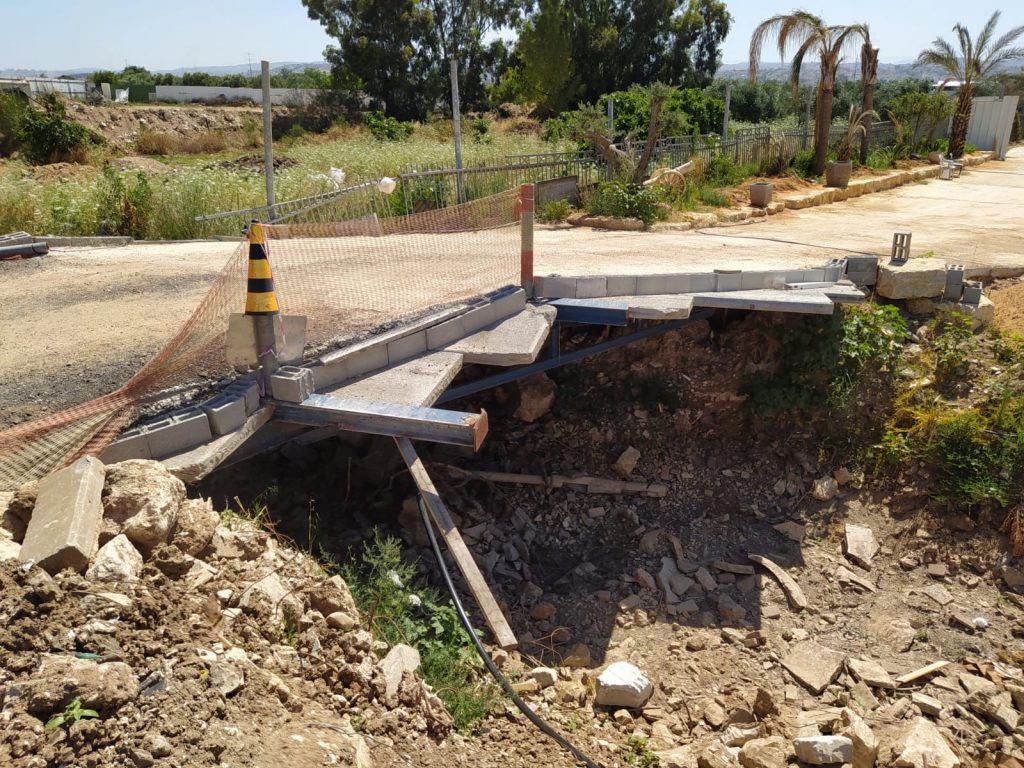
For a number of years, Regavim has been monitoring pollution of the river. Regavim recently submitted a complaint to the Ministry of Environmental Protection over new environmental hazards that were discovered near Taibe, namely: sewage pollution, blocking of the river stream due to digging work, and construction of an illegal bridge.
Responding to Regavim’s complaints, the Representative for Public Complaints in the Ministry of Environmental Protection claimed that the Ministry is incapable of enforcing the law against these hazards. “The blockage of the river and the construction of the bridge are matters of planning and building, a field in which the Ministry has no authority,” it said in a letter addressed to Regavim. And with regards to sewage pollution, the Ministry claimed that the responsibility lies with the sewage and water corporation ‘Mei Iron’.
“This is an infuriating answer,” said Yachin Zik, Head of Activity for Regavim, “It’s inconceivable that the Ministry of Environmental Protection should dodge the issue, refrain from fixing the problem, and allow the pollution of the river to continue.”
“Instead of shirking responsibility and requesting that Regavim turn to other bodies, it would be better if the Ministry pressure the local planning and building committee to deal with the problem. We are hopeful that Minister Gila Gamliel, who recently assumed her role, will act more firmly against such incidents and instruct her people to take action rather than engaging in tiresome bureaucracy.”
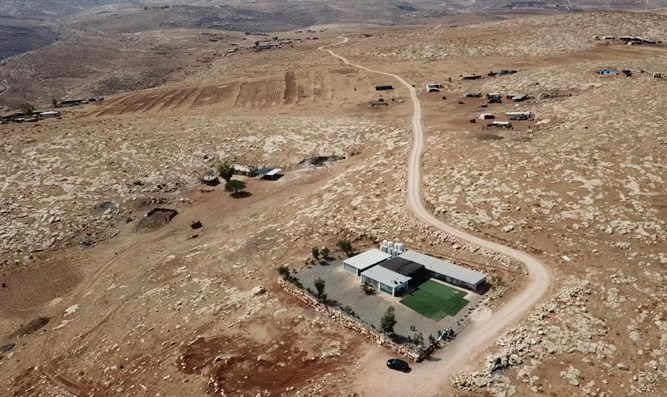
Many people submitted a petition in the Jerusalem District Court Wednesday against the Palestinian Authority, which built an illegal school within the Nahal Mahoch Nature Reserve, on state land.
The petition was filed in parallel with Defense Minister Naftali Bennett’s announcement this morning that he would create seven new nature reserves in Judea and Samaria.
The site where the illegal construction was carried out spans some 18,000 dunams (4,450 acres) in the northern Judean Desert, extending from Mount Hatzor to the Jordan River and the Dead Sea. The reserve is home to several species of rare flowers such as the Judean iris and the Tulipa agenensis, as well as several rare bird species. The sign posted on the school, which was built with EU funding and other foreign funds, indicates that the structure is owned and owned by the State of Palestine – Ministry of Education and Higher Education.
A photograph was attached to the petition from an official mapping site of the Palestinian Authority, which proves that the PA is well aware that the land is Israeli state land in the heart of a nature reserve.
The petition was resubmitted to the Jerusalem District Court in light of last week’s Supreme Court directive that the proceeding should be held in an administrative court, following the state’s statement that a demolition order was issued in February.
The new petition highlights the disenfranchisement of the enforcement authorities – in light of the fact that since the demolition orders were issued, an entire year has passed, during which the PA was able to complete the construction of the building and accommodate the students for the new school year.
The petitioners are suing the PA for breach of environmental protection laws, invasion of state land, and violation of planning and construction laws.
Meir Deutsch, CEO of the Regavim Movement, said that “Defense Minister Naftali Bennett’s announcement of the declaration of new nature reserves in Judea and Samaria is a welcome and worthwhile step that has not been implemented for years. Bennett’s refreshing change in direction in maintaining Area C shows that there is an important and significant perceptual change here “
“At the same time, the petition demonstrates just how important the actual conservation of nature reserves is, and what the strategic significance of the PA is to take control of its nature reserves and its ambition to do so as far as it wants. Enforcement should look and be done, and one hour earlier,” he added.
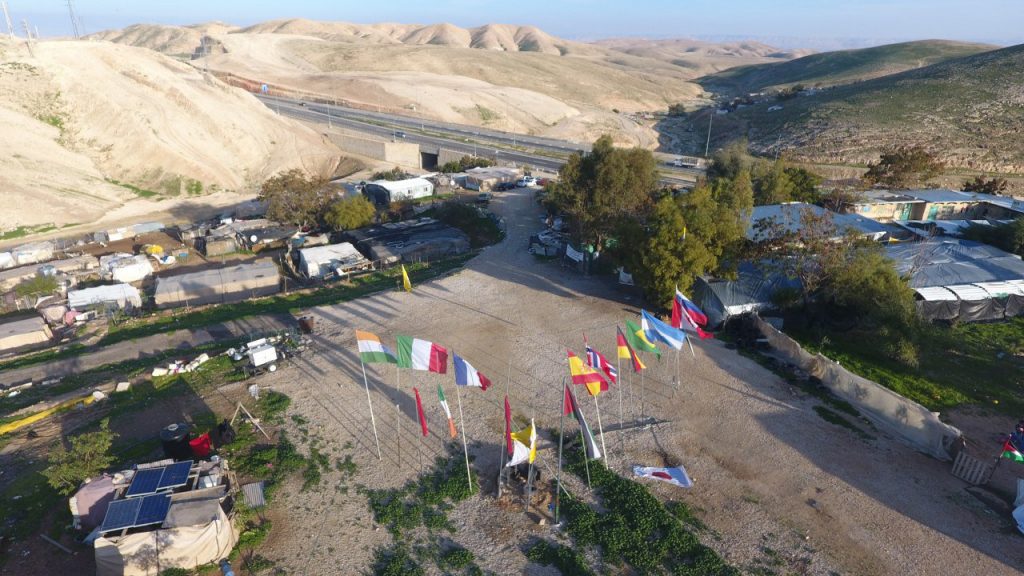
The EU-funded illegal PA outpost of Khan al-Ahmar, east of Jerusalem
For 10 years, the illegal Bedouin outpost of Khan al-Ahmar has been undermining Israel’s rule of law, making a mockery of Israeli sovereignty, enabling the Palestinian Authority to carry out the Fayyad Plan for the establishment of a de facto state on Israeli-controlled sections of Judea and Samaria and galvanizing a coalition of anti-Israel NGOs and foreign interests. Now, Khan al-Ahmar has become an instrument for the evisceration of High Court of Justice rulings and the erosion of the very foundations of Israeli democracy.
On Monday evening, the State Attorney submitted a request to the court on behalf of Israeli Prime Minister Benjamin Netanyahu, asking to delay a hearing on a petition submitted by Israeli NGO Regavim against the government’s failure to evacuate Khan al-Ahmar. Should the court grant this request, the hearing, scheduled for early December 2019, would be postponed until March 2020.
Khan al-Ahmar is one of more than 170 illegal outposts created by the P.A. and funded by the European Union for the sole purpose of establishing a corridor of P.A.-controlled territory disconnecting Jerusalem from the Jordan Valley and the Dead Sea. These outposts are populated by the most vulnerable, disadvantaged and easily manipulated Bedouin families, stateless pawns in the P.A.’s power play, and follow a very simple, very predictable pattern of development.
First, the P.A. places water tankers at strategic points: along major Israeli highways, on land belonging to or abutting existing Jewish communities, or along lines that create territorial contiguity between major Arab population clusters in Areas A and B of Judea and Samaria. Knowing that Bedouin require little more than a steady supply of water to congregate and remain in any particular spot in this arid region, the P.A. thus attracts the tribes to strategic locations, even when those locations pose serious hazards to the health and livelihood of the Bedouin.
The next step is the construction of a school. This, too, attracts population—and makes for devastating publicity if Israel’s Civil Administration knocks it down. From this point, the battle of narratives begins. The “village” quickly rises up, constructed almost entirely of prefab housing units bearing the symbol of the European Union. It is given a name and equipped with a fictitious history. An army of internationally financed “do-gooders” takes up the cause of the unfortunate Bedouin who are “threatened” with relocation by the Israeli authorities—to new, modern neighborhoods on Israeli state-owned land, along with cash payouts and other forms of compensation.
The P.A., the European Union and a host of “humanitarian aid” groups take to the High Court of Justice to block any and all compromise solutions, forcing the helpless Bedouin to remain in unbearable conditions in the illegal outposts, in the service of the P.A.’s geopolitical machinations.
More than a decade ago, Regavim began monitoring, mapping, reporting on and petitioning against Khan al-Ahmar and its sister outposts. It took years to force the Israeli government to take notice of the strategic nature of these seemingly innocuous Bedouin squatters camps, and even more years to convince the government to demand that the European Union stop funding this illegal activity.
After six rounds of Supreme Court petitions, each of which resulted in clearly worded decisions regarding the illegality of Khan al-Ahmar and the necessity to relocate the Bedouin families living there, the only thing standing in the way is the Israeli government. Regavim strenuously objects to the delay of the hearing on the government’s inaction.
“This is the sixth petition we have submitted in the matter of Khan al-Ahmar,” said Meir Deutsch, director general of Regavim. “The State of Israel should have cleared the encampment as far back as 2009, when the Supreme Court handed down its first decision on the matter. We believe that further procrastination eviscerates the ‘final’ judgment handed down by the High Court after the fourth round of hearings. The government’s behavior in this matter is an affront to the stature of the court and harms the national interest.”
One year ago, Netanyahu publicly declared that Khan al-Ahmar would be evacuated in a matter of days. Since then, every passing day is one more day of shame for the rule of law in Israel.
The State admits: Illegal construction for Arabs was whitewashed– but policy has changed
In the course of a High Court of Justice hearing on Regavim’s petition against the illegal Arab city growing in the Judean Desert, the State’s attorney admitted that in the past Arabs had been allowed to build without permits or planning approval.
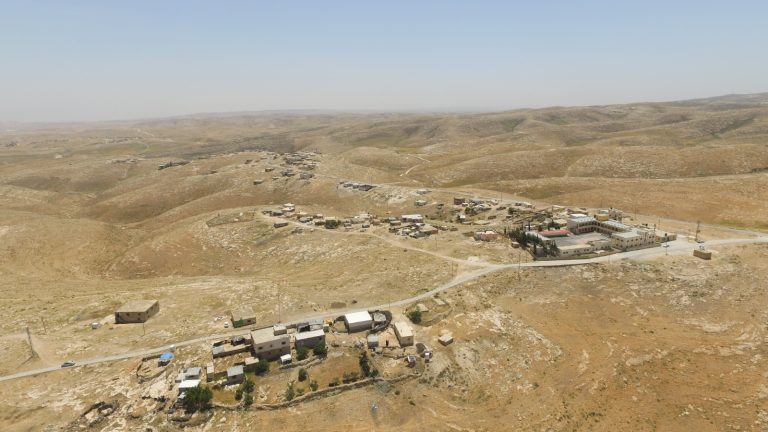
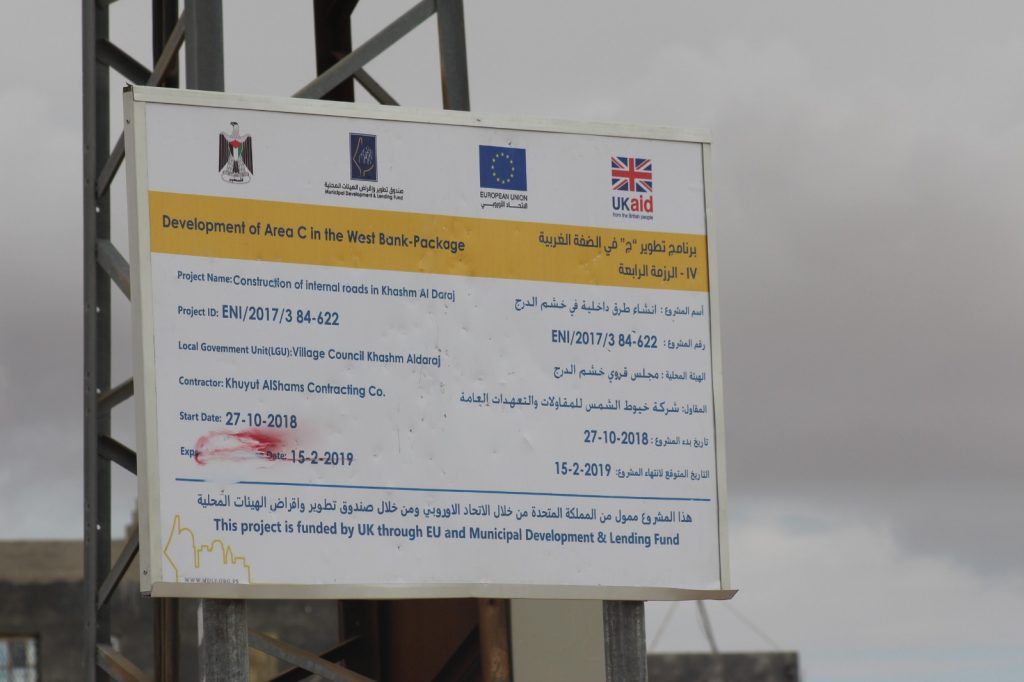
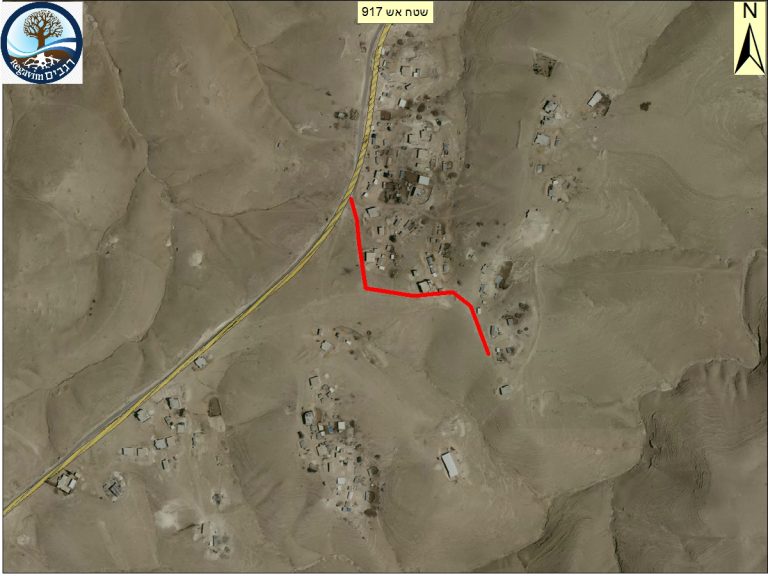
On 20 November 2018, Israel’s High Court of Justice heard Regavim’s petition regarding an illegal Arab city growing on the grounds of IDF Training Range 917. The city, made up of 1,700 illegal structures – homes, schools, clinics, mosques – covers tens of thousands of dunams. The infrastructure that supports it all is spread over dozens of kilometers, thanks to generous funding provided by the European Union, the United Arab Emirates, Abu Dhabi, and other foreign interests.
The bottom line: A new Arab city has been born in an area of critical strategic importance, creating a contiguous Arab pale of settlement that stretches from the Arad Valley through Har Hebron and eastern Gush Etzion.
Foreign funding for illegal construction in 917
Background:
In the 1980s, a few Bedouin families lived in temporary structures that dotted the landscape of IDF Training Ground 917. Without any legal foundation or precedent, the Civil Administration demarcated a number of clusters and declared them”no go zones:” No law enforcement steps would be taken against structures within these areas, despite the fact that they had no building permits or municipal plans as required by law.
As if this weren’t bad enough, Regavim has documented more than 500 additional illegal structures built outside of these demarcated zones in the last few years – structures that “connect the dots” between the original clusters and create an uninterrupted band of Arab territory that stretches from the Arad Valley through Har Hebron and eastern Gush Etzion.
The State’s representative admitted in court that the “arrangements” that had been in force, which allowed illegal construction to continue unhindered, “constitute an historic reality, but do not reflect the government’s current policy regarding illegal construction. Nonetheless, because of the ‘seniority’ of the structures in question, the State contends that construction and regulation should be allowed to proceed.” Despite the irrefutable evidence presented by Regavim to the contrary, the State’s attorney argued that the Civil Administration is carrying out law enforcement procedures “according to its priorities,” outside of the demarcated non-enforcement zones.
Questions without answers:
“The State decided in the past that there is no law within these clusters – but even outside of their boundaries there is absolutely no enforcement activity,” said Attorney Avi Segal of Regavim. “At issue is an increase of hundreds if not thousands of percentage points in the rate of illegal construction. The State should be required to explain by what authority it allowed this chaos to begin in the first place. Now, the government sends its attorney to court to announce that someone has been hired to formulate a plan – but he is unable to say who this “someone” is, when this plan will be implemented, or where it will be implemented. The State has not demonstrated that any concrete steps toward cleaning up this mess have been taken. Whereas the court handed down very strict timetables for resolving the matter of a few paltry meters in structures that were built without permits elsewhere, in this case we are talking about 1700 illegal structures – and counting.”
The hearing, in a nutshell:
At the hearing, Chief Justice Hayut reprimanded the State’s attorney, who had stated over a year ago that “progress” had been made – but since then, has not produced a time-frame or operational plans. “The regulation team that is eventually chosen through the tender process now underway will be tasked with planning in any number of locations. What are the specific timetables regarding this particular area? How is it possible that the State does not have a plan of action?”
On the other hand, the Chief Justice required Regavim to add additional respondents to the petition: “There is no argument that many hundreds of illegal structures are involved,” said Chief Justice Hayut. “Residents of these illegal structures must be included as respondents to Regavim’s petition.” Attorney Segal explained that the residents have managed to avoid being served with papers, which were posted on the illegal structures instead. Furthermore, Regavim’s earlier attempts to serve residents with papers, as the court has required, were met with threats of physical violence.
Looking ahead:
In one month, the court will reconvene to consider the State’s plans for regulation and law enforcement, and Regavim will be there to continue the fight to protect Israel’s land resources.
IDF Firing Zones 917 and 918 are situated in a strategic area in the South Hebron Hills, a region that connects Israel’s eastern flank to the Negev and the Dead Sea.
For the past few years, a massive take-over of land in this area has been underway, and we at Regavim have made a major effort to combat the phenomenon and have the squatters removed. In Area 918, for example, we submitted a petition against an entire village, Halet al Dabaa, which was constructed illegally by the European Union.
We also petitioned the Supreme Court last year regarding an illegal road that had been paved, in another attempt to create facts on the ground and fulfill the Fayyad Plan’s vision of connecting Gaza, the Negev, and the Hebron Hills and create territorial contiguity that would effectively amputate the Negev from Israel.
***
This week, in response to our petition, the High Court of Justice issued an order to halt illegal development activities on IDF Firing Grounds 917 and 918.
We welcome the High Court’s clear pronouncement and hope it will be the first step toward halting this catastrophic plan.