Freedom of Information Petition: Who is providing electricity to illegal Palestinian construction?
The Regavim Movement has petitioned the Jerusalem District Court, after the Civil Administration refused to provide data on the extent of electricity connections apparently supplied by the East Jerusalem Electric Company, an Israeli subsidiary of the Israel Electric Company which is subject to Israeli law, for thousands of illegal Palestinian structures in Judea and Samaria.
Tens of thousands of illegal structures have been built in the last decade in Area C, the section of Judea and Samaria under full Israeli jurisdiction. Most of these structures are connected to the electricity grid operated by the East Jerusalem Electric Company, an Israeli company supervised by the Public Services Authority. Other than the Israel Electric Company, the East Jerusalem Electric Company is the only company in Israel licensed to distribute electricity throughout the country.
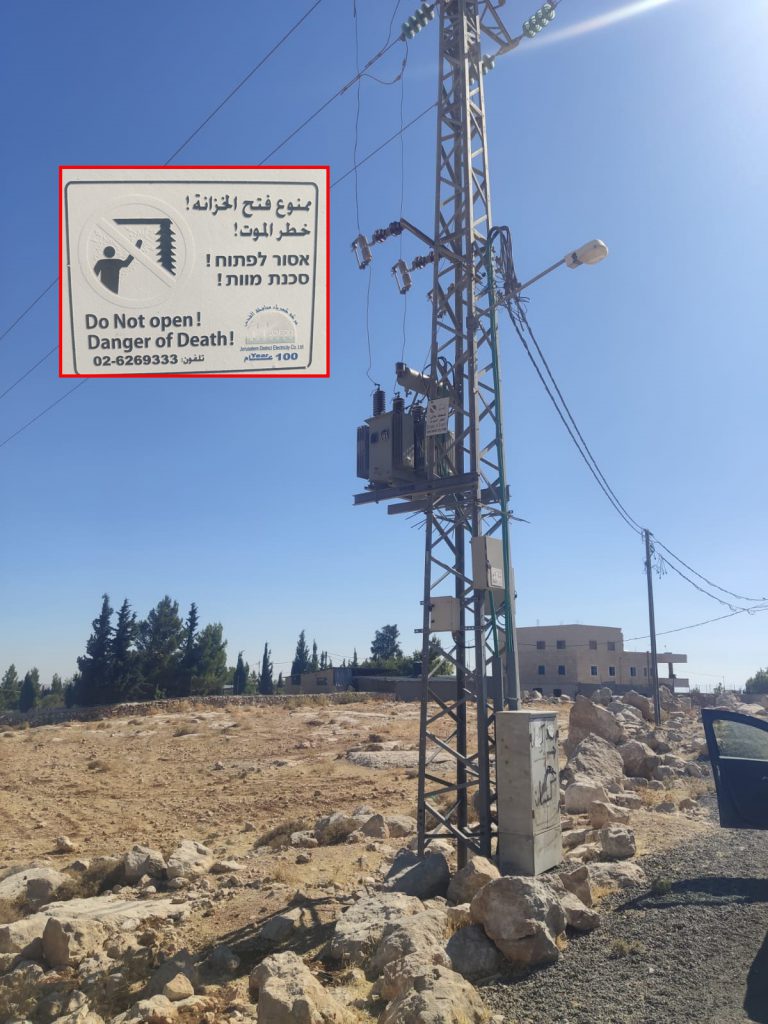
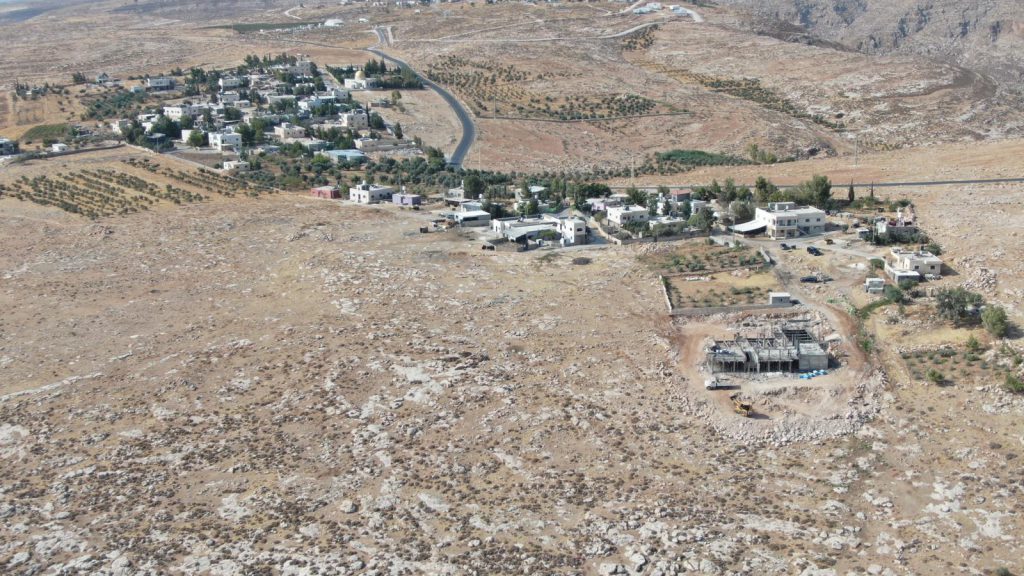
To ascertain the extent of this phenomenon, Regavim submitted a Freedom of Information request to the Civil Administration last August. The request focused on electrical connections provided for illegal structures located a few meters from the entrance gate to Efrat in Gush Etzion. These structures, built illegally by Arabs with the encouragement and support of the Palestinian Authority, are connected to the East Jerusalem Electric Company network.
Regavim wanted to understand how the East Jerusalem Electric Company received permission to connect the illegal structures to the grid, and precisely how the electricity pillars were placed: Is there an approved masterplan for the area? Were these structures given permits, or perhaps granted permit exemptions which allowed for their connection to the grid?
The Civil Administration did not respond; after Regavim’s second request for information, the Civil Administration’s official response was that “staff members are working vigorously to formulate a response to this query;” although these structures had been hooked up to the electrical supply only a few months before the query was submitted, the Civil Administration explained that the structures in question are “old,” and that “in-depth examination of the archives is required.”
Months after this puzzling response, no substantive reply was received from the Civil Administration to the Freedom of Information request, so Regavim petitioned the court to compel the Civil Administration to provide satisfactory answers about this absurd situation.
“Aside from the safety hazards posed by unauthorized, unsupervised electrical connections, this situation lends permanence to the illegal structures,” says Yakhin Zik, Director of Operations at Regavim. “It is inconceivable that a company subject to Israeli law should provide unauthorized electrical connections to structures built illegally. It is inconceivable that while on the one hand the Israeli government has vowed to fight and win “the battle for Area C,” on the other hand it is allowing this phenomenon to entrench and reward the illegal construction that is the primary tool for the hostile Palestinian takeover of Area C.”
At the largest illegal dump in Judea and Samaria, untreated waste continues to pollute the entire ecosystem – and no indictments are in sight.
Under cover of the first corona shutdown, the Ramallah Municipality dumped thousands of truckloads of untreated refuse into an abandoned quarry at the headwaters of Nahal Makoch. The Civil Administration admits: Only three trucks were impounded, and no indictments were filed against the criminals. Regavim: “The mountain of waste remains, despite the Civil Administration’s claims to the contrary.”
The mountain of waste dumped during the first corona lockdown by the Ramallah Municipality at the Nahal Makoch water basin is made up of more than 10,000 cubic meters of household and industrial waste. More than six months after the Regavim Movement filed an official complaint, “Mount Trashmore” remains precisely as it was, and in an official response to Regavim’s recent query, the Civil Administration admited that no indictments have been filed against those responsible for this environmental disaster.
Last year, during the first closure imposed to combat the spread of the corona virus, the Ramallah Municipality took advantage of the furlough of enforcement inspectors, and over the course of just a few weeks, thousands of garbage trucks dumped their contents into an abandoned quarry located only hundreds of meters from Binyamin Region Police Headquarters.
Last summer, after Regavim sent an urgent alert to the Civil Administration (CA), which is responsible for law enforcement in the area, the CA replied that they had halted all further dumping at the site and had carried out a number of enforcement actions. Regavim submitted a freedom of information request, to obtain details of the enforcement activity. From the CA’s reply, received earlier this week, we learned that in fact only two garbage trucks and an excavator were impounded, and the vehicles’ owners were charged only for the impound expenses.
⚠️ Despite the Civil Administration’s promises, the ‘Corona dump’ near Shaar Binyamin in Area C remains uncleared! And despite being caught in the act, the dumpers haven’t been indicted. ? THREAD pic.twitter.com/2r662dvkxA
The Civil Administration admitted that although the perpetrators were caught in the act, no indictments have been filed against them. In addition, the huge mountains of trash have not yet been removed from the area, contrary to the Civil Administration’s statement that “the owner of the machinery is required to remove the waste and level the area,” and that “these steps were completed out some time ago.”
“Almost a year has passed, and not one of the authorities responsible for dealing with hazards of this nature has taken responsibility,” explains Eitan Melet, Regavim’s Field Coordinator for Judea and Samaria. “The criminals got off virtually scot-free, with no criminal indictments, no clean-up costs, no punitive fines – but the entire ecosystem is paying a heavy price. The heaps of untreated garbage contaminate the topsoil, and runoff flows into the nearby creek channel, seeping into the groundwater, polluting the Makoch Valley and Wadi Qelt. This is eco-terrorism, and the official bodies that should be responding to it with swift, decisive action to repair the environmental damage and create a deterrent for other eco-criminals – the Ministry of Environmental Protection and the Civil Administration – are allowing this monumental failure to persist.”
י"ב שבט התשפ"א - 25 January 2021
Share:
PA ‘celebrates’ Tu b’Shvat near Rosh HaAyin
Yesterday (Sunday 24 January), the Palestinian Authority planted thousands of trees on Israeli state land, in an IDF firing zone. Participating in the event were armed Palestinian Police. Regavim: “While they’re establishing facts on the ground, the Israeli authorities are in winter hibernation.”
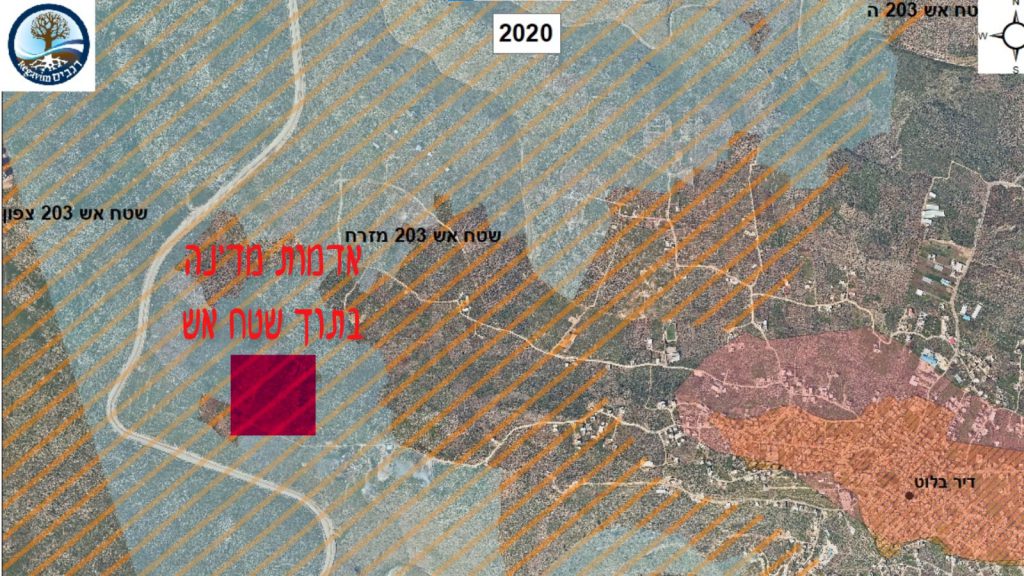
The Palestinian Authority held a ceremony yesterday (Sunday), planting some 2000 olive trees on Israeli state land, in IDF Training Ground 203 – adjacent to Rosh HaAyin to the east and Dir Balut in the west, in close proximity to the security barrier.
The event was filmed, photographed and publicized by Fatah– affiliated Radio Zeituna and on social media. Armed Palestinian Police officers were among those in attendance, and were filmed as they entered the IDF firing zone – despite the fact that are prohibited from entering Area C, the section of Judea and Samaria under Israeli jurisdiction.
This event is one element of a large-scale project that has taken shape over the past several years, in which the Palestinian Authority has planted millions of trees as a means of illegally seizing control of thousands of dunams in Area C.
The Palestinian Authority’s “agricultural annexation” focuses on land adjacent to roadways, surrounding Jewish communities, as well as state land – particularly in locations that are of high strategic and political importance.
“The Palestinian Authority has joined the Tu B’Shvat celebrations with well-planned ‘agricultural conquest’ projects – and thus far, the State of Israel is fast asleep,” said a spokesperson for Regavim. “These projects are supported by massive European funding, and the targeted locations are chosen with care to serve a clear and publicly-declared purpose: changing the map, by creating facts on the ground – and all within spitting distance of Rosh HaAyin and Gush Dan.”
י"ד כסלו התשפ"א - 30 November 2020
Share:
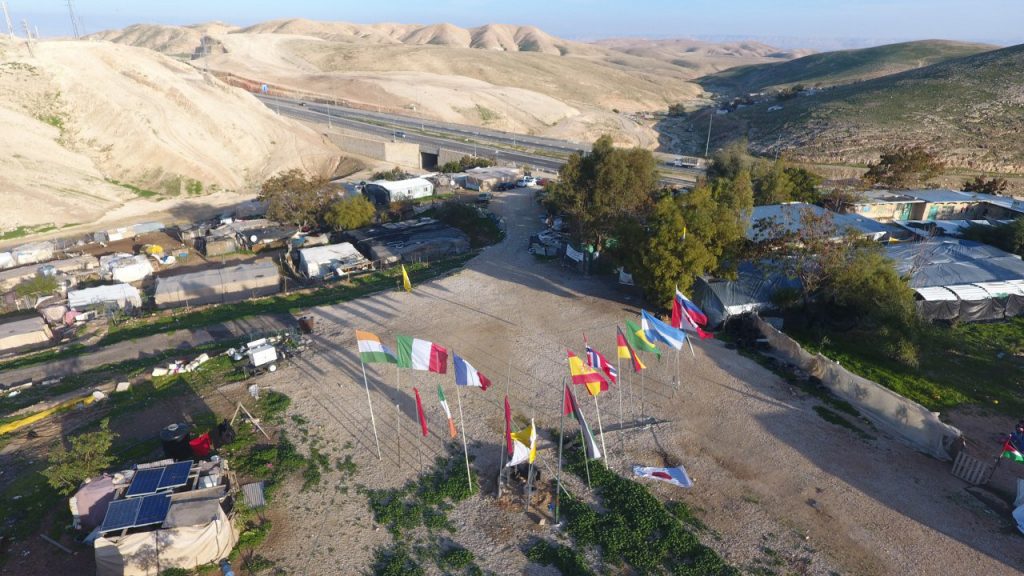
The EU-funded Palestinian outpost of Khan al-Ahmar
The High Court of Justice on Sunday (30 November) granted the state can another additional extension and postponed proceedings regarding the evacuation of the illegal Arab outpost of Khan al Ahmar until July 2021.
In it seventh hearing on Khan al Ahmar following a petition submitted by the Regavim Movement, the court granted the state another extension, giving Prime Minister Netanyahu and Minister of Defense Gantz another seven months to report on the status of the Palestinian Authority (PA) outpost in the Adumim Region (E1).
The High Court of Justice approved the evacuation of the outpost, and this most recent petition was filed when the government failed to fulfill its commitment.
Regavim, which monitors and combats illegal Arab construction and land grabs, accused Netanyahu of “hiding behind closed-door hearings and secret communications to avoid why he was able to demolish [the Israeli communities of] Netiv HaAvot and Amona but is unable to evacuate Khan al Ahmar or to stand up to the Palestinian Authority.”
“It’s convenient for Netanyahu to hide behind closed doors and use in-camera hearings to avoid explaining to the Israeli public why he hasn’t lived up to his public pronouncements and to his commitment, reiterated countless times, to evacuate Khan al Ahmar. He owes the voters an explanation: Why was he able to evacuate Netiv HaAvot and Amona, but unable to deal with Khan al Ahmar or the Palestinian Authority?”
The Khan al Ahmar saga, more than a decade long, has been heard in multiple High Court of Justice petitions submitted by Regavim.
In 2018, the Israeli government announced its intention to complete the evacuation and relocation of the illegal outpost, the flagship of the Palestinian Authority’s systematic program of territorial dominance in Area C.
The Jahalin Bedouin, the residents of Kahn Al-Ahmar, are an offshoot of a larger tribe based in southern Israel. After a blood feud that occurred within the tribe in the 1970s, some of the families were forced out and migrated north, arriving and settling in their present location after the 1973 Yom Kippur War.
The location of the illegal structures is hazardous due to its proximity to Highway 1, a major transportation artery. Khan al Ahmar overlooks the road that connects Jerusalem to the south of Israel in a strategic area.
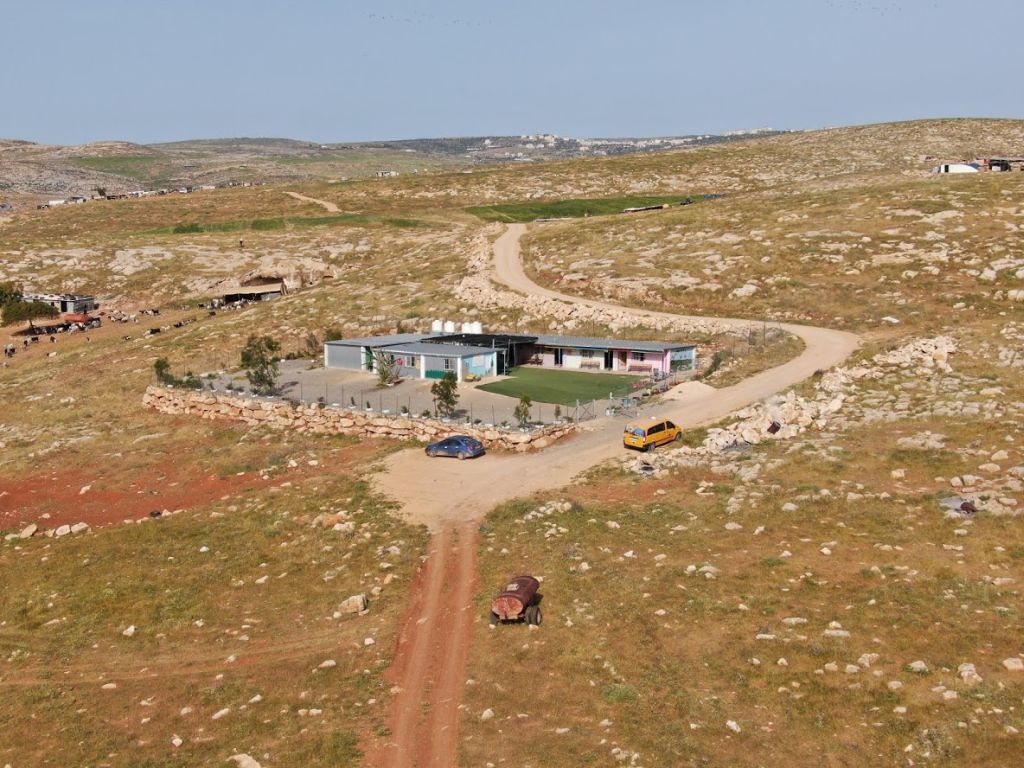
An illegal, EU-funded, PA-built school in Nahal Machoch Nature Reserve on Israeli state land
Brigadier General Ghassan Alian, Commander of the IDF’s Civil Administration, said at a hearing in the Foreign Affairs and Defense Committee that the Palestinian Authority (PA) employs hundreds of people to register real estate in Judea and Samaria – including in Area C, which is under full Israeli control, while the Civil Administration has only about 20 people dealing with this issue.
Alian’s shocking remarks were made in the context of this morning’s (November 23) Foreign Affairs and Defense Subcommittee hearing, chaired by MK Gideon Saar. The hearing, initiated by MKs Uzi Dayan, Moshe Arbel, Yitzhak Pindros and Bezalel Smotrich, examined the renewal of land registration and regulation procedures in Judea and Samaria.
The chairman of the Foreign Affairs and Defense Committee, MK Zvi Hauser, who participated in the hearing, reacted sharply, “This is the what the State of Israel has to show for itself, although for years it has talked about the ‘battle for Area C’ but in practice only a few people are assigned to this issue – despite the fact that the Palestinian Authority has been in a race to seize control and register territory, and some 600 people are employed to do so.”
Meir Deutsch, Director General of the Regavim Movement, who participated in the hearing, says that the data provided by the Civil Administration reflect that the Israeli government’s operational, organizational and moral bankruptcy.
“Land regulation and registration is a complex process that is the responsibility of the sovereign. Aside from the fact that the Palestinian Authority is treating Area C as its own sovereign territory – and there has been no Israeli response to speak of – the shameful inaction of the Israeli government to carry out land registration in Judea and Samaria is a moral failure. In essence, the government is making a statement through this inaction that it is not the sovereign in the area,” Deutsch said.
In 2019, Regavim exposed an internal Civil Administration document that outlined illegal Palestinian Authority land registration activity in Area C of Judea and Samaria, the portion of Judea and Samaria placed under full Israeli jurisdiction under the Oslo Accords.
According to this Civil Administration report, Palestinian Authority land registry efforts date back to at least 2015, and includes ownership inspection procedures, registration of purported ownership of the land in its official land registry, and parcellation of territorial blocks and individual plots of land – including property within the municipal boundaries of Jewish communities.
A report released in June 2017 exposed that “this is a phenomenon spread over thousands of dunams” and that the process “is led by the Palestinian Ministry of Justice and in particular by the Palestinian Land Authority, under the management of Nadim al-Brahami, with funding provided by various European countries.”
Illegally-constructed Palestinian school in Area C
In 2009, then-Prime Minister Salaam Fayyad unveiled his plan for the creation of a Palestinian state.
Ever since, driven by European funding and the cynical use of the most vulnerable members of society as pawns, the PA has illegally created facts on the ground.
While the Israeli government has failed to meet this challenge, the PA has fine-tuned it, building some 60,000 illegal structures, commandeering tens of thousands of acres of Israeli state land, and building some 50 illegal schools in Area C.
Strategically-placed schoolhouses are a win-win proposition. If Israeli authorities enforce the law, the media pump out heartbreaking photos of underprivileged children being ‘denied’ an education. If Israel turns a blind eye in order to avoid a black eye, the schools become anchors for new outposts in previously uninhabited – and generally uninhabitable – areas, and more funding pours in to alleviate the humanitarian hardships of these fabricated communities.
Illegal school near Kochav HaShachar constructed to facilitate a land-grab
At Regavim, we try to prevent such a predicament by identifying the problem early on. We take legal action, put pressure on the authorities, government officials, and raise public and media attention.
A Palestinian state would be a disaster for whoever seeks stability, justice, and prosperity in the region. Besides the huge security and economic threats it would create for Israel, Jewish national and individual rights in Judea & Samaria would be totally disregarded.
Help us in the #BattleforAreaC, in the battle to prevent a judenrein, failed, Palestinian terror state! You can support our efforts with a one-click, online tax-exempt donation here.
Newly-built illegal school constructed in Area C in the Jordan Valley
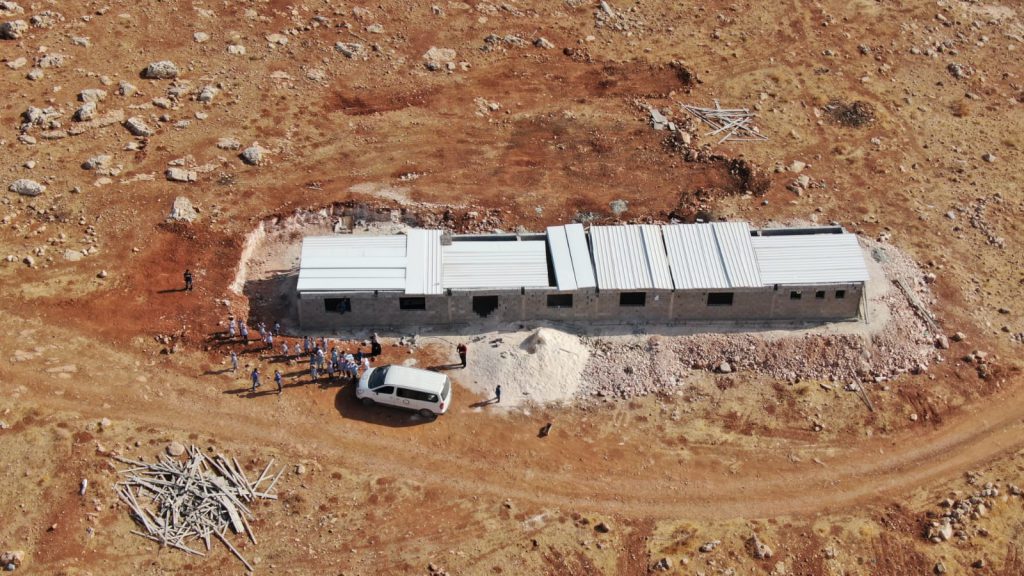
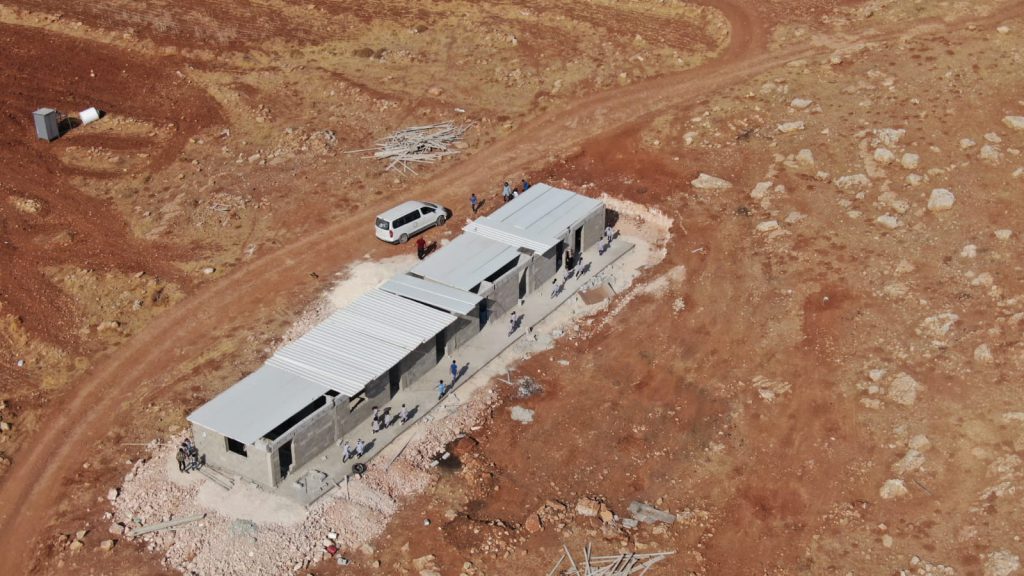
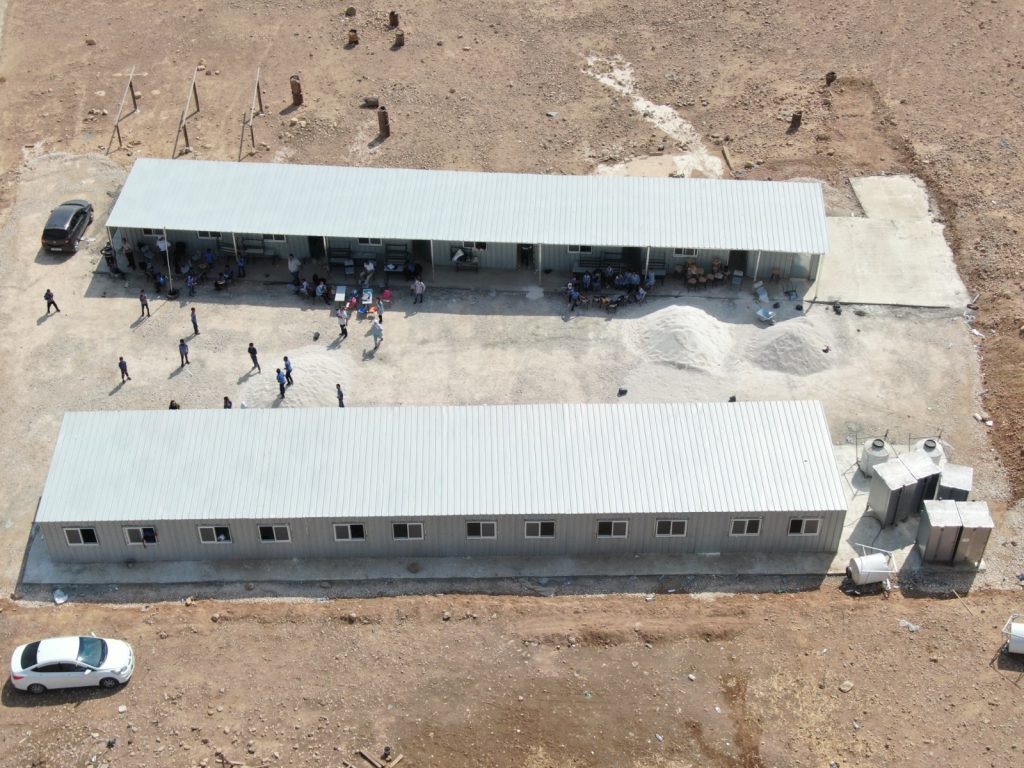
One more illegal school joins the rapidly growing roster of similar structures built by the Palestinian Authority at lightning speed. The newest to join the ranks is an illegal school built overnight – literally – in the Jordan Valley.
Regavim, meanwhile, is clear about the problem: “While the Israeli government chatters about sovereignty in the Jordan Valley, the Palestinian Authority is hard at work building a de facto state.”
Last week, the Palestinian Authority put up the latest new school building in the Jordan Valley, in the heart of the sprawling Bedouin hinterland near Al Auja.
Even a cursory look at aerial photos of the area make it clear: The school’s location was carefully chosen as the connecting link between the Bedouin outposts scattered throughout the area, which now form an all new illegal settlement bloc – in Area C (the portion of Judea and Samaria under full Israeli jurisdiction).
The structure is one more case of the Palestinian Authority’s proven method: Dozens of workers arrived at the site in the evening and worked through the night – and by morning, dozens of children were already sitting at their desks.
The bold sign at the entrance announces that the school is run by the Ministry of Education of the State of Palestine.
“The newest illegal school in the Jordan Valley was built at lightning speed, and it was already up and running by the time we spotted it,” says Meir Deutsch, Director General of Regavim.
“It joins a network of similar structures, among them the new schools in Kisan and Kochav HaShachar that were built in the past month, and more than 50 other illegal schools that have been built this way over the past decade.
“The method is the same each time: Build quickly, and at the same time as the building welcomes its first pupils, petition the High Court of Justice to block law enforcement action at the site.
“In every case, the courts have issued temporary orders that freeze the situation on the ground and bar the authorities from either shuttering or demolishing the structure.
“The problem isn’t that the Civil Administration is unable to enforce the law; the problem is that the Civil Administration has adopted a policy of enabling the construction of these schools.”
According to the map at the core of US President Donald Trump’s “Deal of the Century,” if and when a Palestinian state is established, hundreds of world heritage and archaeology sites will be removed from Israeli hands and placed under Palestinian jurisdiction. There is every reason to fear that this will accelerate the already-rampant takeover, “re-interpretation” and misappropriation of historic sites by the Palestinian Authority, and the tragic pattern of purposeful neglect that will facilitate even further looting and destruction of priceless sites and artifacts.
Recently, Yediot Aharonot revealed that, according to the “Deal of the Century” map, hundreds of heritage and archaeology sites in Judea and Samaria are slated to be removed from Israeli control and transferred to the jurisdiction of the proposed Palestinian state.
The full list of endangered sites was presented at a Knesset Foreign Affairs and Defense Committee hearing, initiated by MKs Shlomo Karhi (Likud), Matan Kahana (Yamina) and Moshe Arbel (Shas) to examine the steps taken by the Israeli government to combat the Palestinian takeover of Area C (the portion of Judea and Samaria placed under full Israeli jurisdiction under the Oslo Accords).
Regrettably, the challenges are so serious and the failure of the defense system to uphold the law in Area C so profound that the archaeological issue was not addressed. The question of Israel’s historical record is – or should be – part and parcel of the sovereignty debate, which, Prime Minister Benjamin Netanyahu reminded us, is still underway.
There are some 6,000 sites of historical and archaeological importance in Judea and Samaria that are recognized by the scientific community, but only 2,300 or so have been officially declared protected archaeological sites. Despite this paltry percentage, the unparalleled importance to world history and heritage of the better-known and more thoroughly researched sites in Judea and Samaria is such that they are protected by explicit international treaties.
The Oslo Accords did not leave these questions to chance. After stipulating PA responsibility over archaeological sites in Areas A and B – the portions of Judea and Samaria placed under the PA – those responsibilities were clearly enumerated; here’s a brief excerpt of some of the relevant clauses:
• The Palestinian side shall protect and safeguard all archaeological sites, take all measures necessary to protect such sites and to prevent damage to them and take all precautions when carrying out activities, including maintenance and construction activities, which may affect such sites.
• A Joint Committee of experts from both sides shall be established by the CAC to deal with archaeological issues of common interest.
• The Palestinian side shall respect academic freedom and rights in this sphere.• Subject to academic considerations, and in accordance with the law, when the Palestinian side grants excavation licenses to archaeologists, researchers and academics, it shall do so without discrimination.
• The Palestinian side shall ensure free access to archaeological sites, open to the public without discrimination.
• Each side undertakes upon itself to respect sites in the West Bank and the Gaza Strip which are regarded as holy, or which hold archaeological value.
• Each side shall have the right to raise issues relating to those sites before the Joint Committee which will consider the issue raised and reach an agreement upon such issue.
The agreement then goes on to list sites of exceptional archaeological and historical importance to the Israeli side and calls for full cooperation regarding these sites in particular.
While these provisions sound extremely thorough and detailed, they have never been worth the paper on which they were printed. The Joint Committee was never formed, the “cooperation” never materialized, and the PA continues to engage in the systematic erasure of sites that bear testimony to the Jewish connection to the Land of Israel.
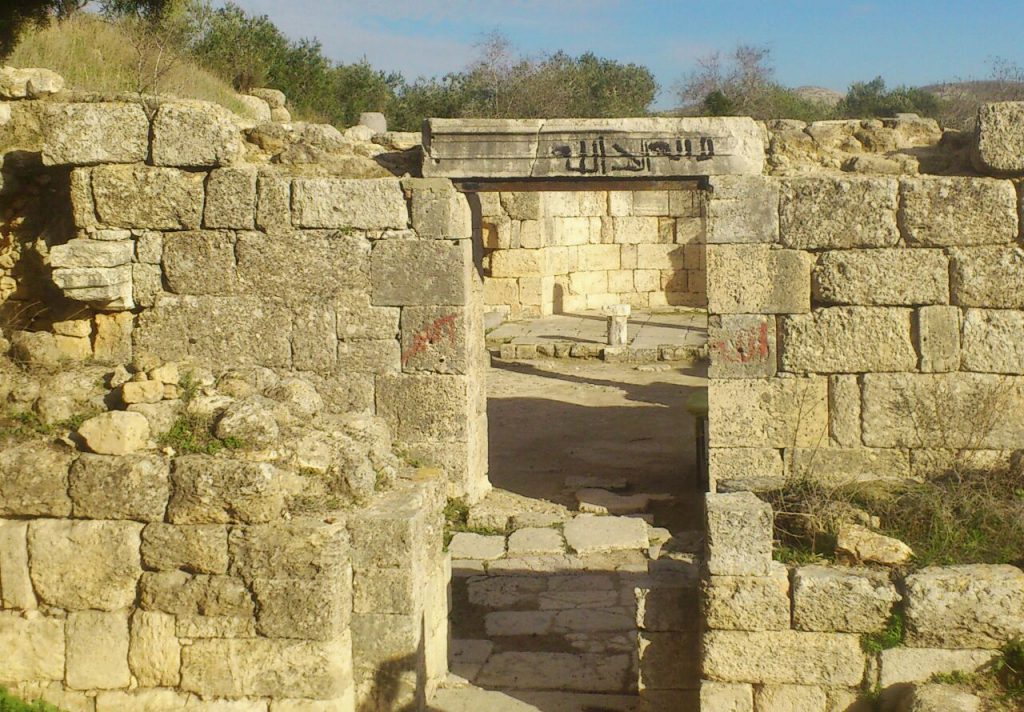
A few examples suffice to illustrate the disastrous situation and to dispel any doubt as to what lies ahead: The first is the ancient synagogue at Samu’a, site #1 on the Oslo Accords list, which has been vandalized and damaged repeatedly. It is located in the center of the Arab village of the same name, and is under PA jurisdiction. Israelis – scientists, worshipers, tourists, inspectors – are able to access the site only with extremely complicated and rare security arrangements. As the attached photos can attest, the vandalism bears a strong antisemitic slant, and the PA has not merely failed to prevent this vandalism, it has also failed to restore this and other similar sites, or to enable access to it as required by the Oslo Accords.
A second example is Tel Aromah, located in Area B (the portion of Judea and Samaria placed under Palestinian jurisdiction for non-security matters). Tel Aromah is one of a chain of eight Hasmonean-era fortresses (142-63 BCE) built by the Maccabean dynasty to protect the Jewish State and its heartland in Judea and Samaria. These massive and imposing fortresses (item #6 on the Oslo Accords list) have been the object of massive and imposing destruction at the hands of the Palestinian Authority, which has poured hundreds of thousands of dollars into “rebranding” Tel Aromah as a “Palestinian Heritage Site.” Most recently, the PA took advantage of the coronavirus shutdown of Israeli oversight and enforcement, and paved an access road to the site, plowing over a section of the fortress wall and destroying the water cisterns that served the inhabitants of the fortress over 2,000 years ago. The PA also paved over an area at the top of the ridge in order to install a massive Palestinian flag and set up tents that are now manned 24/7 to facilitate the Palestinian presence at the site.
A third example is the ancient altar at Mount Ebal (Tel El-Burnat), located in Area C. This site, surveyed and excavated by Prof. Adam Zartal in the 1980s, dates to 1250 BCE, and is identified as the altar constructed by Joshua, the first site of cultic practice and institutionalized Jewish worship in the Land of Israel. Due to its historic, scientific, symbolic and religious significance, the leadership of the village declared war on the site, which is now presented as a “Palestinian Heritage Site.” The Qalandiya Ranch – illegal construction on a massive scale in Area C (which is purportedly under Israeli control), now stands on the precise area of the archaeological tel (and not for want of available open spaces for construction – the surrounding area is completely open, and the PA has within its jurisdiction massive land reserves for which it could and should issue permits). The cultic site is disappearing and history is being expunged.
Another site that has been given a new narrative and identity by the PA is Sebastia, the Arab name for Shomron (Samaria) – the capital city of the northern Israelite kingdom founded in the 9th century BCE. Recently, Sebastia was inaugurated as an official Palestinian Tourism Site, and is open to the public (the UN invested hundreds of thousands of dollars in this “Palestinian Heritage Site”). Local visitors and tourists from around the world who visit the site are exposed to a completely Palestinian narrative, and no mention whatsoever is made of the Jewish connection to the site or the region, to the independent Jewish Kingdom of which Samaria was the seat of government, or to the biblical connections to the city and its environs. No mention is made of the important Christian links to the site, and the Church of St. John the Baptist, a beautiful Byzantine-era structure said to be the burial place of the apostle’s head, has been defaced, and now lies in ruins; other cathedrals-turned-mosques in Sebastia have received new “interpretations” in PA tourism guides.
Defacing the archaeological site in Sebastia
Finally, the case of Archilais, an impressive regional center in the Jordan Valley dating back to the Hasmonean Era. The city was named for Herod Archilaus, who came to power after the death of his father Herod the Great in 4 BCE, and ruled over one-half of the territorial dominion of his father. Today, the city is nothing more than a pile of indistinct rubble, reduced beyond recognition by incessant, massive and brutal “reclamation” that goes far beyond the ability of individual treasure-seekers.
Following the rollout of the Trump plan, Preserving the Eternal – a nonprofit dedicated to the preservation of the archaeological treasures scattered throughout Judea and Samaria – was contracted by the Shiloh Policy Forum to conduct an emergency survey of 365 major antiquities sites that bear particularly important testimony to Israel’s national heritage.
Of the sites surveyed for this project, 258 are located in what is currently Area C. According to the conceptual maps released with the US plan, some 30% of these sites will be part of the future Palestinian state; 135 heritage sites currently under Israeli control will be reassigned to Palestinian jurisdiction. Notable among these are the Hasmonean Fortress at Horkania in the northern Judean Desert, the Hasmonean Fortress at Kypros in the Jordan Valley, the Hasmonean palaces near Jericho, the biblical city of Shomron (Samaria-Sebastia), the altar of Joshua on Mount Ebal, Tel Beitar, Tel Maon and Tel Hebron.
The overwhelming majority of antiquities sites in Judea and Samaria already suffer from constant vandalism and looting; there is every reason to fear that these trends will be exacerbated if jurisdiction is transferred to the Palestinian Authority, which is intent on obliterating the physical record of Jewish connection to the Land of Israel.
“Unfortunately, in the last 20 years, the State of Israel has not maintained its heritage sites,” says Eitan Melet, field coordinator for the Preserving the Eternal Project. “Priceless archaeological sites have been neglected by the government and have been relegated to a place of shame on the list of national priorities. Four thousand years of history should be treated with far more respect. It is time our decision-makers give their full attention to Israel’s national heritage sites and take whatever steps are necessary to maintain them, even if this requires allocating more resources or adjusting the map here and there.” “The Oslo Accords’ stipulations on preservation of and access to world heritage treasures have been completely ignored; it is safe to say that at least in this respect, the Oslo Process has been an abject failure,” says Meir Deutsch, director-general of Regavim. “Many sites are on the verge of being lost forever to the scientific community, and other major sites have been targeted by the Palestinian Authority for takeover and ‘repurposing’ as ‘Palestinian heritage sites.’” The only way to protect these irreplaceable treasures is to extend Israeli sovereignty over as much of the territory as possible, as quickly as possible. This would automatically impose Israel’s stringent antiquities protection laws to these sites and place them under the auspices of Israel’s Antiquities Authority. The alternative – reflected in the “Deal of the Century” map – is clear: The physical remains of biblical history will be decimated under Palestinian custodianship.
Unfortunately, recent history leaves no doubt as to the reliability of Islamist regimes when it comes to protecting, preserving and providing free access to non-Islamic sites and artifacts. On the other hand, Israel has a proven record of insuring full freedom of access and religious worship to members of all faiths. Only under Israeli law have all peoples of the world enjoyed free and unfettered access to our shared world heritage and religious sites, and only under Israeli custodianship will continued religious and scientific freedom in the Land of Israel be guaranteed. Future generations will not forgive us if we fail to preserve our shared heritage by placing its preservation under Israeli law – today.
כ"ז אב התש"פ - 17 August 2020
Share:
Illegal PA construction
The Knesset Foreign Affairs and Defense Committee has been told that the Palestinians have taken over large swaths of Israeli-controlled land in Judea and Samaria while authorities dither on what action to take, Makor Rishon reported Monday.
Testifying before the committee, a representative of the pro-settlement Regavim presented mapping data they collected that does not correspond to the data of the Civil Administration.
“They [Civil Administration] are talking about locating 650 buildings, we found 3,500 illegal buildings built in 2020,” Meir Deutsch said. “Today there are about 69,000 illegal buildings in Area C,” which amounts to 30 to 40 percent of Area C.
Deutsch, whose organization monitors enforcement of the law in Judea and Samaria, showed that in Area A, which is under direct Palestinian control, there are many empty areas suitable for construction without the need for Israeli approval, but the Palestinians insist on building in Area C, which is under full Israeli control.
Regavim said the Palestinians are taking advantage of Israel’s non-enforcement and taking over land in Area C due to the decision-making vacuum as Israel took the last six months to prepare for the application of Israeli sovereignty to settlements in Judea and Samaria.
The sovereignty plan would have seen up to 30 percent of Judea and Samaria fall under direct Israeli rule, but last week it was indefinitely postponed as a condition for the impending establishment of diplomatic ties with the United Arab Emirates, expected to happen at the White House in the coming weeks.
The committee was told that as early as 2017, the Civil Administration recommended a plan to register land in Judea and Samaria as a countermeasure to the registration proceedings initiated by the Palestinian Authority. Knesset Member Ayelet Shaked claims those plans got stuck with the prime minister.
It was revealed that the cabinet decided a year ago that action needed to be taken to thwart the PA’s plan to seize sections of Area C, but nothing was done.
“A common tactic of the Palestinian Authority is to build schools to facilitate a land grab,” Regavim tweeted, saying the Palestinians use large amounts of European funds provided for Palestinian construction in order to quickly put up buildings they call schools without building permits on lands not under their legal control.
The Palestinians then put students in the new school before legal action is taken to demolish the illegal structure, owing to the Israeli government dragging its feet on the legal procedures.
Israel not moving in immediately “makes it much harder for Israel to demolish. Political, international, media pressure works wonders,” Regavim said.
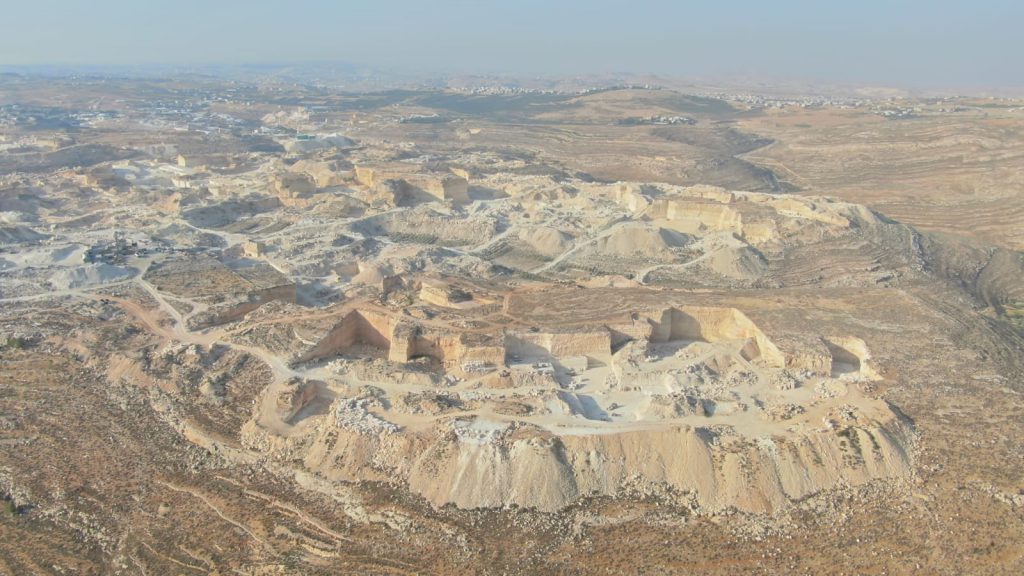
The Regavim Movement recently petitioned the Jerusalem District Court against the continued operation of the Beit Fajar quarry in eastern Gush Etzion. The quarry currently spans some 1,500 dunams (1.5 km2) – hundreds of dunams of which are registered state land – and continues to cause irreversible ecological and environmental damage.
Approximately one third of the Beit Fajar quarry is situated on land under Palestinian Authority jurisdiction, which explains why the State of Israel has refrained from enforcing environmental protection regulations there. However, the majority of the quarry is located on land under full Israeli jurisdiction – and hundreds of dunams are registered as state property. Yet there, too, the quarrying carries on, unhindered and unregulated.
Regavim’s attorneys, Avi Segal and Yael Cinnamon, described the gaping “wound” created by the quarry and the irreparable destruction of the landscape, as well as the massive disruption of the delicate ecosystem that has caused irreversible environmental damage, including destruction of wildlife habitats and breeding grounds for unique species of flora and fauna that have developed and thrived in this area over thousands of years.
Regavim first petitioned Israel’s High Court against the quarry a decade ago, when the quarry, and the damage, were still relatively small. Responding to this petition, the government informed the High Court that it had carried out a number of enforcement steps, and was working on a zoning plan for the area that would establish land-use directives for quarrying at the site.
On the basis of the government’s statements and commitments, the High Court rejected Regavim’s petition at that time. Then-Chief Justice Dorit Beinish, who presided over the case, stressed in her judgement that “we are assuming that the enforcement and regulatory actions taken by the respondents will continue, and that the policy that has been formulated will be enforced without interruption.”
Unfortunately, a decade has passed, and not only have the Israeli authorities failed to take any steps to prevent the continued operation of the quarry, they have allowed it to expand by 33%, deepening the invasion of state land by more than 200 dunams beyond its boundaries ten years ago.When repeated inquiries and correspondence on the matter were ignored, Regavim went back to court, filing a petition against Minister of Defense Beni Gantz, Minister of the Environment Gila Gamliel, the IDF Commander of Central Command, the Civil Administration and the Israel Police.
“The environmental damage caused to this area by the inaction of the authorities responsible for law enforcement is staggering, and, sadly, irreparable,” said Regavim’s spokesperson. “The State of Israel has strict regulations for quarrying permits, and owners and operators are required to finance the rehabilitation of quarried areas when they become inoperative in order to minimize the environmental impact – but this policy vanishes when the imaginary line into Judea and Samaria is crossed. Adding insult to injury, when micro-measures are taken to rehabilitate illegal quarries in these areas, they are paid for by Israeli taxpayers, and the criminals who cause the damage simply carry on, rapaciously exploiting the natural resources of the Land of Israel as they scoff at the law and pocket vast profits, without any responsibility for the destruction they leave in their wake.”