Last week, the Beer Sheva Magistrates Court sentenced an Israeli Bedouin to seven months in prison, after he was found guilty of polygamy. The man, a resident of the Negev, was already married when he took an additional wife.
Although polygamy has been illegal in Israel since 1951, this is only the second time that a polygamist was sentenced to jail time
Polygamy harms the most vulnerable members of Bedouin society, causing poverty and neglect of women & children. It also has a far-reaching impact on Israel’s economy, as it is funded and driven almost entirely by National Insurance Institute (Bituach Leumi) stipends and benefits.
Regavim has been studying and monitoring the practice of polygamy in the Bedouin sector for years. We presented the Ministry of Justice with a comprehensive report and analysis of the phenomenon, which acted as one of the factors leading to the formulation of the Ministry’s new directives to grapple with the problem. And we are members of the Inter-ministerial Committee that monitors the application and enforcement of these directives.
Well done to former Justice Minister Ayelet Shaked and Attorney Emi Palmor, former Director General of the Ministry of Justice, for their leadership in bringing about this much-needed change!
We hope that strict sentences, coupled with educational initiatives and awareness campaigns among young Bedouin men, will bring an end to polygamy in Israel once and for all.
Illegally-constructed Palestinian school in Area C
In 2009, then-Prime Minister Salaam Fayyad unveiled his plan for the creation of a Palestinian state.
Ever since, driven by European funding and the cynical use of the most vulnerable members of society as pawns, the PA has illegally created facts on the ground.
While the Israeli government has failed to meet this challenge, the PA has fine-tuned it, building some 60,000 illegal structures, commandeering tens of thousands of acres of Israeli state land, and building some 50 illegal schools in Area C.
Strategically-placed schoolhouses are a win-win proposition. If Israeli authorities enforce the law, the media pump out heartbreaking photos of underprivileged children being ‘denied’ an education. If Israel turns a blind eye in order to avoid a black eye, the schools become anchors for new outposts in previously uninhabited – and generally uninhabitable – areas, and more funding pours in to alleviate the humanitarian hardships of these fabricated communities.
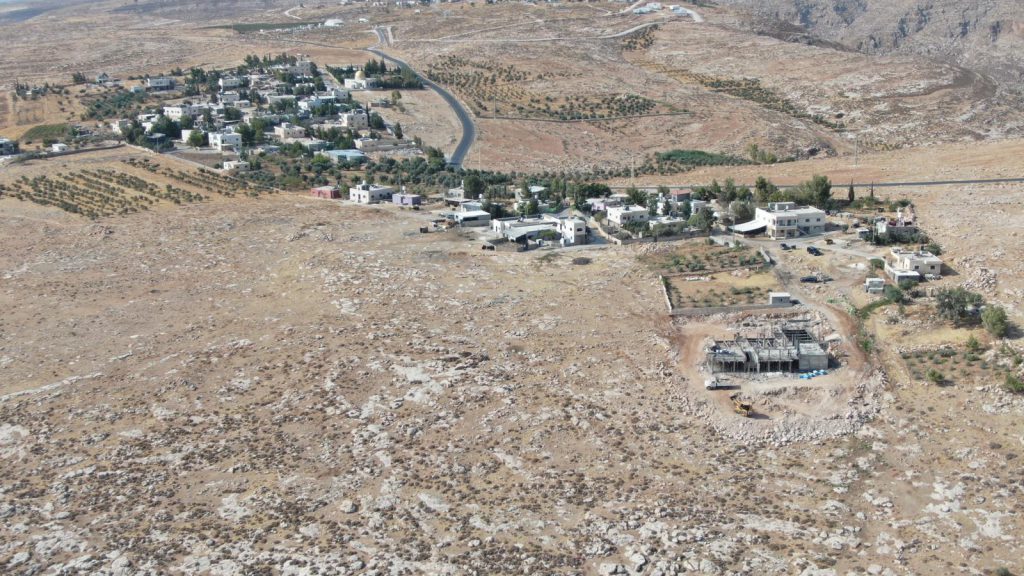
Illegal school near Kochav HaShachar constructed to facilitate a land-grab
At Regavim, we try to prevent such a predicament by identifying the problem early on. We take legal action, put pressure on the authorities, government officials, and raise public and media attention.
A Palestinian state would be a disaster for whoever seeks stability, justice, and prosperity in the region. Besides the huge security and economic threats it would create for Israel, Jewish national and individual rights in Judea & Samaria would be totally disregarded.
Help us in the #BattleforAreaC, in the battle to prevent a judenrein, failed, Palestinian terror state! You can support our efforts with a one-click, online tax-exempt donation here.
כ"ה תשרי התשפ"א - 13 October 2020
Share:
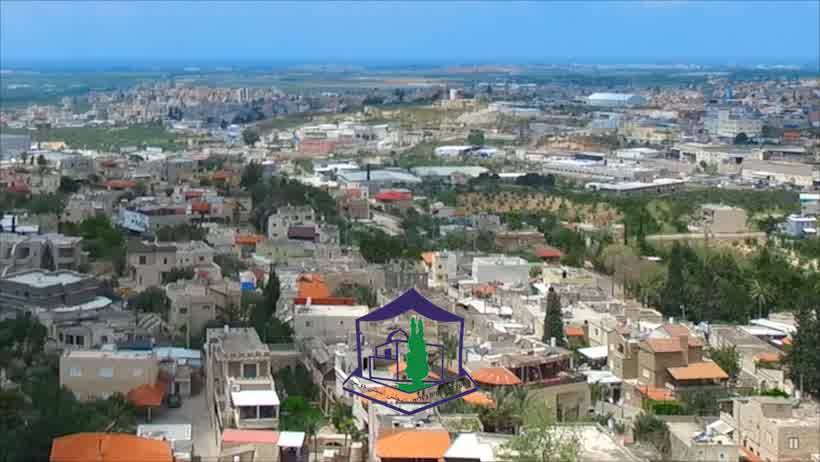
Druze township of Julis in the Galil
Israel’s Regional Planning and Construction Board (Northern District) has approved the publication of a new municipal masterplan for Julis, a Druze township in the Galilee.
The new masterplan paves the way for construction of some 3,000 new housing units, providing residential opportunities that will allow the township to double its population to 12,5000 residents while enabling major improvements to existing infrastructure alongside development of new services and public institutions.
The masterplan was released on Tuesday (October 13).
Many of the new housing projects will utilize already-existing land reserves and newly-expanded construction rights, while others will be built on newly-acquired municipal land reserves, allotted to Julis as part of an expansion project launched by the National Planning Authority.
The plan sets aside some 300 dunams for commercial use, as well as 100 dunams of green spaces. Among other things, the new masterplan will convert the town center and its historic landmarks into a pedestrian mall.
The Regavim non-profit organization applauded the new plan.
“Well-designed planning that makes full use of land reserves while addressing the need to develop housing and employment opportunities is the basis of modern, efficient land-use policy,” said Meir Deutsch, Director General of Regavim.
“These principles should be at the heart of all future planning in Israel, particularly in communities that developed over the years without any oversight or long-term vision.
“Organized, forward-thinking policy of this kind is in the best interests of the residents themselves, who will finally enjoy the benefits of urban planning – modern infrastructure, improved living and working conditions, and a cleaner, brighter, more promising future.”
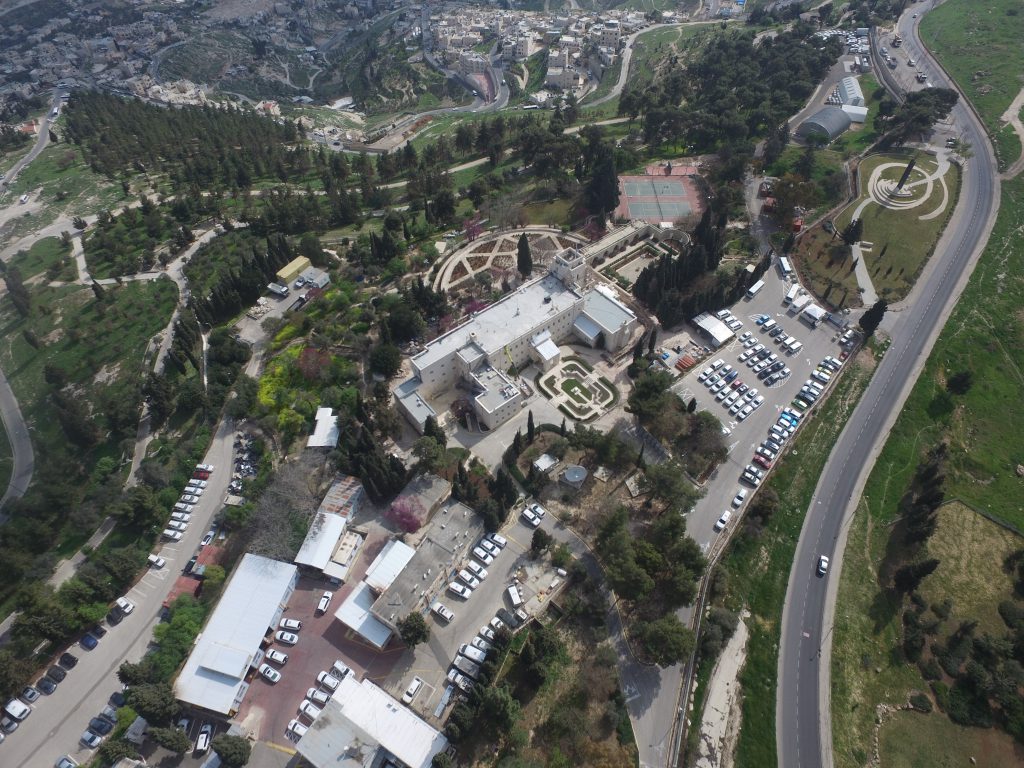
Regavim’s petition regarding the UNTSO Compound in Armon HaNatziv continues.
In March 2017, Regavim petitioned the Jerusalem Magistrates Court for a temporary injunction requiring the Israeli authorities to issue evacuation and restoration orders against illegal construction at the UNTSO compound in Armon HaNatziv, in southern Jerusalem.
This petition was the result of Regavim’s discovery that the UN was carrying out blatant violations of Israeli law and sovereignty at the site, including seizure and unauthorized use of property adjacent to the compound originally “rented” to the UN by the State of Israel, and construction of a number of buildings – including an illegal gas station – at and around the original site for which permits were never requested or received. The work that had either been completed or that was then underway had already caused significant changes to protected historic structures, and posed a possible environmental threat, aside from the basic violation of Israeli law and Israeli sovereignty in Jerusalem.
In the hearing of Regavim’s petition on 8 November 2017, the State’s representatives confirmed that these construction projects had, in fact, been carried out and were still in progress, but stated that the Israeli government would be carrying out diplomatic discussions with representatives of the UN on this matter.
Over the course of the next three years, these “diplomatic discussions” continued, and last week (15 September 2020) the State’s representatives notified the court that this process had reached a successful conclusion: The sides agreed that all future construction work at the site will be “consonant” either substantively or substantially (the wording in Hebrew is extremely vague) “with Israel’s Planning and Construction Code, and will be carried out according to mutually acceptable parameters.” In addition, the government’s attorney notified the court that its inspectors had received and studied plans and other documentation for the construction work that has already been initiated or completed at the site, and found the documentation “satisfactory.”
The State therefore argued that Regavim’s petition had been made redundant and should be rejected.
“While Regavim is happy to hear that the Israeli government and the United Nations have reached an understanding regarding future construction at the site, with all due respect – this ‘understanding’ is worthless,” said Naomi Kahn, Director of Regavim’s International Division.
“There is no argument that Israel’s planning and construction laws apply to the Armon HaNatziv compound, and that the UN and its representatives are required to obey these laws; in fact, this is stated clearly in paragraph 5 of the State’s response. The ‘understanding’ reached with the UN that future construction will be ‘consonant’ with Israeli law is another way of saying that the UN is somehow above the law, and has voluntarily agreed to take Israel’s Planning and Building Code into consideration. At the same time, the Israeli government’s acquiescence to this ‘understanding’ exempts it from enforcing the law.”
“This is an ‘understanding’ that we must not accept,” Kahn continued. “Regavim’s petition, from the very outset, has been as much about the physical damage caused to the historic compound as it is about the blatant disregard for Israeli sovereignty in our capital. ”
Here's a story about #UN?? illegal activity & pathetic #Israeli?? governance. THREAD:
– 1967. Israel grants UN a compound in Armon HaNatziv, in southern #Jerusalem, to allow #UNTSO personnel to monitor ceasefire between #Israel & its neighbors post-war.
“We are unwilling to accept the Israeli government’s behavior in this matter,” added Attorney Avi Segal, who represents Regavim in this case. “The ‘satisfactory’ documentation presented by the UN should not empower our government or its agencies to undermine the basic principles of equal and universal law enforcement. If the planning and building code becomes nothing more than a set of recommendations, if the ramifications for our environment and the allocation of national resources of large-scale projects are only of secondary concern, and if political pressure suffices to suspend all semblance of legal process, Israel is in sad state indeed.”
“Regavim will continue to pursue this matter in court,” said Meir Deutsch, Director General of Regavim. “We will not accept our government’s willingness to forgo Israeli sovereignty – particularly when the challenge is posed by an organization that acts consistently against Israeli sovereignty on every possible front.”
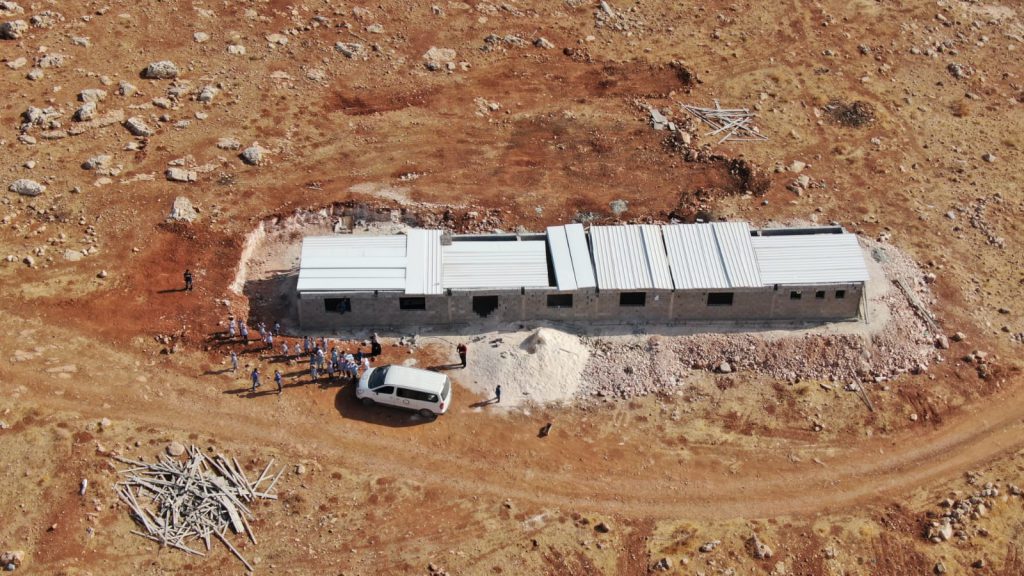
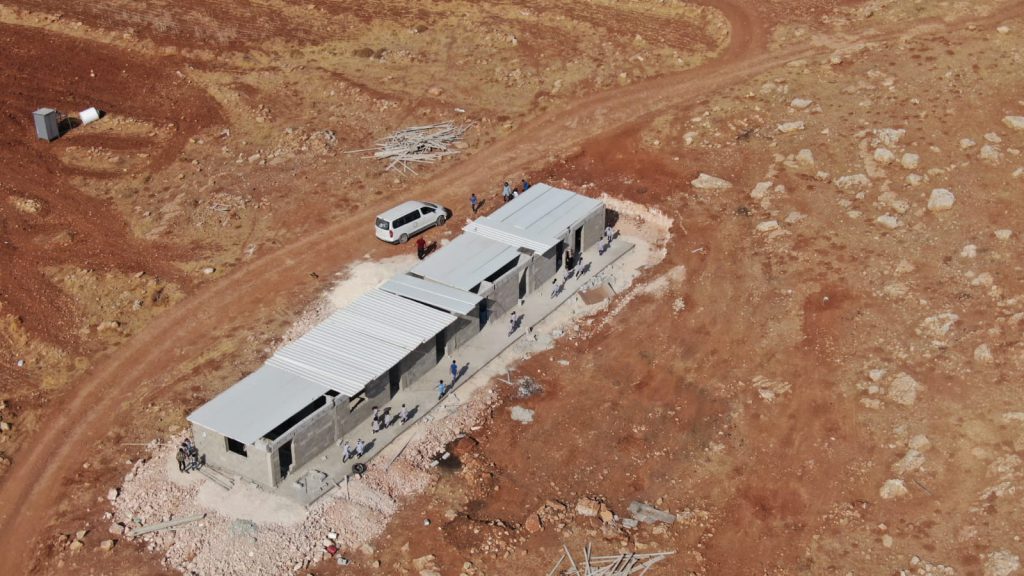
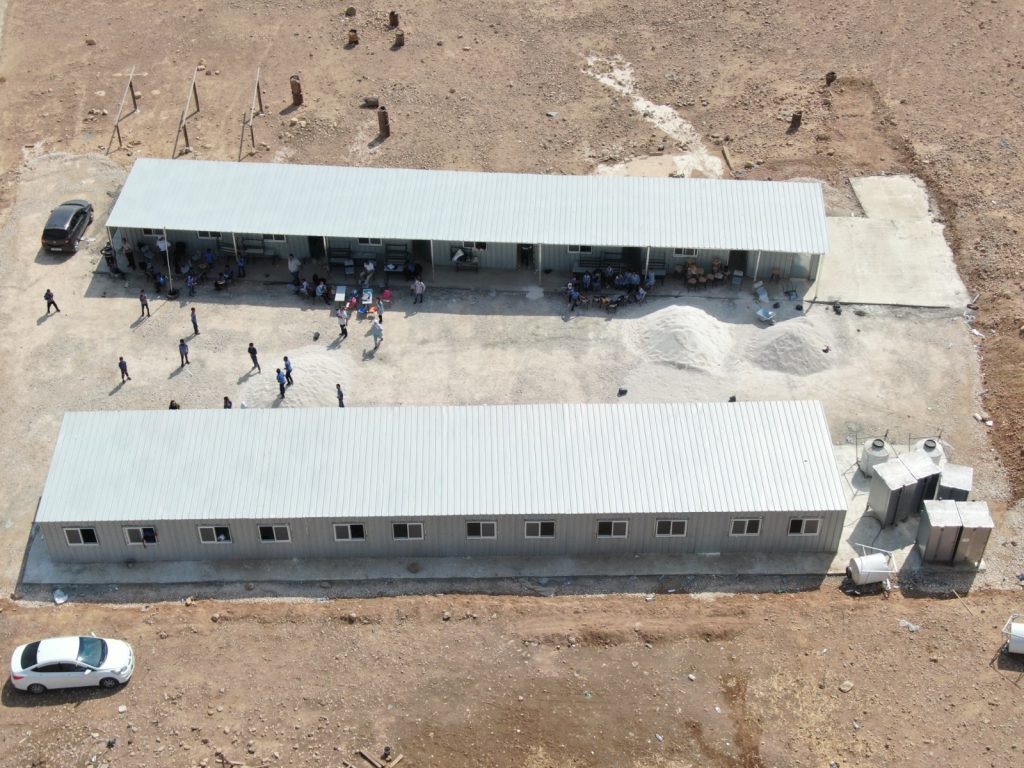
Newly-built illegal school constructed in Area C in the Jordan Valley
One more illegal school joins the rapidly growing roster of similar structures built by the Palestinian Authority at lightning speed. The newest to join the ranks is an illegal school built overnight – literally – in the Jordan Valley.
Regavim, meanwhile, is clear about the problem: “While the Israeli government chatters about sovereignty in the Jordan Valley, the Palestinian Authority is hard at work building a de facto state.”
Last week, the Palestinian Authority put up the latest new school building in the Jordan Valley, in the heart of the sprawling Bedouin hinterland near Al Auja.
Even a cursory look at aerial photos of the area make it clear: The school’s location was carefully chosen as the connecting link between the Bedouin outposts scattered throughout the area, which now form an all new illegal settlement bloc – in Area C (the portion of Judea and Samaria under full Israeli jurisdiction).
The structure is one more case of the Palestinian Authority’s proven method: Dozens of workers arrived at the site in the evening and worked through the night – and by morning, dozens of children were already sitting at their desks.
The bold sign at the entrance announces that the school is run by the Ministry of Education of the State of Palestine.
“The newest illegal school in the Jordan Valley was built at lightning speed, and it was already up and running by the time we spotted it,” says Meir Deutsch, Director General of Regavim.
“It joins a network of similar structures, among them the new schools in Kisan and Kochav HaShachar that were built in the past month, and more than 50 other illegal schools that have been built this way over the past decade.
“The method is the same each time: Build quickly, and at the same time as the building welcomes its first pupils, petition the High Court of Justice to block law enforcement action at the site.
“In every case, the courts have issued temporary orders that freeze the situation on the ground and bar the authorities from either shuttering or demolishing the structure.
“The problem isn’t that the Civil Administration is unable to enforce the law; the problem is that the Civil Administration has adopted a policy of enabling the construction of these schools.”
Today (September 7), the Shin Bet security agency announced that it foiled a Hamas bombing attack at Bilu Junction in central Israel. Mahmud Makdad, an Israeli citizen from the Bedouin town of Segev Shalom in the Negev, was apprehended as he attempted to plant an explosive device in a bus stop at the bustling junction.
Nine others, nearly all residents of Segev Shalom, were arrested for conspiring or actively participating in the foiled attack – including Mahmud’s brother, Ahmed Makdad.
The Makdad brothers’ mother is an Israeli Bedouin, while their father hails from the Gaza Strip. Mahmud is married to woman who resides in Gaza; he spends half his time there. He was enlisted by the military wing of Hamas to reconnoiter sensitive spots throughout Israel, provide information on the location of Iron Dome installations, and was trained to carry out explosive-device attacks.
Regavim conducted an in-depth study on polygamy in the Bedouin sector, and is a participant in the inter-ministerial team convened by the government to monitor enforcement of anti-polygamy laws and implementation of government policy.
According to Regavim’s 2018 study, as a result of marriages between Palestinian women (mainly residents of the Hebron area & the Gaza Strip) and Bedouin men who hold Israeli citizenship, between 40,000-60,000 Palestinian women and their children were living in the Negev in 2015. This figure, based on Israeli social welfare agencies’ estimates, reflects a rate of polygamy in Israel’s Bedouin sector of some 35%; in these polygamous households, some 70% of the women are Palestinian. A study published by Professor Arnon Sofer in 2004 quoted sources that estimated the number of Palestinians living in the northern Negev at that time was between 50,000 – 65,000.
We cannot ignore the fact that the Makdad brothers are products of the practice of polygamy in the Bedouin sector. As Bedouin men seek a second, third or even fourth wife, a massive ‘import-export trade’ has burgeoned in the Negev, enabling for the connection of families to hostile groups in Gaza/the PA.
While these arrests should not cast aspersions on the entire Bedouin sector, the trend of ‘Palestinianization’ of the Bedouin sector must be addressed!
In recent years, thanks to Prime Minister Netanyahu’s directives and former Minister of Justice Ayelet Shaked’s efforts, progress has been made to tackle this issue. However, the government is focusing mainly on the socioeconomic and personal aspects of the practice of polygamy, rather than on its national-social aspects. This time, the ticking bomb was defused – quite literally – but the problem has not been solved.
The sad truth is that Cassif’s objections have very little to do with ecology and environmental protection, and everything to do with a scorched-earth policy of anti-normalization in the West Bank.
A recent Knesset hearing on the proposed Sha’ar Shomron Commercial Centre was an invaluable lesson in Israeli politics and its ills.
MK Ofer Cassif of the United Arab List, who initiated the hearing, described the Shaar Shomron project as a danger to “a unique ecological system in the West Bank.” To the untrained eye, the concerns raised by MK Cassif seem perfectly legitimate and entirely non—partisan, but a closer look reveals unbridled cynicism, hypocrisy and political posturing.
The first thing that made this particular Knesset hearing unusual is the forum in which it was conducted: MK Cassif raised his ecological objections in the Knesset Foreign Affairs and Defense Committee, rather than in the Knesset’s environmental, construction or commerce committees. Why, we might well ask, did MK Cassif choose such a strange forum for this seemingly “green” debate?
And why, we might also ask, has this project progressed to the final stages of planning if it poses such a dire threat to the environment? The blueprint for the Shaar Shomron Commercial Zone has been analyzed and inspected from every possible angle over the course of years. It has been approved by the Regional Planning and Construction Committee, and breezed through the public objections phase. What does MK Cassif know now that he and his colleagues in the United Arab List didn’t know two or three years ago? What does he know that everyone else doesn’t?
The sad truth is that Cassif’s objections to the plan have very little to do with ecology and environmental protection, and everything to do with a scorched-earth policy of anti-normalization in Judea and Samaria. MK Cassif and the United Arab List have a very clear agenda– and the economic development and financial well-being of the flesh-and-blood residents of Judea and Samaria (“the West Bank,” in their lingo)- Arabs and Jews alike – be damned. No employment opportunities will be allowed. No modernization will be permitted. No co-existence will be condoned. “Normal” beyond the dreaded (but imaginary) ‘green line’ must always be equated with “backward;” otherwise, how will the United Arab List continue to rail against the evils caused by Israeli “occupation”? No commercial centers, planned by Israeli authorities to balance development and economic needs with sustainable use of resources and minimal environmental impact, will be permitted.
What makes MK Cassif’s concern for the “delicate ecosystem” even more absurd is the fact that less than one mile away from the proposed site of the of the new employment hub – in the very same “delicate ecosystem” – lies the largest commercial zone in Israel – the illegal Kfar Kasem commercial center that is gobbling up green spaces and operating without licenses, without proper waste removal, sewage, water or other infrastructure oversight, without taxation or insurance payments. In short, the free-for-all at nearby Kfar Kasem doesn’t bother Cassif or his fellow United Arab List MKs in the least, but a properly planned commercial center, built to code and overseen by engineering, environmental and economic experts, has awoken their eco-conscience. Strange, indeed.
We might say that the United Arab List has a very selective appreciation for rules and regulations. In fact, one of the central planks of the party’s platform is the repeal of Amendment 116 to the Planning and Building Code, otherwise known as the Kaminitz Law. This long-awaited and highly effective set of enforcement powers cut illegal construction by some 50% in its first year alone, creating a way forward for development projects to alleviate the Arab sector’s housing crisis, much-needed infrastructure projects, and preservation of Israel’s land reserves for future generations – but the United Arab List has been fighting it tooth and nail. In the battle against the Kaminitz Law, as in the battle against the Shaar Shomron Commercial Center, the United Arab List has brought strange and cynical arguments, shedding crocodile tears for the environment in one instance and bemoaning “racist Israeli policies” in the other. To be clear: The Kaminitz Law applies to everyone, everywhere in Israel. It gives local authorities the power to issue fines that make illegal construction a far less lucrative undertaking. The only people who have anything to fear from the Kaminitz Law are those who break the law, and those with the most to fear are those who are guilty of construction crimes on the largest scale.
The Shaar Shomron Commercial Center should be built, under the watchful eye of Israel’s planning and construction authorities and environmental regulators. It will provide jobs for both Jews and Arabs, and will be an important step toward normalization. The Kaminitz Law must be preserved and enforced; adjustments can be made, but the core of this legislation is the best way to insure that Israel’s most precious and most endangered resource – the land itself – is protected from the scourge of illegal construction.
Several months ago, when the United Arab List’s MK Ahmed Tibi attempted to hijack the Israeli government and hold the Ministry of Justice’s budget hostage in order to force the repeal of the Kaminitz Law, many MKs and members of the Knesset Finance Committee were unable to see through the false claims and the cynical rhetoric. Fortunately, far fewer were taken in by MK Cassif’s transparent attempt to derail the wheels of progress and development in Shaar Shomron. Let’s hope that Israel’s elected officials have learned to recognize – and to rebuff – the United Arab List’s recurring abuse of Israel’s democratic institutions for their own warped purposes.
According to the map at the core of US President Donald Trump’s “Deal of the Century,” if and when a Palestinian state is established, hundreds of world heritage and archaeology sites will be removed from Israeli hands and placed under Palestinian jurisdiction. There is every reason to fear that this will accelerate the already-rampant takeover, “re-interpretation” and misappropriation of historic sites by the Palestinian Authority, and the tragic pattern of purposeful neglect that will facilitate even further looting and destruction of priceless sites and artifacts.
Recently, Yediot Aharonot revealed that, according to the “Deal of the Century” map, hundreds of heritage and archaeology sites in Judea and Samaria are slated to be removed from Israeli control and transferred to the jurisdiction of the proposed Palestinian state.
The full list of endangered sites was presented at a Knesset Foreign Affairs and Defense Committee hearing, initiated by MKs Shlomo Karhi (Likud), Matan Kahana (Yamina) and Moshe Arbel (Shas) to examine the steps taken by the Israeli government to combat the Palestinian takeover of Area C (the portion of Judea and Samaria placed under full Israeli jurisdiction under the Oslo Accords).
Regrettably, the challenges are so serious and the failure of the defense system to uphold the law in Area C so profound that the archaeological issue was not addressed. The question of Israel’s historical record is – or should be – part and parcel of the sovereignty debate, which, Prime Minister Benjamin Netanyahu reminded us, is still underway.
There are some 6,000 sites of historical and archaeological importance in Judea and Samaria that are recognized by the scientific community, but only 2,300 or so have been officially declared protected archaeological sites. Despite this paltry percentage, the unparalleled importance to world history and heritage of the better-known and more thoroughly researched sites in Judea and Samaria is such that they are protected by explicit international treaties.
The Oslo Accords did not leave these questions to chance. After stipulating PA responsibility over archaeological sites in Areas A and B – the portions of Judea and Samaria placed under the PA – those responsibilities were clearly enumerated; here’s a brief excerpt of some of the relevant clauses:
• The Palestinian side shall protect and safeguard all archaeological sites, take all measures necessary to protect such sites and to prevent damage to them and take all precautions when carrying out activities, including maintenance and construction activities, which may affect such sites.
• A Joint Committee of experts from both sides shall be established by the CAC to deal with archaeological issues of common interest.
• The Palestinian side shall respect academic freedom and rights in this sphere.• Subject to academic considerations, and in accordance with the law, when the Palestinian side grants excavation licenses to archaeologists, researchers and academics, it shall do so without discrimination.
• The Palestinian side shall ensure free access to archaeological sites, open to the public without discrimination.
• Each side undertakes upon itself to respect sites in the West Bank and the Gaza Strip which are regarded as holy, or which hold archaeological value.
• Each side shall have the right to raise issues relating to those sites before the Joint Committee which will consider the issue raised and reach an agreement upon such issue.
The agreement then goes on to list sites of exceptional archaeological and historical importance to the Israeli side and calls for full cooperation regarding these sites in particular.
While these provisions sound extremely thorough and detailed, they have never been worth the paper on which they were printed. The Joint Committee was never formed, the “cooperation” never materialized, and the PA continues to engage in the systematic erasure of sites that bear testimony to the Jewish connection to the Land of Israel.
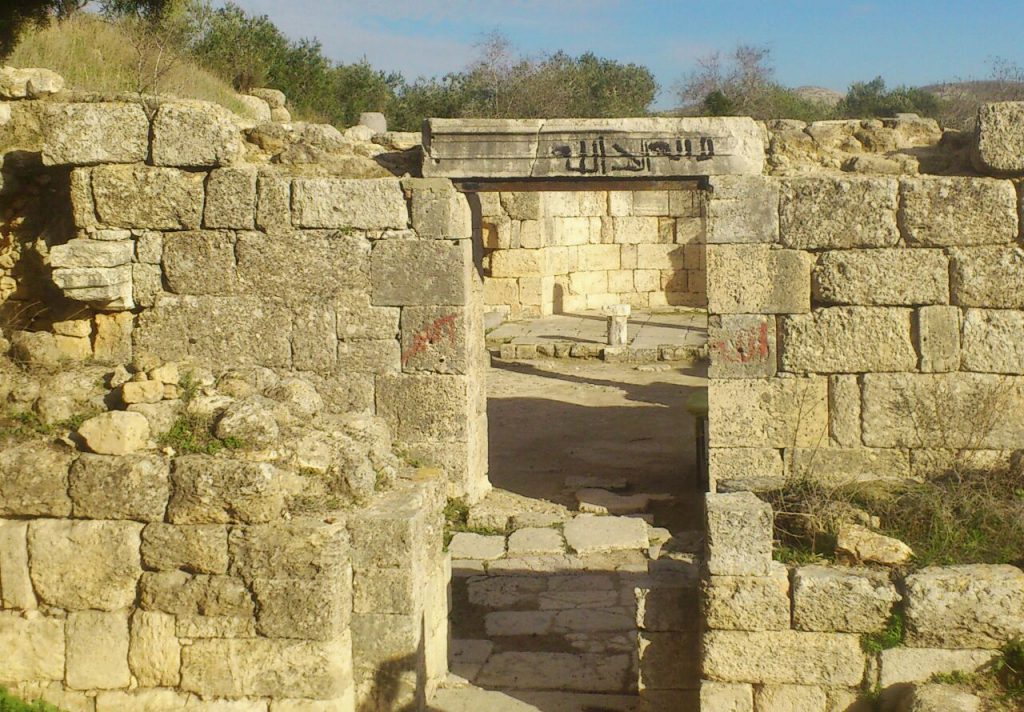
A few examples suffice to illustrate the disastrous situation and to dispel any doubt as to what lies ahead: The first is the ancient synagogue at Samu’a, site #1 on the Oslo Accords list, which has been vandalized and damaged repeatedly. It is located in the center of the Arab village of the same name, and is under PA jurisdiction. Israelis – scientists, worshipers, tourists, inspectors – are able to access the site only with extremely complicated and rare security arrangements. As the attached photos can attest, the vandalism bears a strong antisemitic slant, and the PA has not merely failed to prevent this vandalism, it has also failed to restore this and other similar sites, or to enable access to it as required by the Oslo Accords.
A second example is Tel Aromah, located in Area B (the portion of Judea and Samaria placed under Palestinian jurisdiction for non-security matters). Tel Aromah is one of a chain of eight Hasmonean-era fortresses (142-63 BCE) built by the Maccabean dynasty to protect the Jewish State and its heartland in Judea and Samaria. These massive and imposing fortresses (item #6 on the Oslo Accords list) have been the object of massive and imposing destruction at the hands of the Palestinian Authority, which has poured hundreds of thousands of dollars into “rebranding” Tel Aromah as a “Palestinian Heritage Site.” Most recently, the PA took advantage of the coronavirus shutdown of Israeli oversight and enforcement, and paved an access road to the site, plowing over a section of the fortress wall and destroying the water cisterns that served the inhabitants of the fortress over 2,000 years ago. The PA also paved over an area at the top of the ridge in order to install a massive Palestinian flag and set up tents that are now manned 24/7 to facilitate the Palestinian presence at the site.
A third example is the ancient altar at Mount Ebal (Tel El-Burnat), located in Area C. This site, surveyed and excavated by Prof. Adam Zartal in the 1980s, dates to 1250 BCE, and is identified as the altar constructed by Joshua, the first site of cultic practice and institutionalized Jewish worship in the Land of Israel. Due to its historic, scientific, symbolic and religious significance, the leadership of the village declared war on the site, which is now presented as a “Palestinian Heritage Site.” The Qalandiya Ranch – illegal construction on a massive scale in Area C (which is purportedly under Israeli control), now stands on the precise area of the archaeological tel (and not for want of available open spaces for construction – the surrounding area is completely open, and the PA has within its jurisdiction massive land reserves for which it could and should issue permits). The cultic site is disappearing and history is being expunged.
Another site that has been given a new narrative and identity by the PA is Sebastia, the Arab name for Shomron (Samaria) – the capital city of the northern Israelite kingdom founded in the 9th century BCE. Recently, Sebastia was inaugurated as an official Palestinian Tourism Site, and is open to the public (the UN invested hundreds of thousands of dollars in this “Palestinian Heritage Site”). Local visitors and tourists from around the world who visit the site are exposed to a completely Palestinian narrative, and no mention whatsoever is made of the Jewish connection to the site or the region, to the independent Jewish Kingdom of which Samaria was the seat of government, or to the biblical connections to the city and its environs. No mention is made of the important Christian links to the site, and the Church of St. John the Baptist, a beautiful Byzantine-era structure said to be the burial place of the apostle’s head, has been defaced, and now lies in ruins; other cathedrals-turned-mosques in Sebastia have received new “interpretations” in PA tourism guides.
Defacing the archaeological site in Sebastia
Finally, the case of Archilais, an impressive regional center in the Jordan Valley dating back to the Hasmonean Era. The city was named for Herod Archilaus, who came to power after the death of his father Herod the Great in 4 BCE, and ruled over one-half of the territorial dominion of his father. Today, the city is nothing more than a pile of indistinct rubble, reduced beyond recognition by incessant, massive and brutal “reclamation” that goes far beyond the ability of individual treasure-seekers.
Following the rollout of the Trump plan, Preserving the Eternal – a nonprofit dedicated to the preservation of the archaeological treasures scattered throughout Judea and Samaria – was contracted by the Shiloh Policy Forum to conduct an emergency survey of 365 major antiquities sites that bear particularly important testimony to Israel’s national heritage.
Of the sites surveyed for this project, 258 are located in what is currently Area C. According to the conceptual maps released with the US plan, some 30% of these sites will be part of the future Palestinian state; 135 heritage sites currently under Israeli control will be reassigned to Palestinian jurisdiction. Notable among these are the Hasmonean Fortress at Horkania in the northern Judean Desert, the Hasmonean Fortress at Kypros in the Jordan Valley, the Hasmonean palaces near Jericho, the biblical city of Shomron (Samaria-Sebastia), the altar of Joshua on Mount Ebal, Tel Beitar, Tel Maon and Tel Hebron.
The overwhelming majority of antiquities sites in Judea and Samaria already suffer from constant vandalism and looting; there is every reason to fear that these trends will be exacerbated if jurisdiction is transferred to the Palestinian Authority, which is intent on obliterating the physical record of Jewish connection to the Land of Israel.
“Unfortunately, in the last 20 years, the State of Israel has not maintained its heritage sites,” says Eitan Melet, field coordinator for the Preserving the Eternal Project. “Priceless archaeological sites have been neglected by the government and have been relegated to a place of shame on the list of national priorities. Four thousand years of history should be treated with far more respect. It is time our decision-makers give their full attention to Israel’s national heritage sites and take whatever steps are necessary to maintain them, even if this requires allocating more resources or adjusting the map here and there.” “The Oslo Accords’ stipulations on preservation of and access to world heritage treasures have been completely ignored; it is safe to say that at least in this respect, the Oslo Process has been an abject failure,” says Meir Deutsch, director-general of Regavim. “Many sites are on the verge of being lost forever to the scientific community, and other major sites have been targeted by the Palestinian Authority for takeover and ‘repurposing’ as ‘Palestinian heritage sites.’” The only way to protect these irreplaceable treasures is to extend Israeli sovereignty over as much of the territory as possible, as quickly as possible. This would automatically impose Israel’s stringent antiquities protection laws to these sites and place them under the auspices of Israel’s Antiquities Authority. The alternative – reflected in the “Deal of the Century” map – is clear: The physical remains of biblical history will be decimated under Palestinian custodianship.
Unfortunately, recent history leaves no doubt as to the reliability of Islamist regimes when it comes to protecting, preserving and providing free access to non-Islamic sites and artifacts. On the other hand, Israel has a proven record of insuring full freedom of access and religious worship to members of all faiths. Only under Israeli law have all peoples of the world enjoyed free and unfettered access to our shared world heritage and religious sites, and only under Israeli custodianship will continued religious and scientific freedom in the Land of Israel be guaranteed. Future generations will not forgive us if we fail to preserve our shared heritage by placing its preservation under Israeli law – today.
כ"ז אב התש"פ - 17 August 2020
Share:
Illegal PA construction
The Knesset Foreign Affairs and Defense Committee has been told that the Palestinians have taken over large swaths of Israeli-controlled land in Judea and Samaria while authorities dither on what action to take, Makor Rishon reported Monday.
Testifying before the committee, a representative of the pro-settlement Regavim presented mapping data they collected that does not correspond to the data of the Civil Administration.
“They [Civil Administration] are talking about locating 650 buildings, we found 3,500 illegal buildings built in 2020,” Meir Deutsch said. “Today there are about 69,000 illegal buildings in Area C,” which amounts to 30 to 40 percent of Area C.
Deutsch, whose organization monitors enforcement of the law in Judea and Samaria, showed that in Area A, which is under direct Palestinian control, there are many empty areas suitable for construction without the need for Israeli approval, but the Palestinians insist on building in Area C, which is under full Israeli control.
Regavim said the Palestinians are taking advantage of Israel’s non-enforcement and taking over land in Area C due to the decision-making vacuum as Israel took the last six months to prepare for the application of Israeli sovereignty to settlements in Judea and Samaria.
The sovereignty plan would have seen up to 30 percent of Judea and Samaria fall under direct Israeli rule, but last week it was indefinitely postponed as a condition for the impending establishment of diplomatic ties with the United Arab Emirates, expected to happen at the White House in the coming weeks.
The committee was told that as early as 2017, the Civil Administration recommended a plan to register land in Judea and Samaria as a countermeasure to the registration proceedings initiated by the Palestinian Authority. Knesset Member Ayelet Shaked claims those plans got stuck with the prime minister.
It was revealed that the cabinet decided a year ago that action needed to be taken to thwart the PA’s plan to seize sections of Area C, but nothing was done.
“A common tactic of the Palestinian Authority is to build schools to facilitate a land grab,” Regavim tweeted, saying the Palestinians use large amounts of European funds provided for Palestinian construction in order to quickly put up buildings they call schools without building permits on lands not under their legal control.
The Palestinians then put students in the new school before legal action is taken to demolish the illegal structure, owing to the Israeli government dragging its feet on the legal procedures.
Israel not moving in immediately “makes it much harder for Israel to demolish. Political, international, media pressure works wonders,” Regavim said.
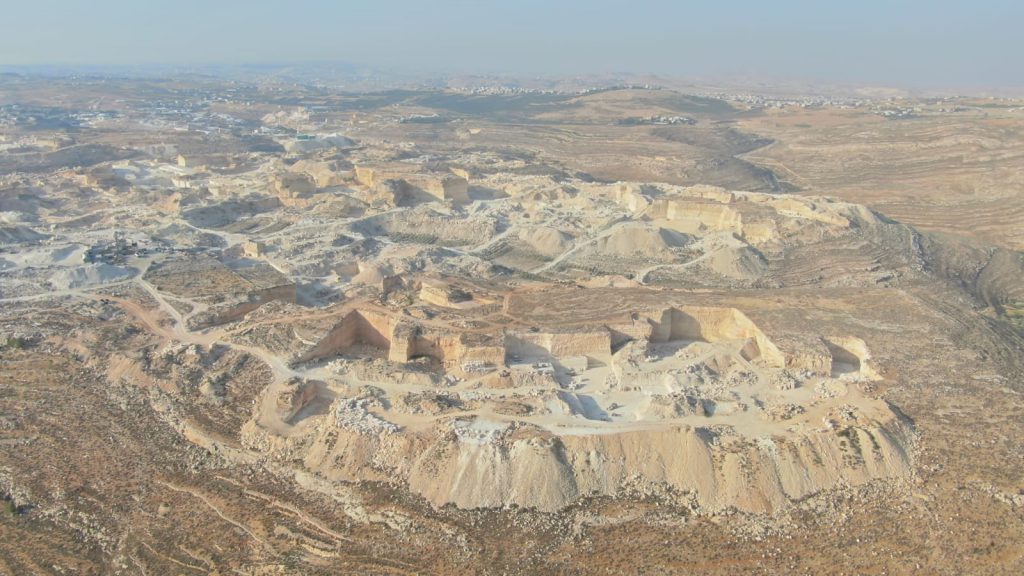
The Regavim Movement recently petitioned the Jerusalem District Court against the continued operation of the Beit Fajar quarry in eastern Gush Etzion. The quarry currently spans some 1,500 dunams (1.5 km2) – hundreds of dunams of which are registered state land – and continues to cause irreversible ecological and environmental damage.
Approximately one third of the Beit Fajar quarry is situated on land under Palestinian Authority jurisdiction, which explains why the State of Israel has refrained from enforcing environmental protection regulations there. However, the majority of the quarry is located on land under full Israeli jurisdiction – and hundreds of dunams are registered as state property. Yet there, too, the quarrying carries on, unhindered and unregulated.
Regavim’s attorneys, Avi Segal and Yael Cinnamon, described the gaping “wound” created by the quarry and the irreparable destruction of the landscape, as well as the massive disruption of the delicate ecosystem that has caused irreversible environmental damage, including destruction of wildlife habitats and breeding grounds for unique species of flora and fauna that have developed and thrived in this area over thousands of years.
Regavim first petitioned Israel’s High Court against the quarry a decade ago, when the quarry, and the damage, were still relatively small. Responding to this petition, the government informed the High Court that it had carried out a number of enforcement steps, and was working on a zoning plan for the area that would establish land-use directives for quarrying at the site.
On the basis of the government’s statements and commitments, the High Court rejected Regavim’s petition at that time. Then-Chief Justice Dorit Beinish, who presided over the case, stressed in her judgement that “we are assuming that the enforcement and regulatory actions taken by the respondents will continue, and that the policy that has been formulated will be enforced without interruption.”
Unfortunately, a decade has passed, and not only have the Israeli authorities failed to take any steps to prevent the continued operation of the quarry, they have allowed it to expand by 33%, deepening the invasion of state land by more than 200 dunams beyond its boundaries ten years ago.When repeated inquiries and correspondence on the matter were ignored, Regavim went back to court, filing a petition against Minister of Defense Beni Gantz, Minister of the Environment Gila Gamliel, the IDF Commander of Central Command, the Civil Administration and the Israel Police.
“The environmental damage caused to this area by the inaction of the authorities responsible for law enforcement is staggering, and, sadly, irreparable,” said Regavim’s spokesperson. “The State of Israel has strict regulations for quarrying permits, and owners and operators are required to finance the rehabilitation of quarried areas when they become inoperative in order to minimize the environmental impact – but this policy vanishes when the imaginary line into Judea and Samaria is crossed. Adding insult to injury, when micro-measures are taken to rehabilitate illegal quarries in these areas, they are paid for by Israeli taxpayers, and the criminals who cause the damage simply carry on, rapaciously exploiting the natural resources of the Land of Israel as they scoff at the law and pocket vast profits, without any responsibility for the destruction they leave in their wake.”