
To view the report click here

Freedom of Information Petition: Who is providing electricity to illegal Palestinian construction?
The Regavim Movement has petitioned the Jerusalem District Court, after the Civil Administration refused to provide data on the extent of electricity connections apparently supplied by the East Jerusalem Electric Company, an Israeli subsidiary of the Israel Electric Company which is subject to Israeli law, for thousands of illegal Palestinian structures in Judea and Samaria.
Tens of thousands of illegal structures have been built in the last decade in Area C, the section of Judea and Samaria under full Israeli jurisdiction. Most of these structures are connected to the electricity grid operated by the East Jerusalem Electric Company, an Israeli company supervised by the Public Services Authority. Other than the Israel Electric Company, the East Jerusalem Electric Company is the only company in Israel licensed to distribute electricity throughout the country.
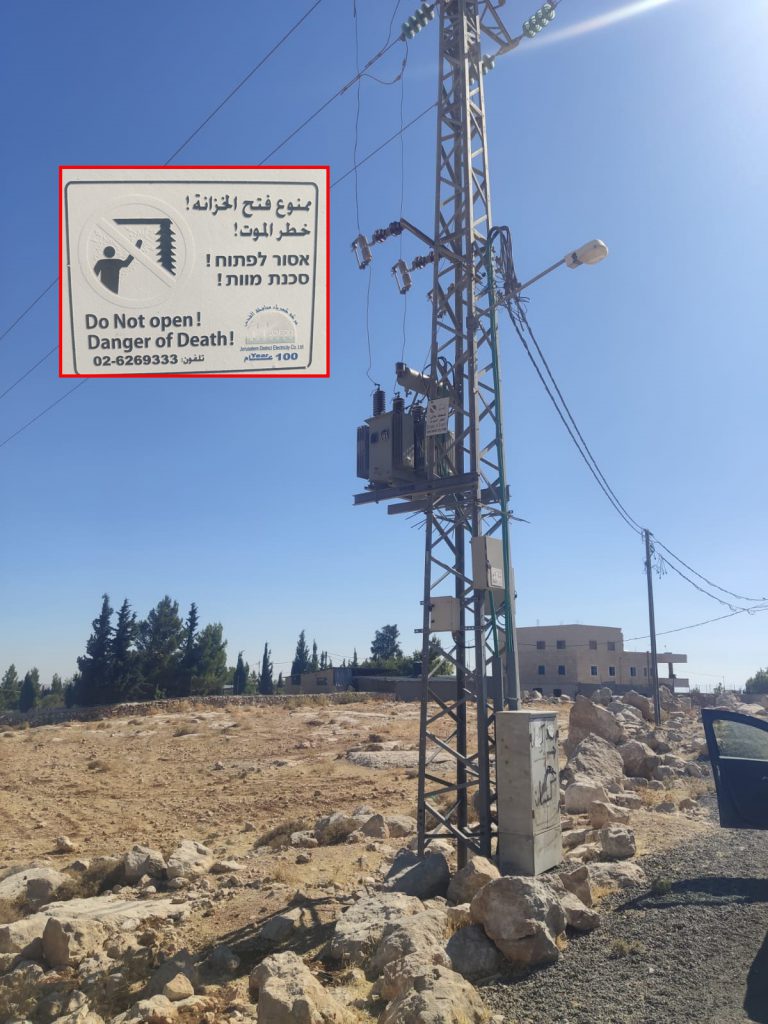
To ascertain the extent of this phenomenon, Regavim submitted a Freedom of Information request to the Civil Administration last August. The request focused on electrical connections provided for illegal structures located a few meters from the entrance gate to Efrat in Gush Etzion. These structures, built illegally by Arabs with the encouragement and support of the Palestinian Authority, are connected to the East Jerusalem Electric Company network.
Regavim wanted to understand how the East Jerusalem Electric Company received permission to connect the illegal structures to the grid, and precisely how the electricity pillars were placed: Is there an approved masterplan for the area? Were these structures given permits, or perhaps granted permit exemptions which allowed for their connection to the grid?
The Civil Administration did not respond; after Regavim’s second request for information, the Civil Administration’s official response was that “staff members are working vigorously to formulate a response to this query;” although these structures had been hooked up to the electrical supply only a few months before the query was submitted, the Civil Administration explained that the structures in question are “old,” and that “in-depth examination of the archives is required.”
Months after this puzzling response, no substantive reply was received from the Civil Administration to the Freedom of Information request, so Regavim petitioned the court to compel the Civil Administration to provide satisfactory answers about this absurd situation.
“Aside from the safety hazards posed by unauthorized, unsupervised electrical connections, this situation lends permanence to the illegal structures,” says Yakhin Zik, Director of Operations at Regavim. “It is inconceivable that a company subject to Israeli law should provide unauthorized electrical connections to structures built illegally. It is inconceivable that while on the one hand the Israeli government has vowed to fight and win “the battle for Area C,” on the other hand it is allowing this phenomenon to entrench and reward the illegal construction that is the primary tool for the hostile Palestinian takeover of Area C.”

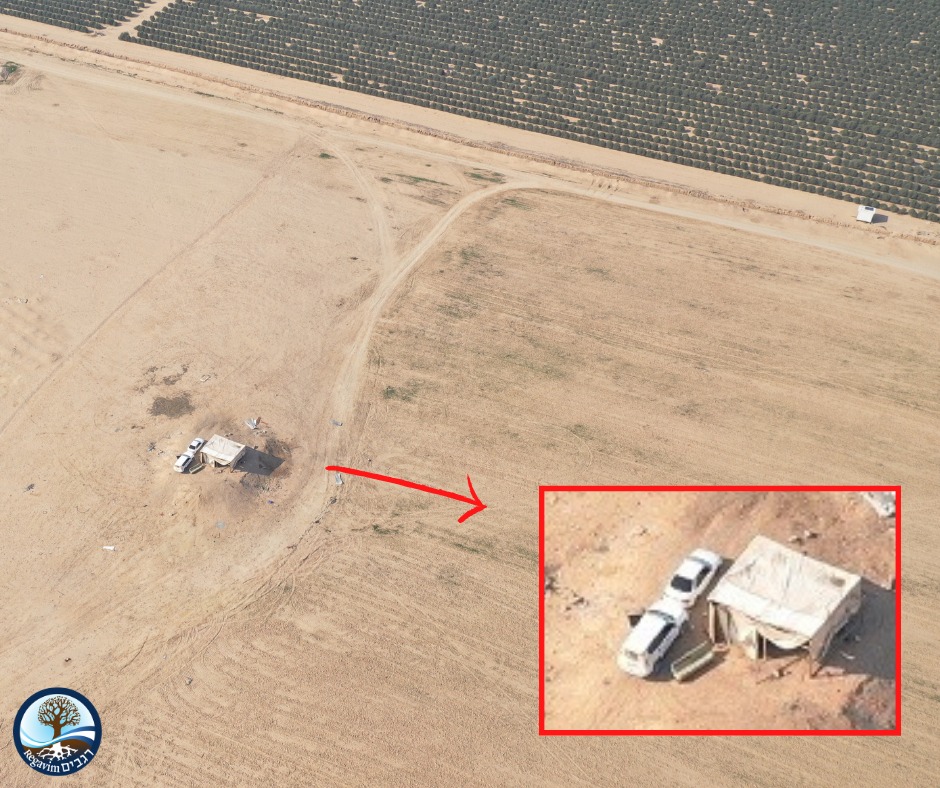
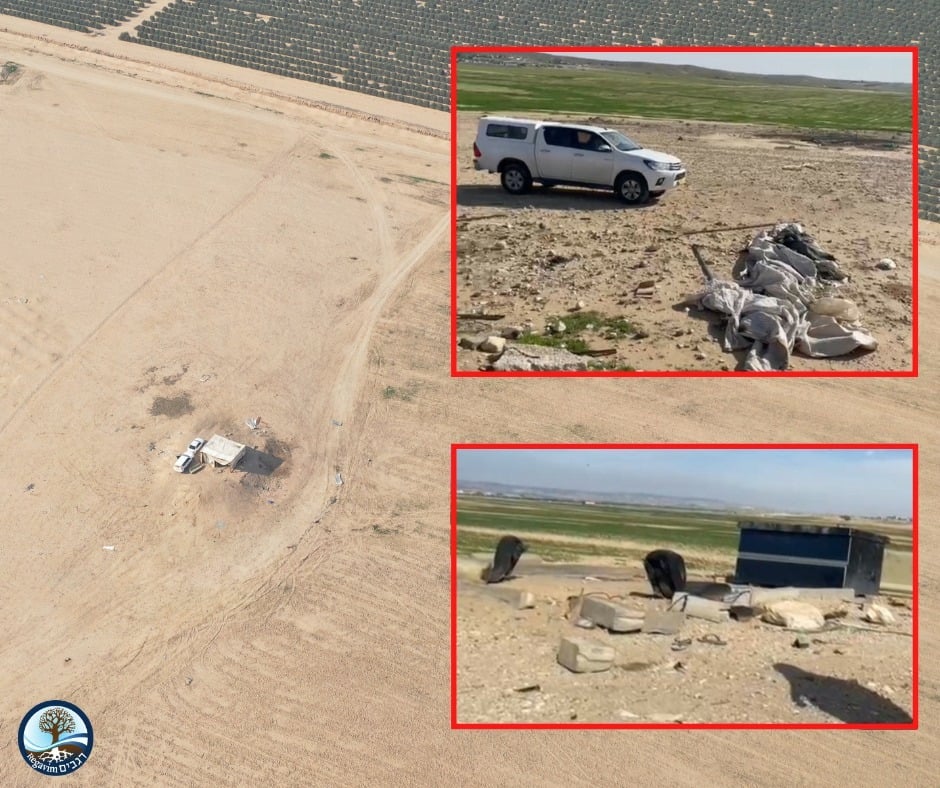
Earlier this year, a Bedouin man invaded into agricultural lands that belong to the Moshav Nevatim, appropriated a piece of land for himself, and put up an illegal hut. The hut was small, but its impact was huge: the intruder decided to stay there and prevent the Moshav’s workers from entering their fields to work the land. He also threatened whoever made such attempts.
Moshav Nevatim in the central Negev, near Be’er Sheva, is surrounded by clusters of illegal Bedouin squatters’ camps, and has suffered for many years from crime, vandalism, burglary and agricultural theft. Nevatim was recently in the headlines following the shocking desecration of Jewish graves in the Moshav cemetery.
The frustrated farmers of Nevatim asked Regavim for help. We went to the National Enforcement Unit, the Israel Police, and the Israel Land Authority to demand a stop to this illegal land seizure. We explained that threats on farmers are not acceptable, and urged that the invader be kicked out and held accountable.
The lack of effective governance in the Negev is what led to this episode in the first place. For years, the State hasn’t exercised its authority and responsibilities in the Negev properly, rendering it Israel’s Wild South. This has allowed people to take the law into their own hands, which causes major distress and damage for regular, law-abiding residents of the Negev.
Thanks to Regavim’s pressure in this case, the invader was kicked out, the hut was dismantled, and the threats on the farmers were lifted. In March, finally, the farmers returned to work their lands.
We don’t always see the fruits of our efforts immediately, but in cases like these it’s clear how important and significant our work is. We’re hopeful that the Moshav’s workers will never again find themselves under threat; never again will their lands be seized illegally in broad daylight. If they seek our assistance, we will do whatever we can to help.
Israel’s High Court of Justice denies appeal of landowners whose property has been overtaken by thousands of Bedouin squatters: “This case does not justify judicial interference.”
After a decade of legal proceedings, yesterday (Monday) Israel’s High Court of Justice denied an appeal by owners of private property who sought a court-mandated deadline for the removal of squatters from their land – land located on the outskirts of Bir Hadaj, the crime capital of the Negev. “An outrageous miscarriage of justice.”
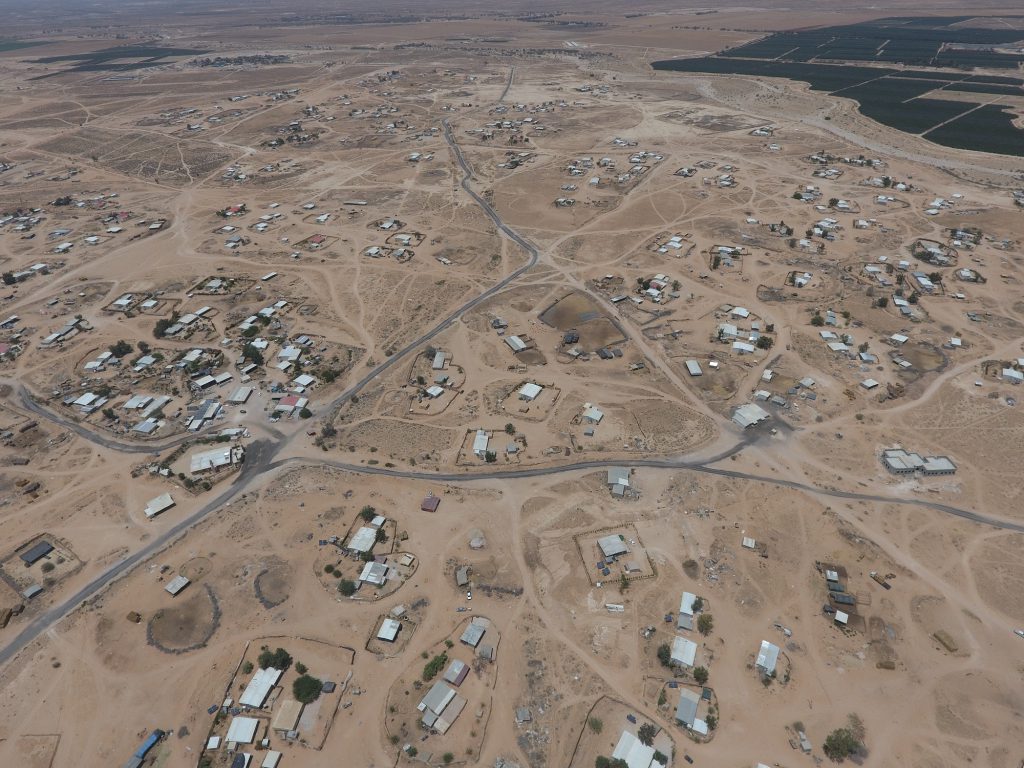
Yestrday (Monday), Israel’s High Court of Justice rejected a petition filed by individual land owners whose property has been overrun by Bedouin squatters. Over the past number of years, more than 1,000 Bedouin families invaded state land and private properties on the outskirts of Kibbutz Revivim, while rejecting a series of increasingly generous relocation-compensation packages offered by the Israeli government. The owners of the property took their case to court ten years ago, and in their most recent appeal, they sought a court-mandated timetable for the restoration of their property.
In stark contrast to a well-established record of High Court judgements that required the state to remove Jewish homes built on privately-owned Arab property according to non-negotiable deadlines, in the case of the Jewish landowners of Bir Hadaj, Justices Groskopf, Mazuz and Wilner decided that “the rights of ownership of the appellants regarding their private property are not absolute, and do not exist in a vacuum,” and that this “is not among those exceptional and extreme cases that justify judicial intervention in the policy of the authorities responsible for enforcing planning and construction laws.”
The squatters’ camps near Bir Hadaj began to take shape in the early 2000s, after the Israeli government temporarily relocated 15 families from the Ramat Beka area to state land near Kibbutz Revivim. This set off a massive movement of families from the Al Azazmeh tribe, who quickly covered thousands of dunams of state land in the vicinity, as well as some 2000 dunams of land owned privately by Jews, with hundreds of illegal structures.
This sprawling squatters’ camp has grown into the crime capital of southern Israel, an exterritorial no man’s land where Israeli law enforcement is virtually nonexistent. Residents of the squatters’ camp have been in the news recently: The suspects in the rape of a 10-year old girl in the course of a home invasion, the massive drug production plantations on the nearby Tzeelim firing zone, large-scale plunder of IDF ammunition and harassment of IDF trainees and reservists are all “credited” to residents of the Bir Hadaj hinterland.
In 2003, the Israeli government decided to create a new, legal alternative for the squatters: an all-Bedouin town, built on state land. Each of the squatter families was offered a “compensation” package of hundreds of thousands of shekels as well as a 5 dunam plot of land (!) – but this wasn’t enough to convince the squatters to relocate.
The owners of the stolen land, together with the Regavim Movement, petitioned the Beer Sheva District Court, asking that the state be required to provide a timetable for the evacuation of the squatters, but the government responded that it was carrying out negotiations with the squatters with the aim of achieving a mutually-acceptable evacuation – and the petition was dismissed. When the much-awaited agreement didn’t materialize, a second petition was filed in 2015 – which the court denied without explanation.
A third petition was filed after the Director of the Bedouin Authority, Yair Maayan, released an official announcement that all attempts to achieve a mutually-accepted evacuation agreement had failed.
The owners of the purloined property returned to court, proving that from the time they had first petitioned, the squatters had built hundreds of additional illegal structures on their property. To make matters worse, what meager law enforcement activity had taken place in the interim (6 relocation agreements were signed with squatters, out of over 1000) had focused on clearing state-owned land, and the private owners were left ‘high and dry.’
This third petition was also denied, despite the government’s response to the court that it could not predict when enforcement activity would be completed in the squatters camp as a whole, and in the privately-owned sections in particular. The property owners turned to the High Court of Justice to appeal the District Court decision.
Yesterday (Monday), the High Court of Justice denied their appeal. “The situation in Bir Hadaj as a whole, and in the privately-owned section in particular, is unacceptable,” wrote Justice Groskopf in the opening words of the judgement. “The state must not accept a situation in which there are areas under its jurisdiction that are beyond the law,” and even after a decade has passed, “it is unclear when the owners of the property will be able to exercise their rights to it.”
Nonetheless, the judges refused to require the state to adhere to a deadline for evacuation of the property. “The appellants’ ownership rights to the privately-owned land, which undoubtedly and undeniably been harmed, are not absolute and do not exist in a vacuum. They are to be weighed against the state’s policy of creating appropriate regulation solutions for the illegal compound at Bir Hadaj, in the larger context of efforts to regulate Bedouin settlement in the Negev.”
Meir Deutsch, Director General of Regavim, reacted to the judgement: “This is a miscarriage of justice that cries out to the very heavens. In inverse cases, the High Court ordered the wholesale evacuation of Jewish communities and the destruction of Jewish homes according to draconian, non-negotiable timetables. In this case, it has become clear that the government itself is creating the cesspool of lawlessness that is exploding on us all. The squatters’ camps have become an exterritorial incubator for the horrors that continue to befall Israeli citizens of the Negev and beyond. The unthinkable has become the norm; the rape of a child in her own home, the invasion and looting of IDF bases, and the terrorizing of law abiding Israelis speak for themselves.”
Chaim Goloventsis, one of the owners of the land, added: “We must not accept a reality in which the High Court of Justice once again denies us the right to our property. I am convinced that if our land had been located in the 03 area code (i.e., greater Tel Aviv), the judgement would have been totally different. This is just one more pathetic, embarrassing instance of the breakdown of the state’s institutions in southern Israel.”
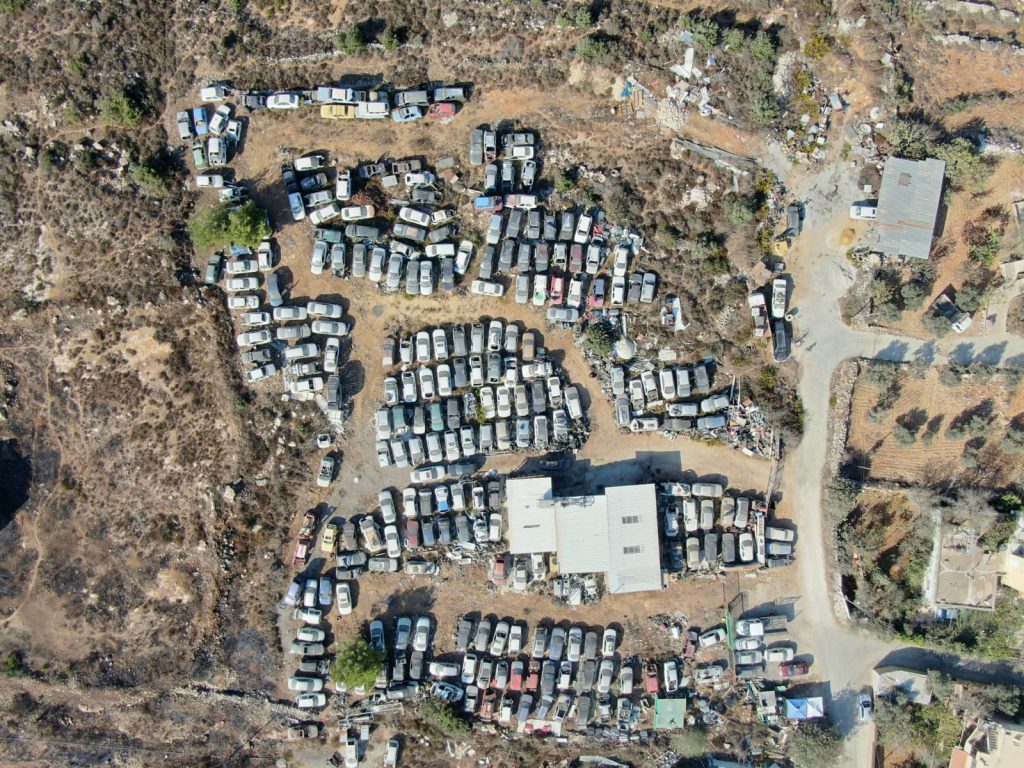
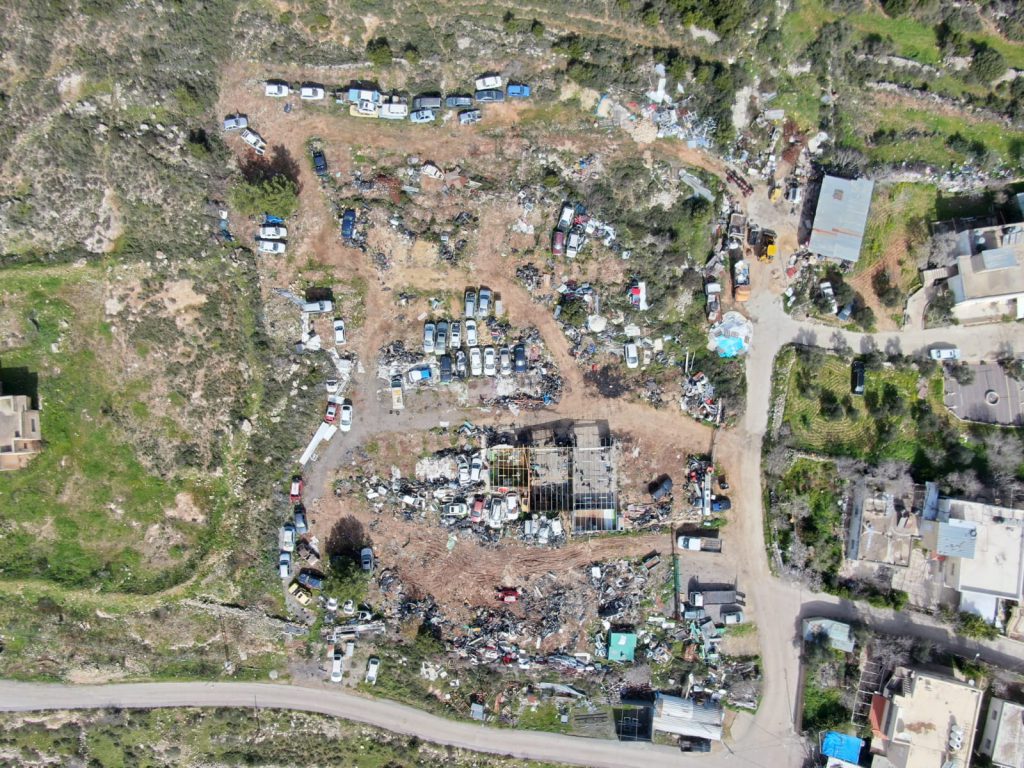
As a result of our petition, a massive junkyard that was blighting the countryside and polluting the groundwater in the Binyamin region was cleared. Countless wrecks had been piling up for years at an illegal automotive scrapyard near Bir Zeit, polluting topsoil and groundwater with untreated effluents and automotive waste.
About eight months ago, we turned to the Civil Administration to demand the clearance of the illegal junkyard. But the Civil Administration tried to shirk their responsibilities, claiming that enforcement can’t be carried out at “junkyards on private lands”. This was a ridiculous claim and defies the law that explicitly gives the Civil Administration the authority to remove vehicle wrecks from “the public or private domain”. So we had to submit a petition to the Jerusalem District Court to give them a nudge.
And indeed, recently, the Civil Administration issued orders for the owner to clear all the vehicles and to restore the area within 30 days. In recent weeks, the owner removed hundreds, if not thousands, of the old cars and dismantled the illegal garage. We are hopeful that in the coming days and weeks the rest of the area will be cleared, and this environmental hazard will be lifted.
Automotive waste and untreated effluents that pollute the groundwater don’t distinguish between Jewish and Arab lands. Environmental abuse is not a right- or left-wing issue, and doesn’t stop at the Green Line. We shall continue to push for equal law enforcement throughout the Land of Israel, the protection of Israel’s land resources and the environment.
Regavim: Protecting Israel’s Resources, Preserving Israeli Sovereignty
This first appeared on our Facebook page
Ignoring a small problem allows it to turn into a big problem.
Last night’s case in point:
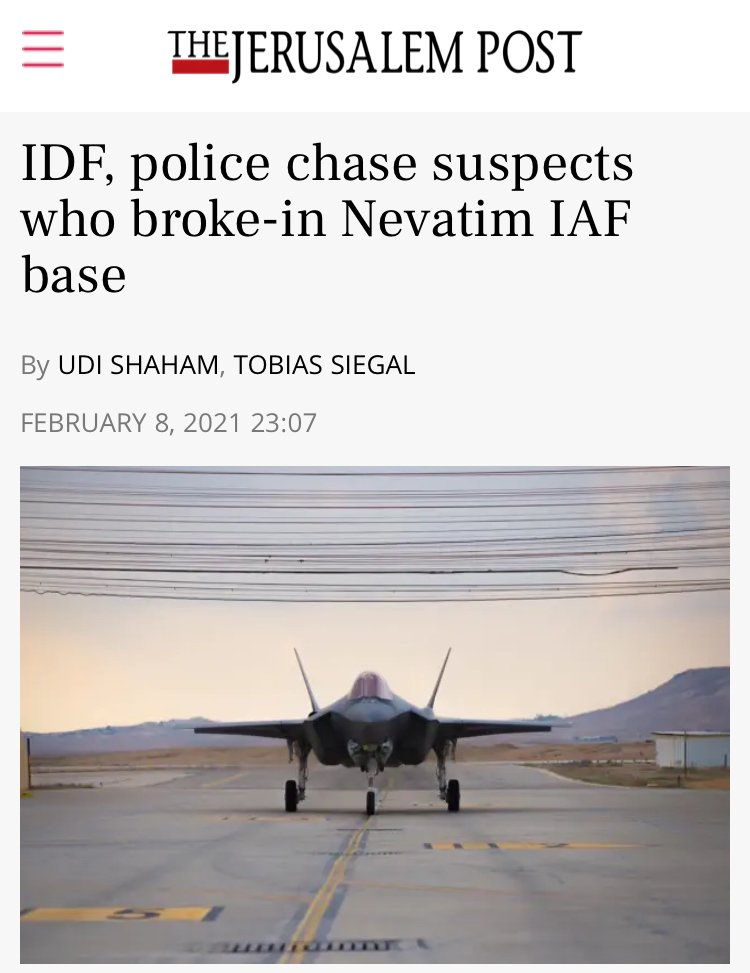
Bedouin bandits infiltrated the Israel Air Force base at Nevatim; IAF helicopters engaged in an hours-long chase.
The State of Israel has been ignoring the cracks in law and order in the Negev for so long, they’ve become a “grand canyon” – and tonight’s events in the Negev prove the point.
In the last two weeks alone the Negev has seen horrific and varied forms of criminal behavior: The shocking sexual assault of a little girl in her home, the break-in at the Israel Air Force base at Sde Teiman that included a stun grenade attack on our soldiers, a string of robberies in Be’er Sheva that were caught on film and uploaded to social media, the desecration of a Jewish cemetery, a massive ammunition heist, and now, a break-in at the Nevatim base, where Israel’s top-secret aeronautical technology is housed.
It’s time for the State of Israel to draw a line in the sand. For the sake of each and every citizen of Israel, we demand that the government formulate a comprehensive, non-negotiable solution to the problem of Bedouin crime in the Negev.
Let the numbers do the talking. Here’s what we accomplished in the last year:
205 Field tour days
51 New case files
18 Lectures and webinars
20 Knesset hearings
9 New legal petitions
31 Tours for Members of Knesset and Ministers
32 Tours for journalists
And one homeland which we will continue to protect – with God’s help and yours.
Join our efforts to protect the Land of Israel, its resources, and the rule of law >> https://regavim.org/support-us/
For a more in-depth look at what we achieved during 2020, have a look at our Annual Report
There’s been a tremendous amount of “chatter” recently – including governments condemning Israel and members of the US Congress referring to “ethnic cleansing” and serious crimes” committed by Israel in the case of Khurbet Humsa.
Although Regavim was not involved in this case, here are some facts to give you a more accurate picture of the story, which the European Union has failed do to.
First, the High Court of Justice decision, which refers to three earlier appeals on the same matter, in 4/2011, 7/2011 and 11/2014.
In each case the appellants tried a new excuse – Ramadan, the weather, who knows what – to prevent their removal from the site; in each case the court rejected the appeal out of hand. The area has been an active IDF training ground since 1972 (Firing Grounds 903), and the Bedouin didn’t set up camp there until 2010.
The satellite images we obtained are of the training grounds in 2008, focusing on the spot that was recently evacuated, followed by an image of the same point in 2013 (where only one structure is visible), and another in 2019 (where the recently-demolished structures, complete with European donors’ symbols, stand).
We haven’t done in-depth research on this illegal outpost, and weren’t involved in the legal process that resulted in last week’s demolitions, but this phenomenon is repeated over and over in IDF training grounds. In the case of the southern Hebron Hills area, a city has sprung up on what was IDF Firing Zones 917 and 918. As the Palestinian Authority and the European benefactors flooded the training grounds with more and more structures (not tents or shacks but massive, even palatial homes), the IDF gradually withdrew in order to avoid injuring the squatters, eventually abandoning the training grounds altogether. It’s no coincidence that this area was targeted for aggressive take-over: It forms a land bridge between Area A to the Negev and beyond, and is an active smuggling route.

This week, the IDF held a military exercise that began in the Negev in Biq’at Arad and ended in Training Ground 918 in the South Hebron Hills.
Shouldn’t be much of a big deal, right?
Well, far-left organizations such as B’Tselem pounced on this opportunity to attack the IDF, claiming that the drills were held “in Palestinian villages” and forced “local residents out of their homes”. This left-wing propaganda was publicized in the international media, too. It’s important for us at Regavim to present the facts so that fair-minded people aren’t brainwashed by these lies.
1. Training Ground 918 was declared a firing zone by the IDF in the early 1980s.
2. It’s a desert area, and like all other training grounds, was empty – besides sometimes functioning as a grazing area.
3. Training Ground 918 has served various IDF units over the years – including infantry, artillery, and the Air Force.
4. In 2000, local Arabs began to take over the area through mass illegal construction.
5. Due to the construction, the IDF was forced to reduce its activities in the Training Ground and made changes to training schedules.
6. Radical left-wing organizations filed a petition to the High Court of Justice, claiming that hundreds of Arab families had lived in the Training Ground for many years.
7. The IDF checked and found that only a handful of families lived in the area in 2000 – and they were all there on a seasonal basis. It wasn’t their permanent residence!
8. Out of 49 families mentioned in the petition, at least 38 were identified as permanent residents of the nearby village of Yatta or other villages.
9. Despite the State’s position, which viewed the land as rightfully belonging to the State, the High Court offered a compromise: the illegal structures on the periphery of the Training Ground would remain, and the rest of the land would be permitted for grazing and other agricultural purposes when the IDF isn’t using the grounds.
10. Although the Palestinian Authority was involved from the starting point, from 2009 onwards, together with international organizations, it started actively funding the illegal construction as part of their efforts to take over Area C. (For more on the #BattleforAreaC – see here)
11. In the meantime, the State of Israel didn’t do much; local Arabs continued their encroachment and even paved an illegal smuggling route.
12. The PA ignored the High Court’s suggestion for compromise. And as the PA-led encroachment increased, the number of IDF drills decreased drastically.
**
Ok, so to sum up, what happened this week? Exactly what happened a year ago, and the year before that. IDF troops came to train in an #DF training zone.
Unlike the left-wing radicals, we like to talk #facts rather than fake news and hateful, fabricated, anti-Israel narratives.
The Arab village was established in the middle of the IDF Training Ground, and not vice-versa. That must be the starting point of any discussion.
Please share this post to help us get the truth out.
Regavim: Protecting Israel’s Resources, Preserving Israeli Sovereignty